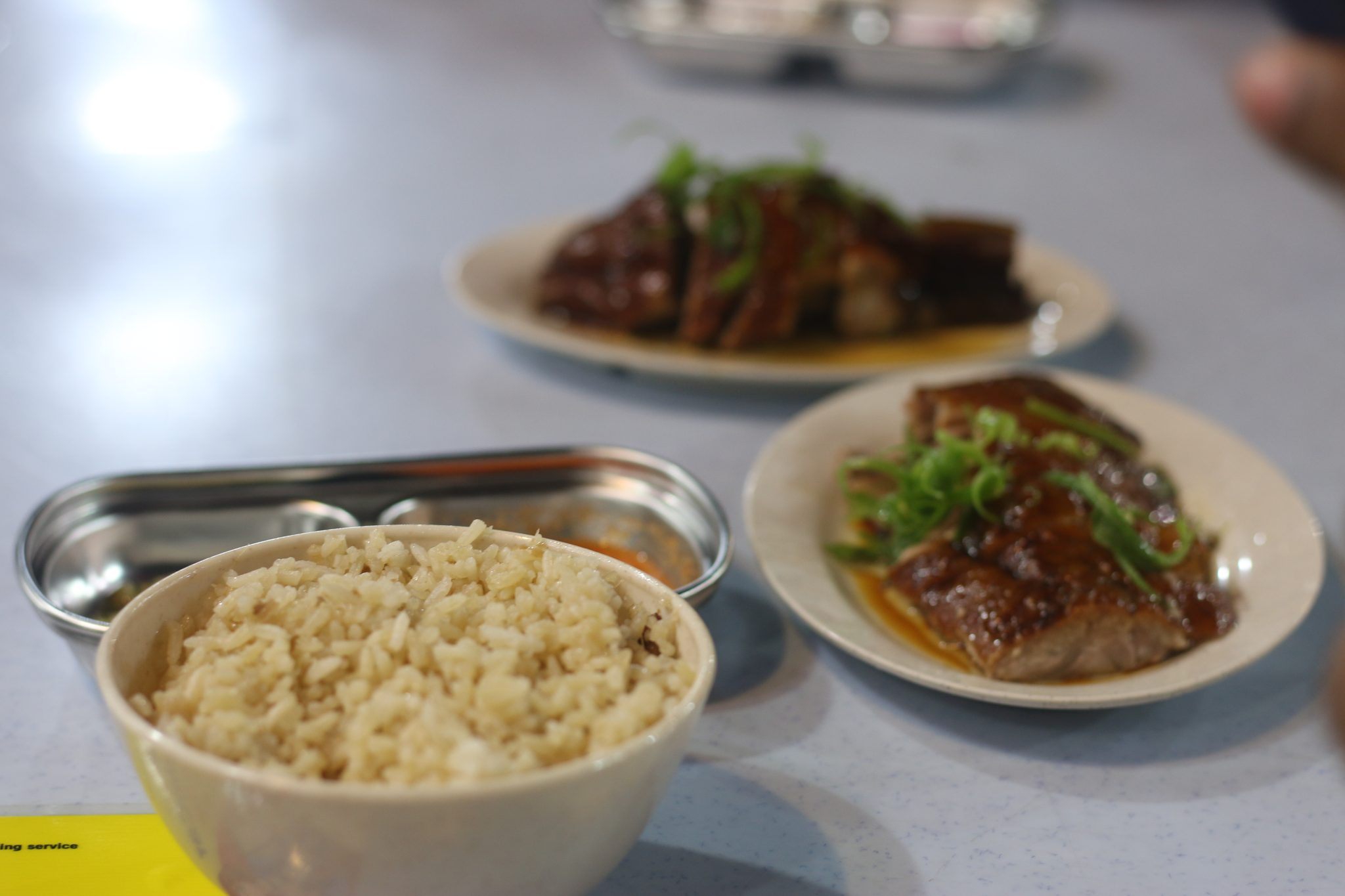
Rice from the pot is soft, sticky and slightly translucent. The same rice out of a container the next morning is firm, dry, separated into individual grains, and hard enough that a fork bounces off the surface. Anyone who has made fried rice knows this and uses it, because yesterday’s rice is the only rice that fries properly.
Somewhere around 2019 that texture change stopped being a cooking detail and became a nutrition claim. Cook the rice, chill it overnight, reheat it, and a portion of the starch supposedly stops counting. The number attached to the claim varies wildly depending on who is repeating it, and most versions of it have travelled a long way from anything measured.
The underlying process is real and has a name. The question worth answering is how much it changes, whether reheating undoes it, and whether it is a big enough effect to organize your week around. It is also worth knowing that the food safety side of cooling rice is a more consequential subject than the carbohydrate arithmetic.
- The process: retrogradation, which is starch recrystallizing as it cools
- The window: most of it happens in the first 12 to 24 hours in the refrigerator
- Size of the effect: real but modest, a few grams per cooked cup at most
- Reheating: keeps a good share of it, which is the part people get wrong
- Also applies to: potatoes, pasta, beans, oats, and green bananas by a different route
- What actually matters more: cooling the rice fast and not leaving it on the counter
- Where the trend overreaches: treating it as a way to remove calories from a meal
The claim that started showing up in every feed
The version that circulates goes roughly like this: cooking rice and cooling it converts a large fraction of its starch into a form the body cannot digest, so the same bowl delivers substantially fewer usable calories. Figures of fifty or sixty percent get quoted. Sometimes a coconut oil step is attached to it.
Every part of that has a kernel of something real inside it, wrapped in a number that has grown in transit. Cooling does change the starch. The change is measurable. The magnitude is nowhere near what the headline versions claim, and the difference between the two matters if you are making decisions based on it.
The useful way in is not the claim but the mechanism, because once you know what is physically happening to the grain, the size of the effect follows and the exaggerations stop being persuasive.
Starch is two molecules, and only one of them recrystallizes well
Starch in rice comes as two different polymers of the same sugar. Amylose is a long, mostly straight chain. Amylopectin is heavily branched, like a bush rather than a rope. Every rice variety contains both, in a ratio that determines almost everything about how it cooks.
Long-grain rice, basmati and most parboiled rice are relatively high in amylose, which is why the grains stay separate and firm. Short-grain, sushi and glutinous rice are low in amylose and dominated by amylopectin, which is why they turn sticky and cling together. That ratio also determines how much of the effect this article is about you can expect.
Straight chains stack neatly against one another. Branched ones cannot. So when cooked starch cools, it is the amylose that lines up into ordered crystalline regions, and the amylopectin mostly does not, or does so far more slowly. High-amylose rice therefore firms up more overnight and produces more of the change than sticky rice does.
What twelve hours in the refrigerator rearranges
Cooking does the opposite job first. Heat and water force their way into the tightly packed starch granules, the ordered structure breaks apart, the granules swell and burst, and the polymer chains spread out into the water. That is gelatinization, and it is why raw rice is inedible and cooked rice is not. It is also why cooked starch digests quickly: the enzymes have easy access to loose chains.
Cooling reverses part of it. As the temperature drops, the amylose chains find each other again and lock into crystalline regions that are tighter and more ordered than the granules they came from. The process is called retrogradation, and it is the same phenomenon that makes bread go stale on the counter.
Digestive enzymes work on starch by grabbing the ends of chains and cutting. Chains locked into a crystal do not present accessible ends, so that fraction passes through the small intestine intact. It has stopped being a carbohydrate you absorb and started being something closer to fiber.
Resistant starch cooked and cooled, measured in the same bowl of rice
Here is where the honesty has to come in. Published measurements of this effect vary enormously, because they depend on the rice variety, the amylose content, how much water it was cooked in, how fast it cooled, how long it was held, and what analytical method the laboratory used. Studies disagree with each other by large factors, and any article quoting one tidy percentage is quoting one experiment.
What the body of work agrees on is direction and rough scale. The resistant fraction in cooked white rice starts low, and chilling it overnight raises it by a meaningful multiple, often two or three times its starting level. Because the starting level is small, a large multiple of a small number is still a small number. In practical terms, a cooked cup of rice gains something on the order of one to a few grams of resistant starch.
Set that against the roughly 45 grams of carbohydrate in a cooked cup of white rice and the size of the thing becomes clear. It is not nothing, and it is not a way to eat a bowl of rice for half the calories. The people describing it as a fifty percent reduction are describing the percentage change in the resistant fraction, not the percentage change in the meal.
Reheating: how much of it survives
This is the part most summaries get backwards. The common assumption is that heating it again melts the crystals and undoes the whole thing, which would make the technique useless for anyone who does not want to eat cold rice.
Retrograded amylose crystals are considerably more heat-stable than the original granules were. They need temperatures well above normal reheating to melt, which is why stale bread does not become fresh bread when you toast it, only warm and slightly less stale. Reheated rice keeps a good share of what it gained, and by some measurements a cook-cool-reheat cycle ends up ahead of cooking and cooling alone, because the second cooling adds another round.
Repeated cycles do keep adding, with diminishing returns each time. There is a practical limit long before there is a chemical one, because rice that has been cooled, reheated and cooled again is not something you want to keep passing around the refrigerator on food safety grounds.
Four types, and which one this is
| Type | What it is | Where you find it |
|---|---|---|
| Type 1 | starch physically trapped inside intact cell walls | whole grains, seeds, coarsely milled legumes |
| Type 2 | raw granules in a form enzymes cannot open | green bananas, raw potato, high-amylose corn starch |
| Type 3 | retrograded, formed by cooking and then cooling | cooled rice, cooled potatoes, cooled pasta, stale bread |
| Type 4 | chemically modified in manufacturing | added to commercial baked goods and processed foods |
The rice question is entirely about type 3. Type 2 is the one behind green banana flour and raw potato starch, and it is the reason those get recommended as supplements: they carry far more resistant starch per gram than any cooked-and-cooled dish will. If the goal is a specific intake number, the supplement route reaches it and the leftover rice route does not.
Rice is not the only candidate
Potatoes. The best performer in the group, and the effect is large enough to notice. Boiled potatoes cooled overnight develop a substantially higher resistant fraction, which is one reason potato salad behaves differently from hot mashed potato. Waxy varieties do it more readily than floury ones.
Pasta. Already lower on the glycemic scale than most starches because of its dense protein structure, and cooling adds to that. Cooked al dente, cooled, then briefly reheated is the version with the most going for it.
Beans and lentils. They start high because of type 1 starch trapped in cell walls, and cooling adds type 3 on top. This is the category where the total is genuinely substantial without any technique at all.
Oats. Rolled oats soaked cold overnight and eaten without cooking behave differently from oats cooked hot, though the mechanism there is as much about the intact flake as about retrogradation.
Across all of them the pattern is the same: the change is real, it is modest, and it is largest where the starch has structure to begin with. A composed bowl built on cooled grains and beans quietly collects more of this than any single trick does.
What the resistant fraction does after it gets past the small intestine
Starch that is not absorbed does not just leave. It arrives in the large intestine, where gut bacteria ferment it and produce short-chain fatty acids, butyrate among them, which are used by the cells lining the colon. This is the same fate as soluble fiber, and it is the main reason resistant starch attracts research attention.
The measurable consequence at the table is a flatter blood glucose response after the meal. That effect is reasonably well established, though its size again varies by person, by variety and by what else is on the plate. Protein, fat and acid all blunt a glucose response too, often by more than the cooling step does.
Fermentation in the colon also produces gas, so a large jump in resistant starch intake can cause bloating for a week or two while the gut adjusts. This is general information rather than medical advice; anyone managing diabetes or a digestive condition should take dietary decisions with a clinician rather than from a cooking article.
Where the trend overreaches
The calorie framing. Presenting cooled rice as a way to eat the same portion for meaningfully fewer calories is the central overreach. The arithmetic does not support it, and framing food this way tends to produce worse decisions than simply serving a smaller portion of rice alongside more vegetables.
The coconut oil version. One small study, conducted with a specific technique on a specific rice, is the entire basis for a claim that has been repeated many thousands of times as established fact. Treat it as an interesting single result rather than a method.
The idea that it beats the alternatives. Choosing brown rice, adding a can of lentils, or putting a large pile of vegetables next to a smaller pile of rice all move the numbers further than an overnight chill does, and none of them requires planning a day ahead.
The honest position: it is a small free benefit attached to a habit worth having anyway. Cook rice in batches, keep it cold, use it during the week. The nutritional bonus is a footnote to the convenience.
Cooling rice safely matters more than the carbohydrate math
Uncooked rice commonly carries spores of Bacillus cereus, and those spores survive cooking. Rice left to sit at room temperature gives them hours to germinate and multiply, and one of the toxins they produce is heat-stable, meaning reheating the rice later does not make it safe. This is the origin of the illness sometimes called fried rice syndrome.
The handling rules are short and worth following exactly. Cool the rice quickly rather than leaving the pot out: spread it in a shallow layer on a tray or in a wide container so it drops out of the danger range in well under an hour, then refrigerate it. Do not leave cooked rice at room temperature for more than about two hours in total.
Keep it no more than three or four days in the refrigerator, reheat it thoroughly and only once, and if it smells at all off, throw it out. Rice freezes very well in portions, which is the better answer for anything beyond a few days.
A routine that gets the benefit without reorganizing dinner
- Cook a batch on a night you are cooking anyway. Three cups of dry long-grain rice takes the same twenty minutes as one and gives you the week.
- Spread it out to cool the moment it is done. A sheet tray, ten minutes on the counter, then straight into shallow containers in the refrigerator.
- Give it a full night. Most of the change happens in the first twelve to twenty-four hours, so the next day’s lunch is already there.
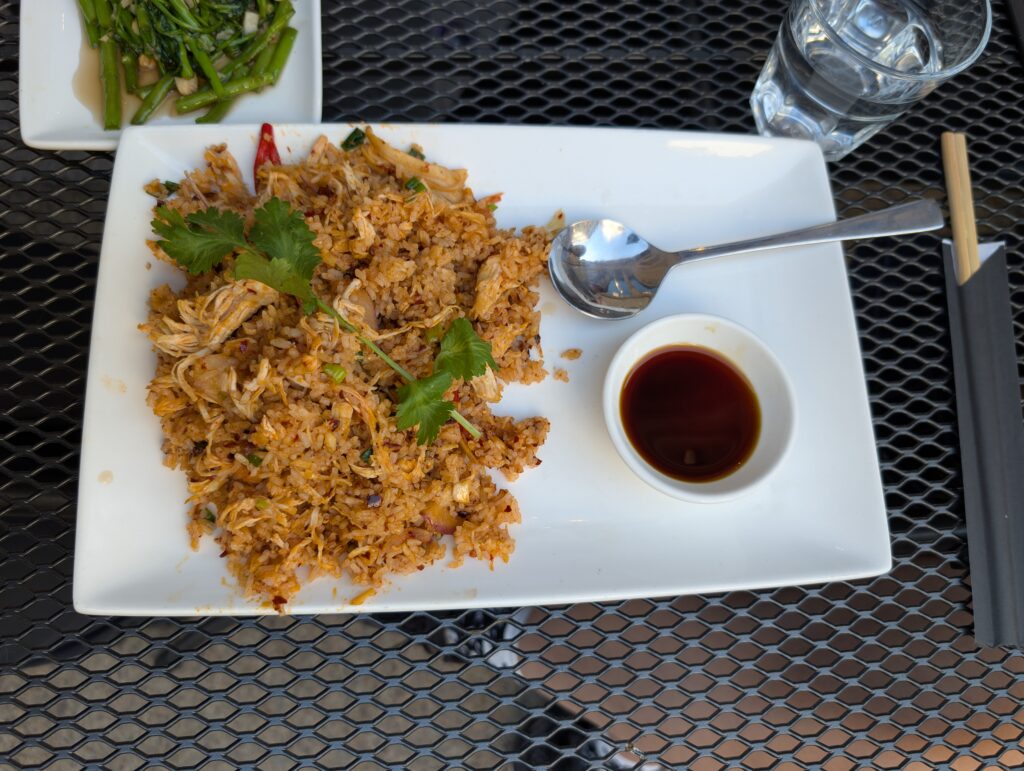
- Reheat with a splash of water, or fry it. Cold rice separates and browns properly, which is exactly why fried rice needs day-old rice.
- Or do not reheat it at all. Cold rice belongs in grain bowls, salads and assembled rice bowls, where the firmer grain is an advantage rather than a compromise.
Choosing a higher-amylose rice makes the whole thing work better. Long-grain, basmati and parboiled rice all firm up more overnight than short-grain does, and parboiled rice starts with a somewhat higher resistant fraction before you do anything to it.
Yesterday’s rice really is a different food from rice out of the pot, and the reason is a structural change you can feel with a fork. It is worth knowing about and worth using. It is not worth eating a larger bowl over.
Frequently Asked Questions
How long does the rice need to be cold for?
Most of the change happens in the first twelve to twenty-four hours. An hour in the refrigerator does very little; a full night does nearly all of it. Beyond about two days there is not much more to gain, and food safety becomes the limiting factor rather than chemistry.
Does freezing work as well as refrigerating?
Refrigerator temperatures are better for forming the crystals. Retrogradation runs fastest in the cold range above freezing and slows down considerably once the water in the food is frozen solid. Chill the rice overnight first, then freeze it if you want to keep it longer.
Is brown rice better for this than white?
Brown rice is the better choice overall, but not particularly because of this effect. It brings intact bran, more fiber and a lower glycemic response before any cooling happens. The retrogradation gain on top is similar in scale to white rice, so treat brown rice as a good default rather than a stacking strategy.
Can I taste the difference?
Yes, and it is the clearest evidence that something changed. Cooled rice is firmer, drier and separates into individual grains, and reheated rice never fully returns to the softness it had out of the pot. That texture is the crystalline structure you are eating.
Does this apply to bread?
It does, and it is the same process that stales it. Bread cooled and then refrigerated retrogrades faster than bread left on the counter, which is why refrigerating a loaf ruins it. Toasting stale bread reverses some of the texture but not most of the underlying change, which is why toast is chewier than fresh bread.