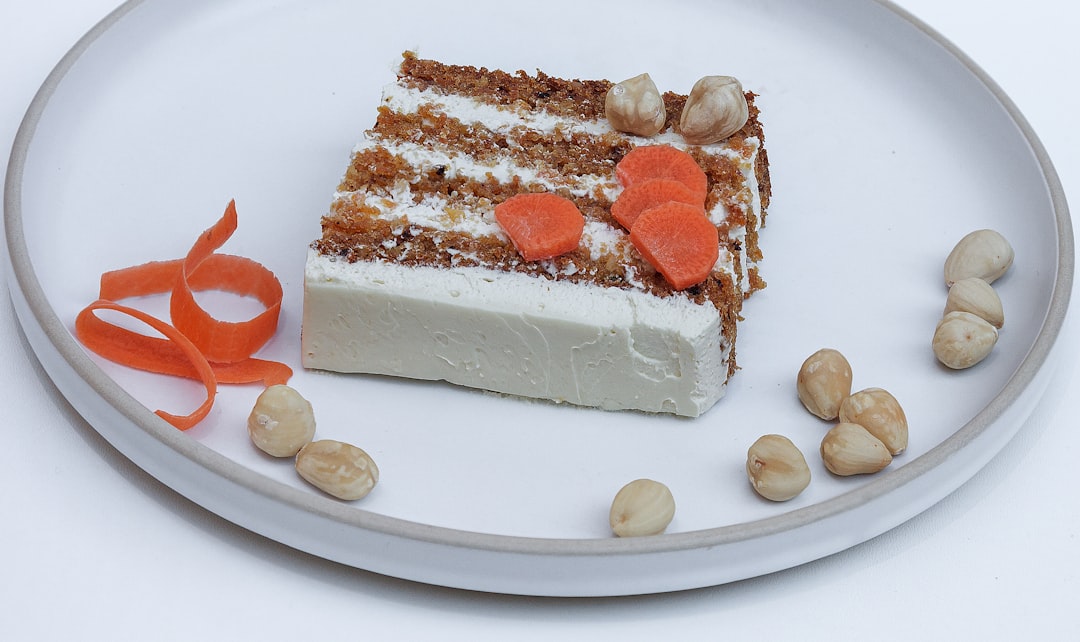
Carrot cake occupies a unique position in the dessert world. It is simultaneously a celebration of an unlikely vegetable, a showcase for warm spices, and one of the only acceptable excuses to eat an absurd amount of cream cheese frosting in public. A great carrot cake recipe delivers a crumb that is deeply moist (the oil and carrots ensure this), warmly spiced without being aggressive, and studded with enough walnuts to provide texture in every bite. The frosting, in this version, takes things a step further with brown butter, adding a nutty, caramelized dimension that turns a familiar classic into something extraordinary.
The key to this cake lies in details that many recipes overlook. The carrots must be finely grated (not shredded on the large holes of a box grater, which produces stringy, uneven pieces). The oil must be neutral, allowing the spices to be the star. The buttermilk provides a slight tang that balances the sweetness. And the brown butter in the frosting, made by cooking butter until the milk solids turn amber and smell like toasted hazelnuts, adds a complexity that regular butter simply cannot match. If you enjoy baking projects, our homemade cinnamon rolls and New York cheesecake deliver similar satisfaction.
Why This Recipe Works
Oil creates a moister cake than butter. Unlike butter, which is approximately 80% fat and 20% water, oil is 100% fat. This means an oil-based cake has more fat coating the flour proteins, which limits gluten development and produces an exceptionally tender, moist crumb. Oil also remains liquid at room temperature, so the cake stays soft even after refrigeration, unlike butter-based cakes that firm up in the cold. For a carrot cake, which benefits from a dense, moist texture, oil is the definitive choice. According to Serious Eats, the choice of fat is the single most important decision in carrot cake baking.
Finely grated carrots distribute evenly and add moisture. When carrots are grated on the fine holes of a box grater or with a food processor fitted with the finest grating disk, they almost dissolve into the batter during baking. This releases their natural sugars and moisture uniformly throughout the cake. Coarsely grated carrots create pockets of moisture and unevenly distributed vegetable flavor, and they produce a stringy texture that detracts from the crumb. Three cups of finely grated carrots is the optimal amount: enough to keep the cake remarkably moist without making it heavy.
Brown butter adds a nutty, caramelized dimension to the frosting. When butter is cooked past the melting point, the water evaporates and the milk solids begin to brown through the Maillard reaction. These browned solids carry flavors of toasted nuts, caramel, and toffee. When this brown butter is solidified and beaten with cream cheese and powdered sugar, it produces a frosting that tastes noticeably more complex than the standard version. The nutty quality of the brown butter harmonizes beautifully with the walnuts in the cake and the warmth of the cinnamon and ginger.
Buttermilk adds tang and activates leavening. The lactic acid in buttermilk reacts with the baking soda in the batter, producing carbon dioxide gas that creates lift and a tender crumb. But buttermilk also contributes a subtle tanginess that cuts through the cake’s sweetness. This acid-base reaction happens quickly once the wet and dry ingredients are combined, so it is important to get the batter into the oven promptly after mixing.
A layered spice approach builds complexity. Rather than relying on a single heavy dose of cinnamon, this recipe uses a blend of cinnamon, ginger, nutmeg, and cloves in carefully calibrated amounts. Cinnamon provides the familiar warmth, ginger adds a sharp heat, nutmeg brings a rounded sweetness, and cloves contribute a deep, almost medicinal intensity that ties everything together. Too much of any one spice overwhelms; the blend produces depth. According to Bon Appetit, the spice blend is what separates a professional carrot cake from a one-dimensional home version.
Recipe Card
| Prep Time | 25 minutes |
| Cook Time | 30-35 minutes |
| Total Time | 1 hour 30 minutes (including cooling and frosting) |
| Servings | 12 slices |
| Difficulty | Intermediate |
| Cuisine | American |
Ingredients
For the Cake
- 2 cups (250g) all-purpose flour
- 2 teaspoons baking soda
- 2 teaspoons ground cinnamon
- 1 teaspoon ground ginger
- 1/2 teaspoon freshly grated nutmeg
- 1/4 teaspoon ground cloves
- 1/2 teaspoon fine sea salt
- 4 large eggs, at room temperature
- 1 1/4 cups (250g) granulated sugar
- 1 cup (240ml) neutral oil, such as canola or vegetable
- 1/2 cup (120ml) buttermilk, at room temperature
- 2 teaspoons pure vanilla extract
- 3 cups (about 340g) finely grated carrots (approximately 1 pound or 5-6 medium carrots)
- 1 cup (120g) toasted walnuts, roughly chopped
For the Brown Butter Cream Cheese Frosting
- 1/2 cup (113g) unsalted butter, for browning
- 16 ounces (450g) cream cheese (two 8-ounce blocks), softened to room temperature
- 3 cups (360g) powdered sugar, sifted
- 2 teaspoons pure vanilla extract
- 1/4 teaspoon fine sea salt
For Garnish
- Walnut halves
- A light dusting of ground cinnamon (optional)
Step-by-Step Instructions
- Prepare the pans and oven. Preheat your oven to 350 degrees F (177 degrees C) with a rack in the center position. Butter the sides and bottoms of two 9-inch round cake pans, then dust with flour, tapping out the excess. Alternatively, use baking spray with flour. Line the bottom of each pan with a parchment paper round for insurance against sticking. This step is critical: carrot cake batter is sticky and dense, and an improperly prepared pan will ruin your layers.
- Combine the dry ingredients. In a large bowl, whisk together the flour, baking soda, cinnamon, ginger, nutmeg, cloves, and salt. Whisking aerates the flour and distributes the leavening and spices evenly, eliminating pockets of baking soda that would create bitter spots in the finished cake. Set aside.
- Mix the wet ingredients. In a separate large bowl, whisk the eggs until broken up and uniform. Add the granulated sugar and whisk vigorously for about 1 minute until the mixture is slightly pale and thickened. Whisk in the oil in a steady stream, then the buttermilk and vanilla extract. The mixture should be smooth and homogeneous.
- Combine wet and dry. Pour the wet ingredients into the dry ingredients. Using a large rubber spatula or wooden spoon, fold gently until just combined. Some small streaks of flour are acceptable; they will hydrate as you add the carrots. Do not overmix, as this develops gluten and produces a tough cake. Add the finely grated carrots and chopped toasted walnuts. Fold until evenly distributed, about 15 strokes. The batter will be thick and heavy.
- Bake the layers. Divide the batter evenly between the two prepared pans. A kitchen scale is helpful here: weigh the total batter, then portion equally. Smooth the tops with an offset spatula. Bake for 30 to 35 minutes, rotating the pans front-to-back halfway through. The cakes are done when the tops spring back when lightly pressed, the edges pull away from the sides of the pan, and a toothpick inserted in the center comes out clean or with just a few moist crumbs. Do not overbake; the residual heat will finish the job. Cool in the pans on wire racks for 10 minutes, then run a knife around the edges and invert onto the racks. Peel off the parchment and cool completely, about 1 hour.
- Make the brown butter. While the cakes cool, cut the 1/2 cup butter into tablespoon-sized pieces and place in a light-colored saucepan (so you can see the color change). Cook over medium heat, swirling the pan occasionally. The butter will melt, then foam, then the foam will subside and the milk solids at the bottom will begin to turn golden, then amber. This takes about 5 minutes. The butter will smell intensely nutty and toasty, like hazelnuts. The moment the solids are deep amber, pour the brown butter (including the solids, which are where the flavor lives) into a heatproof bowl. Refrigerate until completely solid, about 1 hour. It should be the consistency of softened butter, not liquid.
- Make the frosting. In a stand mixer fitted with the paddle attachment (or using a hand mixer), beat the solidified brown butter and softened cream cheese on medium speed for 2 to 3 minutes until completely smooth and fluffy, scraping down the bowl twice. Add the sifted powdered sugar in two additions, mixing on low speed after each to incorporate. Add the vanilla extract and salt. Increase speed to medium and beat for 1 minute until the frosting is light, smooth, and spreadable. If it seems too soft, refrigerate for 15 minutes. If too stiff, let it sit at room temperature for 10 minutes.
- Assemble the cake. Place one cake layer on a serving plate or cake stand, bottom side up (for a flat frosting surface). Spread approximately one-third of the frosting over the top in an even layer. Place the second cake layer on top, also bottom side up. Spread the remaining frosting over the top and sides. For a rustic look, use an offset spatula to create gentle swirls. Garnish with walnut halves around the top edge and a light dusting of cinnamon if desired. Refrigerate for at least 30 minutes to let the frosting set before slicing. For a complete dessert spread, pair with our triple chocolate brownies for a chocolate contrast.
Substitution Guide
| Original Ingredient | Substitution | Notes |
|---|---|---|
| Walnuts | Pecans, toasted coconut, or omit entirely | Pecans are the most common swap and add a buttery sweetness. Toasted coconut adds tropical flavor and chewy texture. For nut allergies, simply omit. |
| Buttermilk | 1/2 cup milk plus 1 1/2 teaspoons white vinegar or lemon juice | Combine and let sit 5 minutes until curdled. This produces an acid level comparable to buttermilk. Plain yogurt thinned with a tablespoon of milk also works. |
| Neutral oil | Melted coconut oil or applesauce (for lower fat) | Coconut oil adds a subtle tropical note. Applesauce replaces up to half the oil for a lighter cake, but the texture will be slightly denser. |
| All-purpose flour | 1:1 gluten-free flour blend or white whole wheat flour | GF blends with xanthan gum produce the most similar texture. Whole wheat flour adds a nuttier flavor and denser crumb; use 1 3/4 cups instead of 2 cups. |
| Cream cheese | Mascarpone or vegan cream cheese | Mascarpone produces a richer, less tangy frosting. Reduce powdered sugar by 1/4 cup. Vegan cream cheese works well but may be slightly softer. |
| Carrots | Zucchini or parsnips (finely grated) | Zucchini produces a lighter-colored cake; squeeze out excess moisture first. Parsnips add a sweet, earthy flavor similar to carrots. |
Storage and Reheating Instructions
Room temperature: An unfrosted carrot cake keeps well at room temperature for up to 2 days, covered tightly. Once frosted with cream cheese frosting, the cake must be refrigerated due to the dairy content.
Refrigerator: A frosted carrot cake, covered with a cake dome or loosely draped plastic wrap, keeps for up to 5 days in the refrigerator. The cake actually improves after a day in the refrigerator, as the moisture from the carrots has time to fully hydrate the crumb and the spice flavors meld. Remove from the refrigerator 30 minutes before serving for the best texture and flavor.
Freezer: Unfrosted cake layers can be wrapped tightly in plastic wrap, then in aluminum foil, and frozen for up to 3 months. Thaw overnight in the refrigerator, then frost. A fully frosted cake can also be frozen: freeze uncovered on a sheet pan until the frosting is solid (about 2 hours), then wrap in plastic and foil. Thaw overnight in the refrigerator.
Nutrition Facts (Per Slice, 1/12 of Cake)
| Nutrient | Amount | % Daily Value |
|---|---|---|
| Calories | 480 kcal | 24% |
| Total Fat | 26g | 33% |
| Saturated Fat | 12g | 60% |
| Cholesterol | 85mg | 28% |
| Sodium | 350mg | 15% |
| Total Carbohydrates | 56g | 20% |
| Dietary Fiber | 2g | 7% |
| Sugars | 38g | — |
| Protein | 6g | 12% |
Nutrition values are estimates based on USDA FoodData Central data for carrots, all-purpose flour, walnuts, cream cheese, and butter. Actual values may vary depending on specific brands and the amount of frosting applied per slice.
The Science of Carrot Cake Texture
Why carrots make such good cake. Carrots are approximately 88% water and 10% carbohydrates, with natural sugars (sucrose, glucose, and fructose) making up about 5% of their weight. When finely grated and baked into a cake, the water in the carrots slowly releases into the surrounding batter as steam, keeping the crumb moist from the inside out. The natural sugars caramelize slightly at baking temperatures, contributing a subtle sweetness that complements the granulated sugar. This is why carrot cake stays moist for days while other cakes dry out: the vegetable is essentially a built-in moisture reservoir.
The grating debate. Recipes that call for shredding carrots on the large holes of a box grater produce visible orange strands throughout the cake, which some people find appealing. However, these large pieces do not release moisture as efficiently, can create a slightly stringy texture, and distribute unevenly. Finely grating on the small holes (or using a food processor with a fine grating disk) produces a smoother crumb where the carrot integrates seamlessly. The cake tastes more of warm spices and less of raw vegetable. For this recipe, fine grating is strongly recommended.
Toast your walnuts. Raw walnuts in a carrot cake taste flat and slightly astringent. Toasting them in a 350-degree F oven for 8 to 10 minutes (shaking the pan halfway through) transforms them: the natural oils release, the flavor deepens, and the texture becomes crunchier. This extra step takes almost no effort but makes a noticeable difference in the finished cake. The aroma of the toasted walnuts also pairs beautifully with the brown butter in the frosting, creating a consistent nutty theme throughout the dessert.
Frequently Asked Questions
Can I make carrot cake as cupcakes?
Yes. Fill standard cupcake liners about two-thirds full and bake at 350 degrees F for 20 to 22 minutes. This recipe yields approximately 24 cupcakes. Pipe or spread the brown butter cream cheese frosting on top once cooled. Cupcakes are actually an excellent option for an Easter gathering because they are portion-controlled and easy to serve. Garnish each with a small piece of walnut or a tiny piped carrot made from tinted frosting.
Why is my carrot cake dense and heavy?
The most common causes are overmixing the batter (which develops too much gluten), measuring flour by scooping rather than spooning and leveling (which adds too much flour), or using old baking soda that has lost its potency. The batter should be mixed with a spatula until just combined; you should still see a few small streaks of flour before adding the carrots. Also ensure your eggs are at room temperature; cold eggs do not emulsify with the oil as effectively, resulting in a heavier batter.
How do I prevent the cream cheese frosting from being too runny?
The key is temperature: both the cream cheese and the brown butter must be at the same cool room temperature, not warm. If the frosting is too soft after mixing, refrigerate it for 15 to 20 minutes, then re-beat briefly. Over-beating cream cheese frosting causes it to thin out; mix only until just combined after adding the sugar. Using full-fat cream cheese (not reduced-fat or spreadable) is essential, as lower-fat versions contain more water and produce a thinner frosting.
Do I have to use walnuts?
No. Walnuts are traditional in carrot cake and add a wonderful crunch and nutty flavor, but they can be omitted entirely for nut allergies or personal preference. The cake itself is not affected by their absence. If you enjoy texture contrast but cannot use nuts, consider adding 1/2 cup of raisins or dried cranberries, or 1/3 cup of toasted sweetened coconut flakes. Some bakers add crushed pineapple for extra moisture, though this changes the flavor profile significantly.
What makes the brown butter frosting different from regular cream cheese frosting?
Regular cream cheese frosting uses softened butter at room temperature, which contributes richness and body but a relatively neutral flavor. Brown butter has undergone the Maillard reaction, where the milk solids brown and develop complex flavors reminiscent of toasted hazelnuts, toffee, and caramel. When used in frosting, these flavors elevate the standard tang-and-sweet profile of cream cheese frosting into something more sophisticated. The difference is immediately apparent when tasted side by side: the brown butter version has a depth and warmth that the standard version lacks.
Disclaimer
Nutritional information is provided as a general estimate and should not be considered a substitute for professional dietary advice. Values are calculated using USDA FoodData Central data and may vary depending on specific brands, ingredient sizes, and preparation methods. This recipe contains wheat, dairy, eggs, and tree nuts (walnuts). If you have food allergies or dietary restrictions, consult a healthcare professional before preparing this recipe. This article contains links to external websites for informational purposes; cookingzone.org is not responsible for the content of external sites.