Two identical batches of the same beef stew, frozen the same night, can come out of the freezer weeks later in noticeably different condition, and the recipe has nothing to do with the difference. One went into a shallow container in a thin layer; the other went into a deep, tall container that took most of a day to freeze solid at the center.
The slow-frozen batch comes out mushier, with vegetables that have gone soft and a sauce that separates slightly on reheating. The fast-frozen batch holds its texture far closer to the day it was made. The difference is ice crystal size, and ice crystal size is almost entirely a function of how fast the food actually freezes, not what the food is made of.
What follows is how to freeze cooked food in a way that respects that mechanism: the portion depth that freezes quickly in a standard home freezer, real storage windows by category rather than a single blanket number, and the handful of dishes that never freeze acceptably no matter how carefully they are portioned.
- Core mechanism: fast freezing makes small ice crystals, slow freezing makes large ones that rupture cells
- Portion depth: under two inches thick freezes meaningfully faster than a deep container
- Cooling first: cool food to room temperature before it goes in, but within two hours of cooking
- Freezer temperature: should read 0F or below for reliable freezing speed
- Storage windows vary widely: two to three months for best quality on most cooked dishes
- Never freeze well: mayonnaise-based dishes, dishes with a lot of raw vegetable content, fried food
Why slow freezing is the real texture problem
Water inside cooked food, whether in vegetables, meat, or a sauce, forms ice crystals as it freezes, and the speed of that freezing determines how large those crystals grow. Fast freezing produces many small, evenly distributed crystals that do relatively little structural damage. Slow freezing gives water more time to migrate and form fewer, much larger crystals that puncture cell walls as they grow.
Those ruptured cells are the direct cause of the mushy vegetables and separated sauces that show up after a slow freeze and thaw. The damage is invisible while the food is still frozen, and only becomes obvious once it thaws and the cell structure that used to hold water and fat in place has been physically torn apart.
This is also why professional and industrial freezing, often called blast-freezing, moves food through the freezing point as fast as possible, sometimes in minutes rather than hours, and why a home freezer, which cannot match that speed, benefits enormously from anything that makes freezing faster within its more limited capability.
Portion depth: the detail that decides ice crystal size
A standard home freezer relies on cold air circulating around a container, and that air can only pull heat out through the container’s surface. A deep, tall container has far less surface area relative to its total volume than a shallow one holding the same amount of food, which means the center of a deep container takes considerably longer to reach freezing temperature.
Portioning food into containers under two inches deep, or into flat, sealed bags pressed thin before sealing, dramatically increases the surface area exposed to cold air relative to the food’s total mass. That single change often cuts freezing time by more than half compared to the same amount of food in a deep, narrow container.
Flat bags also stack efficiently once frozen solid, unlike bulky containers, which is a practical bonus on top of the texture benefit: more usable freezer space for the same amount of food.
Cooling before freezing, without overdoing the wait
Food should not go into the freezer while still hot, since a large hot mass placed directly into a freezer raises the temperature of everything around it and slows the entire unit’s ability to keep other food properly frozen. A brief cooling period on the counter or in an ice bath brings the temperature down before the food goes in.
That cooling period has its own limit, though: cooked food should not sit at room temperature for more than two hours total before it is either eaten, refrigerated, or frozen, since that window is when bacteria multiply fastest in food sitting in the temperature danger zone between 40F and 140F.
The practical balance is a short, active cooling step, spreading hot food into a shallow pan or setting the cooking pot into a larger bowl of ice water, rather than either freezing straight from the stove or letting food sit out for an extended stretch waiting to cool passively.
Freezer temperature and why it matters more than people assume
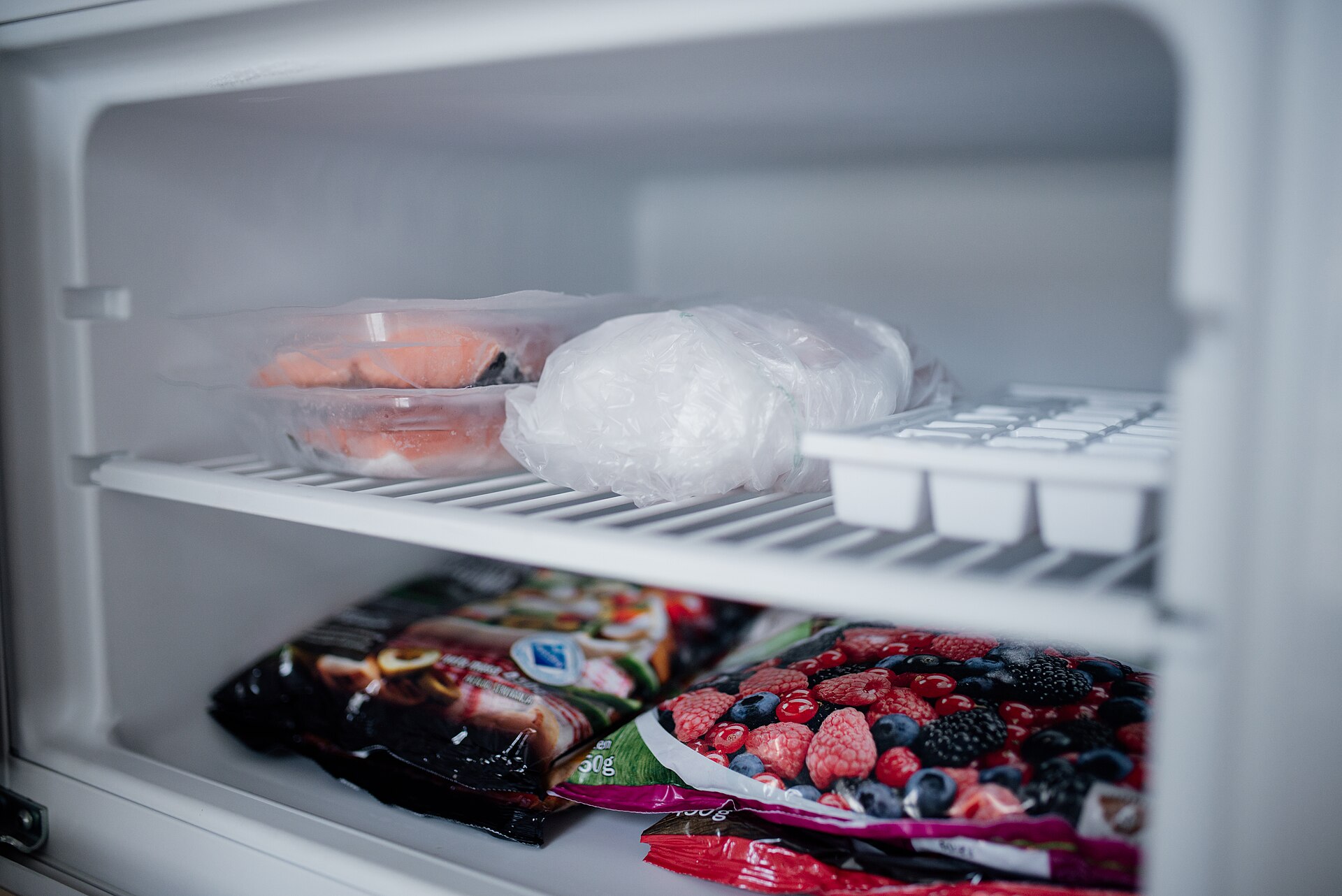
A freezer set to 0F or colder freezes food meaningfully faster than one running at 10 or 15F, which many home freezers do without anyone noticing, particularly if the door gets opened frequently or the unit is packed too full for air to circulate. A freezer thermometer, a small and inexpensive tool, confirms the actual temperature rather than trusting the dial setting.
An overpacked freezer, paradoxically, freezes new items more slowly even though it holds more total food, since restricted air circulation around a newly added container slows how quickly cold air reaches it. Leaving some space for air movement, particularly around anything just added, helps it freeze at closer to the freezer’s actual rated speed.
Real storage windows by category
| Food category | Best quality window | Notes |
|---|---|---|
| Soups and stews | 2 to 3 months | vegetables soften somewhat regardless of freezing speed |
| Cooked meat, sliced or shredded | 2 to 3 months | lean meat holds up better than fatty cuts over time |
| Casseroles | 2 to 3 months | dairy-based sauces can separate slightly on reheat |
| Baked goods, unfrosted | 3 months | freezes and thaws better than most other categories |
| Stock and broth | 4 to 6 months | one of the most freezer-stable items in a kitchen |
| Cooked rice and pasta | 1 to 2 months | texture softens more noticeably than other categories |
These are quality windows, not strict safety cutoffs; food held reliably at 0F or below remains safe well past these numbers, but flavor and texture decline steadily the longer it sits, which is the practical reason to treat these as target windows rather than hard deadlines.
Dishes that should never go in the freezer
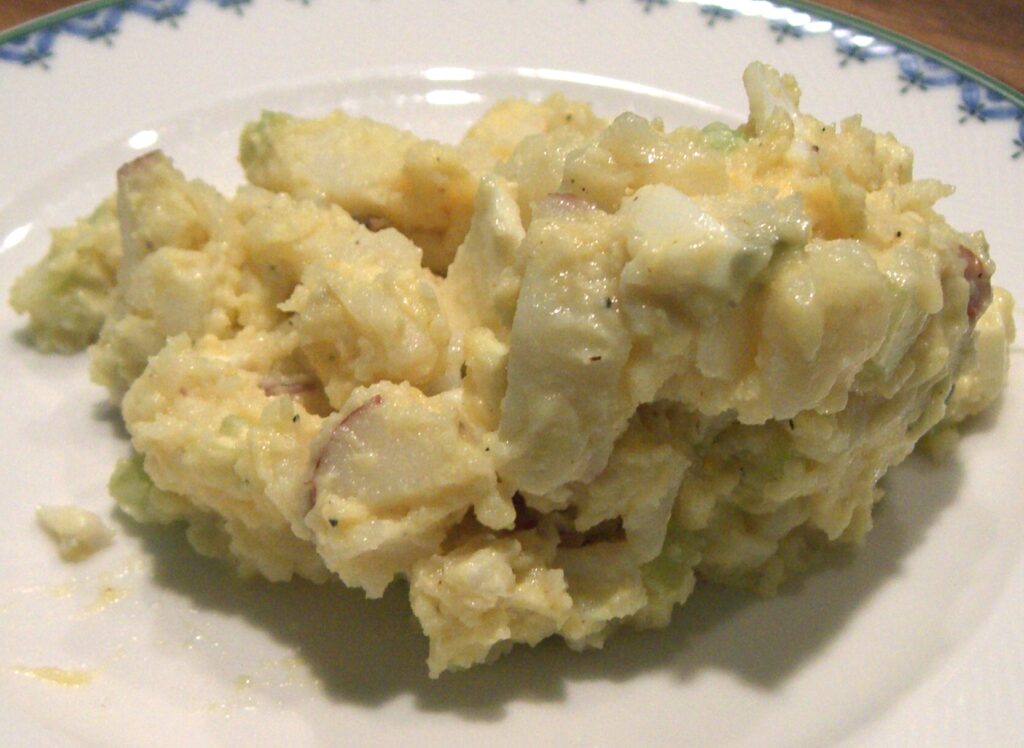
Mayonnaise and other egg-based emulsified sauces break when frozen and thawed, separating into a watery, curdled mess that no amount of stirring fully recombines. Any dish built around a mayonnaise dressing, including most versions of potato or macaroni salad, should be made fresh rather than frozen and thawed.
Dishes with a high proportion of raw, high-water vegetables, particularly lettuce, cucumber, and raw tomato, turn limp and watery once thawed, since the ice crystal damage to their cell structure is especially pronounced in vegetables with such high water content to begin with. Cooked vegetables with lower water content, like a batch-cooked root vegetable side, hold up considerably better.
Fried food loses its crisp texture almost entirely once frozen and reheated, since the moisture that migrates during freezing softens the crust from the inside out in a way reheating cannot fully reverse. It is better eaten fresh or, at most, refrigerated briefly rather than frozen for later.
Labeling and rotation: the part everyone skips
A container without a date written on it becomes a mystery within a month, and the practical result of an unlabeled freezer is food that sits forgotten well past its best-quality window, eventually thrown out unused. A permanent marker and a strip of tape or a label on every container, noting the contents and the freeze date, takes seconds and prevents most freezer waste.
Organizing the freezer so older items sit at the front or top, with newer additions pushed to the back, keeps the rotation moving in the right direction rather than letting new items get used first while older ones age past their best window unnoticed.
Thawing safely once the freezing is done
Frozen cooked food should thaw in the refrigerator, in cold water with the water changed periodically, or directly during reheating, never on the counter at room temperature for an extended period. A large frozen block thawed on the counter can sit in the temperature danger zone for hours before the center is even close to thawed, well past the safe window.
Once thawed, food should be reheated to 165F throughout before eating, and thawed food that will not be eaten within a couple of days should not be refrozen raw; refreezing after full cooking, if the food is being repurposed into a new dish, is generally acceptable, but refreezing the same thawed dish as-is degrades texture further each time.
How to freeze cooked food: a routine that actually works
- Cool food quickly after cooking, within two hours, using a shallow pan or ice bath. Do not let it sit out longer than that.
- Portion into containers or bags no more than two inches deep. Flat bags freeze fastest and stack most efficiently.
- Label every container with contents and the freeze date. This single habit prevents most freezer waste.
- Leave space around new additions rather than packing the freezer solid. Air needs room to circulate for fast freezing.
- Check your freezer’s actual temperature with a thermometer. Confirm it runs at 0F or below.
- Thaw in the refrigerator or during reheating, never on the counter. Reheat to 165F throughout before eating.
A note on freezing in bulk after a large cooking session
A weekend spent batch-cooking several meals at once produces exactly the kind of volume where the shallow-container habit matters most, since a freezer suddenly filled with several deep pots of stew all at once is the scenario most likely to slow the whole unit’s freezing capacity for everything in it, not just the new additions.
Spreading a large cooking session’s output across more containers, thinner rather than deeper, and freezing them in stages rather than all crammed in within the same hour, gives the freezer’s compressor a more manageable load and keeps each portion moving through the freezing point faster than a single overwhelming batch would allow.
None of this requires special equipment beyond containers and a permanent marker. It requires treating freezing speed as the variable that actually determines texture, rather than assuming a freezer is a pause button that treats every container the same way.
Frequently Asked Questions
Can I freeze food in glass containers?
Yes, if the container is specifically freezer-safe glass, left with headspace for expansion, and allowed to cool fully before freezing. Standard glass, or a container filled completely to the top, can crack as the contents expand while freezing.
Does freezing kill bacteria in cooked food?
No, freezing only halts bacterial growth; it does not eliminate bacteria already present. This is why food needs to be handled safely, cooled promptly, and reheated to a safe temperature both before freezing and after thawing.
Why does my frozen soup separate when I reheat it?
Cream-based and dairy-heavy soups are particularly prone to separating after freezing, since the fat and water components can split during the freeze-thaw cycle. Gentle reheating with occasional stirring, or a fresh addition of cream stirred in near the end, usually brings it back together.
Is it safe to freeze food in its original takeout or deli container?
Many thin plastic containers are not designed for freezer temperatures and can crack or leach more readily at very low temperatures. Transferring to a container specifically labeled freezer-safe is the more reliable choice for longer storage.
How can I tell if frozen food has gone bad versus just lost quality?
Freezer burn, showing as grayish-white dry patches, is a quality issue from air exposure, not a safety issue, and affected areas can simply be trimmed away. An off smell or unusual color after thawing and reheating, on the other hand, is a sign the food should be discarded rather than eaten.