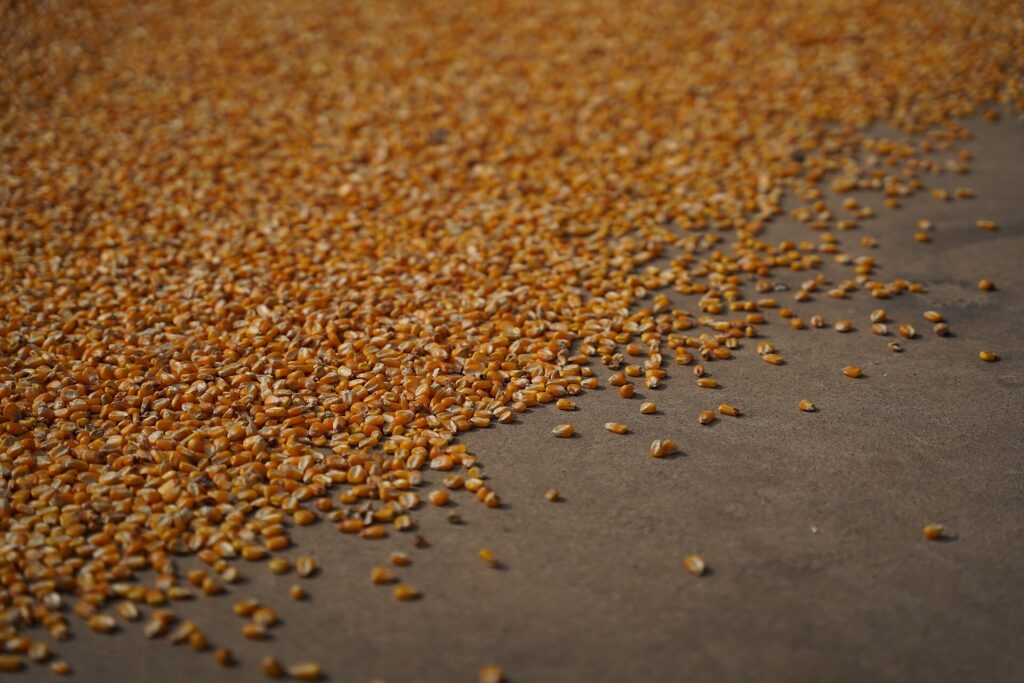
A bag of dried field corn is one of the cheapest things a grocery store sells, and eaten as it comes it is close to inedible. The kernels are armored in a skin that laughs at an hour of boiling, the starch inside stays chalky, and a good part of the nutrition is locked in a form the human gut cannot open.
Ten grams of a white powder fixes all three problems in the same pot. The powder is cal, sold in Mexican markets by the scoop and in canning aisles as pickling lime, and what it does to corn is one of the oldest pieces of applied chemistry in any kitchen. It strips the hull, softens the interior, frees a B vitamin the kernel was holding shut, and alters the starch enough that ground corn will finally behave like a dough.
What follows is the whole sequence in order: the ratio for a kilo, the short cook, the test that ends it, the overnight steep, and the two points where a batch usually goes wrong.
- Corn: 1 kg dried field corn, dent or flint, never sweet corn
- Cal: 10 g food-grade calcium hydroxide, about 1 percent of the dry weight
- Water: 3 liters, in stainless or enamel, never aluminum
- Time at the stove: 15 active minutes, plus 20 to 50 minutes of bare simmer
- Rest: 8 to 14 hours off the heat, covered
- Yield: roughly 1.9 kg of drained nixtamal, about 2.4 kg of masa once ground
- The endpoint: the hull slips under a thumbnail and the core is still faintly chalky
- Do not: boil hard, steep past 16 hours in a warm kitchen, or pour the raw liquid on plants
Sweet corn is the wrong corn
This process is built for mature grain: dent, flint, or the old open-pollinated varieties grown for grinding rather than for eating off the cob. The kernels are dried hard enough to rattle in a bag and the interior is almost entirely starch. Bolita, Conico, Oaxacan Green dent and Floriani flint all behave, and a plain sack of white or yellow field corn from a mill behaves just as well.
Sweet corn is picked immature and bred so the sugars never convert. There is no starchy endosperm to work with, and an alkaline cook turns it into a pale slurry. Popcorn is closer, being a flint, but its skin is unusually thick and it still grinds gritty. Pozole is the other exception: that cook runs past the endpoint described here, until the kernels bloom open, and corn taken that far will not press into tortillas.
Cal is calcium hydroxide, and it goes after the hull first
Cal is slaked lime, calcium hydroxide, and in water it makes a solution somewhere near pH 12. The first thing it reaches is the pericarp, the transparent skin around each kernel. Alkali dissolves the hemicellulose that cements that layer to the grain, and within twenty minutes the hull is hanging on by very little. This is the step that gives the alkaline cook its whole reputation.
Calcium is doing the second job. It migrates into the outer millimeter of the kernel and cross-links with starch and with the pectic material in the cell walls, which is why nixtamalized corn grinds into a dough that holds its shape instead of a wet meal that falls apart. No amount of plain boiling produces that.
Treat the slurry as caustic, because it is. Keep it off skin and out of eyes, do not breathe the dry powder, and rinse anything it touches. Use stainless steel, enamel or unglazed clay. Aluminum is attacked by alkali and will pit and discolor the food, and bare cast iron turns a batch grey.
The niacin was in the kernel the whole time
Maize carries a decent amount of niacin, but most of it is bound up in a complex that human digestion cannot break. Boil the corn, roast it, grind it dry, and that vitamin passes straight through. Alkali cleaves the bond, and the niacin becomes available. The same treatment improves the balance of amino acids that survive to be absorbed, and it leaves behind a substantial amount of calcium that was never in the grain to begin with.
The historical evidence is unusually clear. Where maize traveled without the technique that came with it, populations that leaned on it heavily developed pellagra: skin lesions on sun-exposed areas, digestive collapse, and eventually neurological damage. Southern Europe saw it through the eighteenth and nineteenth centuries; the American South was still fighting it well into the twentieth, until investigators established that the cause was the diet rather than an infection. In Mesoamerica, where the alkaline step was simply how corn was handled, it was not a problem.
How to nixtamalize corn, start to finish
- Sort and rinse the corn. Cover it with cold water in a bowl, swirl, and skim off anything that floats along with the dust and chaff. Drain.
- Weigh the cal at 1 percent of the dry corn. Ten grams per kilo. Slake it in a cup of cold water first, stirring to a thin milk, and add that to the pot rather than dropping powder into hot water.
- Combine with three liters of water per kilo. Stainless or enamel. Stir once; the water clouds and takes on a faint yellow cast.
- Bring it to a boil, then drop the heat immediately. You want a lazy simmer with occasional bubbles, not a rolling boil. Hard agitation abrades the kernels and leaches starch into the liquid.
- Hold that simmer for 20 to 50 minutes, testing from minute 20. The range is wide because variety, kernel size and how long the corn has been in storage all move it.
- Test a kernel in cold water. Fish one out, cool it, and rub it between thumb and forefinger. Stop the cook when the hull slips and the core still reads chalky.
- Kill the heat, cover the pot, and walk away for 8 to 14 hours. Room temperature is correct. Refrigerate if the kitchen is hot or the schedule slips.
- Drain and rinse hard. Into a colander, then under running water, rubbing handfuls between your palms. Three to five changes until the water runs clear and the corn stops feeling slippery.
- Grind while damp, or refrigerate for up to three days. Drained nixtamal keeps well; masa does not keep nearly as long.
Ratios for a kilo, and how they scale
| Dry corn | Cal at 1% | Water | Simmer | Nixtamal out | Masa out | Tortillas at 30 g |
|---|---|---|---|---|---|---|
| 250 g | 2.5 g | 750 ml | 20 to 35 min | about 475 g | about 600 g | about 18 |
| 500 g | 5 g | 1.5 L | 20 to 40 min | about 950 g | about 1.2 kg | about 35 |
| 1 kg | 10 g | 3 L | 25 to 50 min | about 1.9 kg | about 2.4 kg | about 70 |
| 2 kg | 20 g | 6 L | 30 to 55 min | about 3.8 kg | about 4.8 kg | about 140 |
One percent is the middle of the working range, and most kitchens live between 0.8 and 1.5 percent. Old, very hard flint corn tolerates the upper end. Going past two percent shows up as a yellow tint, a slick feel that will not rinse away, and a taste that reads faintly of soap.
The cook is short, and the heat is lower than you think
Twenty to fifty minutes is not long for a dried grain, and that is deliberate. The pot is not trying to cook the corn through. It is trying to loosen the hull and get calcium into the outer layer, and the rest of the softening happens overnight with the burner off.
A rolling boil is the common mistake here. It splits kernels, drives starch into the water, and produces a batch where some grains are blown out and others still hard. Once the pot boils, take it down until the surface barely moves.
The pinch test that ends the cook
Three signals arrive together, and all three should be present before the burner goes off.
The hull slips. Rub a cooled kernel between thumb and forefinger and the transparent skin should come away, ideally in one piece, on most of the kernels you test rather than on the occasional lucky one.
The tip cap releases. That small dark point at the narrow end, where the kernel attached to the cob, should flick off with a thumbnail instead of staying welded on.
The core is still chalky. Bite a kernel in half. The outer millimeter or two should look translucent and give softly; the center should still be opaque, matte and slightly resistant. If the whole kernel is translucent and soft, the cook went too far, and the masa that comes out of it will be gluey and will tear coming off the press.
The overnight steep, and what a long one costs
Turning off the heat does not stop the process. The liquid stays alkaline and stays warm for hours, calcium keeps migrating inward, moisture equalizes through the kernel, and the hull finishes detaching. Skipping this and grinding straight from the pot gives corn that is soft outside and hard in the middle, which grinds unevenly and never forms a cohesive dough.
Eight hours is the practical floor and fourteen is a comfortable ceiling in a normal kitchen. Push past sixteen in a warm room and the corn crosses into mush: the kernels lose definition, the masa turns sticky, and the smell moves from sweet corn toward soap and a faint whiff of ammonia. That flavor does not rinse out.
Rinsing, and how much hull to chase
The steeping liquid, nejayote, is strongly alkaline, cloudy yellow-brown and heavy with dissolved organic matter. Dilute it well before it goes down a drain, keep it away from plants and off a septic system, and do not park it in an aluminum container.
Rinse under running water, working handfuls between your palms so the loosened hulls float off as translucent flakes. Three to five changes is normal, and the reliable indicator is touch: while the kernels feel soapy, free alkali is still on them.
How thoroughly to remove the hull is a choice rather than a rule. For tortillas, take most of it, since leftover pericarp reads as grit and interrupts the surface. For tamales, leaving a little more behind gives body and a coarser, more interesting crumb. For pozole, the tip cap has to come off by hand so the kernel can flower open in the broth. Chasing every last flake produces a paler, softer, blander masa, and it is not worth the twenty extra minutes.
From nixtamal to masa: the grind and the water
The home standard is a hand-cranked corn mill with stone or steel plates, clamped to a counter. A stone metate does it the original way and takes an arm. A wet grinder of the kind used for South Indian batters does an excellent job. A food processor is the fallback: slower, coarser, and better if the nixtamal is well drained and worked in small batches.
Grind damp rather than wet. Pass the corn through once on a coarse setting, then a second time on fine if the mill allows. Water goes in during and after the grind, a spoonful at a time, worked through with your hands until the dough is soft and slightly tacky but not sticky.
Two tests settle the hydration. Press a ball flat between two sheets of plastic: smooth edges mean the water is right, and cracked ragged edges mean it needs more. Then roll a ball in a clean dry palm; it should hold together and leave the hand clean. Let the masa rest twenty to thirty minutes before pressing, which lets the moisture even out.
Fresh masa next to masa harina
| Fresh masa | Masa harina | |
|---|---|---|
| What it is | drained nixtamal ground wet | nixtamal dried and milled to flour |
| To use it | nothing added but water during the grind | rehydrate with roughly 1.3 to 1.5 times its weight in warm water |
| Aroma | strong, sweet, distinctly of lime and corn | flatter, with a toasted note from the drying |
| Tortilla | puffs readily, stays supple as it cools | puffs with a hot comal, stiffens sooner |
| Shelf life | 1 to 2 days refrigerated, months frozen | months in a sealed bag |
| Effort | a day of soaking plus a grind | five minutes and a bowl |
Masa harina is not a fake. It is the same corn through the same chemistry, dried and milled for shelf stability, and it makes perfectly good tortillas for a weeknight plate of tacos. What it loses is aroma, which is volatile and largely gone after the drying.
What a failed batch looks like
Cracked edges in the press. The masa is dry, or the corn was undercooked and never softened through. Work in more water first; if it still cracks, the problem was upstream.
Gluey masa that tears off the plastic. Overcooked, over-steeped, or both. Nothing recovers it for tortillas, but it makes acceptable tamal dough or a thickener for a stew.
A soapy or ammonia smell. Too much cal, or too little rinsing. Rinse again, twice more, and cut the cal on the next batch.
Gritty texture. Either the grind was too coarse or hulls stayed in. Run it through the mill again on a finer setting.
Grey or greenish masa. Usually an iron or aluminum pot. Sometimes a heavy hand with the lime. Change the pot.
Tortillas that refuse to puff. Puffing needs steam trapped between two set faces, which needs a hot surface and adequate moisture. The comal should be hot enough that a drop of water skitters, and the standard three-flip sequence is short, long, short. Street-corn stalls that also sell tortillas run their griddles hotter than most home cooks are comfortable with.
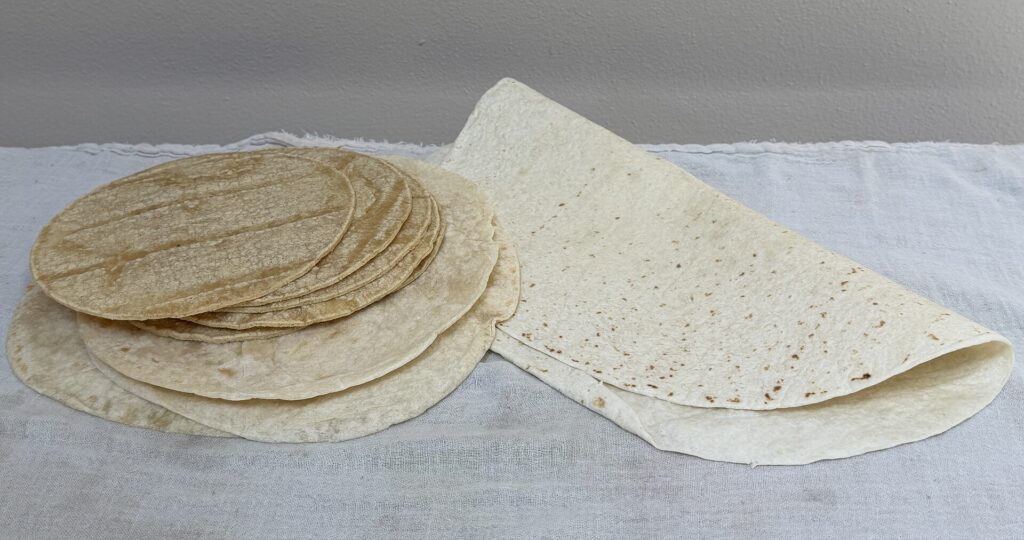
The whole thing costs a bag of corn, a spoonful of lime, and one night of not thinking about it. Once the pinch test is in your fingers, the process stops being a project and turns into something you start on a Tuesday because there is corn in the cupboard. Even the flour-tortilla end of the tradition reads differently once you know what the other side involves.
Frequently Asked Questions
Can I use pickling lime from the canning aisle?
Yes, as long as the label says calcium hydroxide and the product is food grade. That is the same compound sold as cal in Mexican markets. Garden lime is calcium carbonate and will not raise the pH far enough to do anything. Quicklime is calcium oxide, reacts violently with water, and is not a kitchen material.
Is the lime still in the food after rinsing?
The free alkali comes off in the rinse, which is what the slippery feel is telling you. Calcium stays, bound into the corn, and that is the point rather than a side effect: nixtamalized corn carries considerably more calcium than the grain it started as.
How do I know if I used too much cal?
Three signs. The masa reads yellow rather than the natural color of the corn, the kernels stay slippery through several rinses, and the smell drifts toward soap. Drop to one percent of the dry weight on the next batch and it disappears.
Can I shorten the overnight steep?
You can cut it to about four hours with a slightly longer cook, and you will notice the difference. The hull is harder to strip, the moisture has not evened out, and the masa binds less well. The steep is chemistry running slowly, not idle waiting.
Do I have to use a hand mill?
No, but the grinder sets the ceiling on texture. A stone mill or wet grinder gives the smoothest masa, a food processor gives a coarser one that still presses into a decent tortilla, and a blender struggles unless the batch is small and the corn is well drained. Grind twice on the finest setting available before deciding the equipment is the problem.