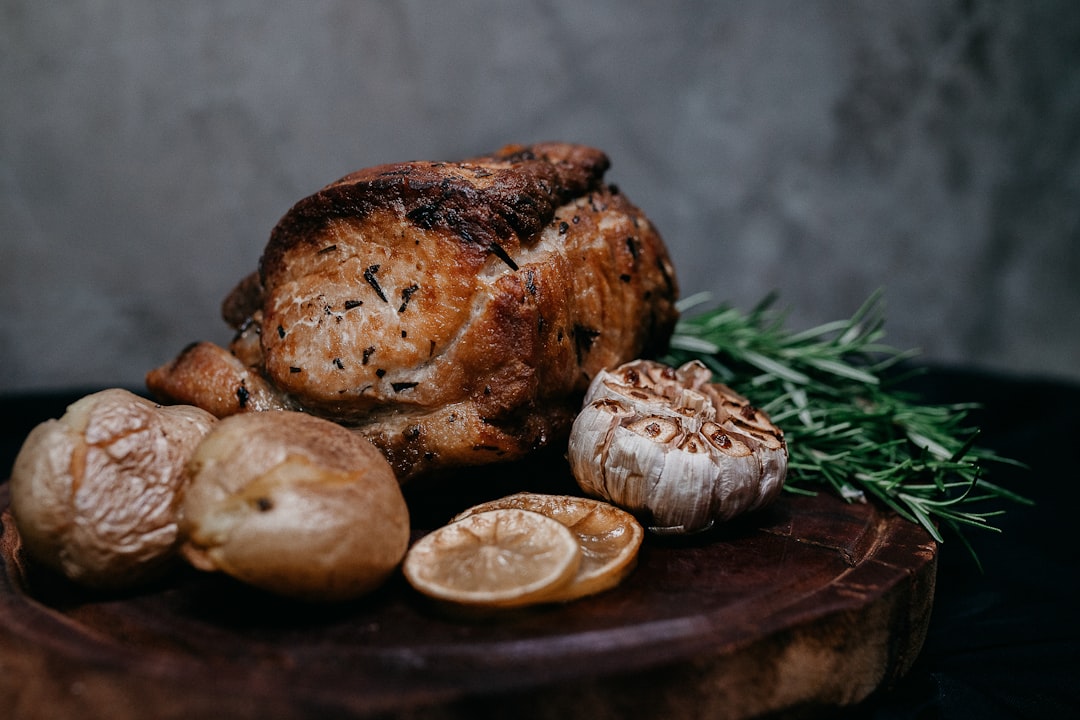
A roast leg of lamb is the kind of dish that commands a dining table. There is nothing subtle about it: a massive joint of meat, its surface burnished and crackling, studded with garlic and herbs, resting in its own juices while the aroma of rosemary fills every corner of the house. It is the traditional centerpiece of Easter dinner across much of Europe and the Mediterranean, and there is a good reason it has held that position for centuries. When done properly, lamb delivers a depth of flavor that beef, pork, and poultry simply cannot match, with a tenderness and richness that reward the patience of slow roasting.
This roast leg of lamb recipe uses a classic approach: stud the meat with garlic and rosemary, sear at high heat to build a crust, then reduce the temperature for a long, gentle roast that produces uniformly pink, succulent meat from edge to center. The red wine jus, built from the pan drippings, is not just a sauce but a concentration of everything good about the roast. If you appreciate the art of cooking large cuts of meat, our cast iron steak applies similar principles of temperature control and resting to a different protein.
Why This Recipe Works
Studding with garlic and rosemary flavors the meat from within. When you insert garlic slivers and rosemary leaves into small incisions in the lamb, you create flavor pockets that perfume the meat as it roasts. The garlic softens and mellows in the oven’s heat, becoming sweet and nutty rather than sharp. The rosemary’s essential oils, which are fat-soluble, dissolve into the lamb fat and distribute throughout the roast. This technique, used by butchers and chefs across the Mediterranean, produces a lamb that is seasoned all the way through, not just on the surface. According to Serious Eats, studding is the single most effective flavoring technique for a large roast.
The two-temperature roasting method maximizes crust and tenderness. Starting at 450 degrees F creates an immediate Maillard reaction on the lamb’s surface, building a flavorful, browned crust in the first 20 minutes. Reducing to 325 degrees F then allows the interior to cook gently and evenly. This approach avoids the common problem of an overcooked exterior and undercooked center that results from roasting at a single high temperature. The initial blast of heat also renders some of the surface fat, creating a crispy exterior.
Resting is essential for lamb’s texture and flavor. Lamb’s proteins, like all meat, contract and squeeze moisture toward the center during cooking. A 20-to-30-minute rest allows these proteins to relax, the juices to redistribute, and the internal temperature to rise by about 10 degrees F through carryover cooking. Cutting into the lamb immediately after roasting results in a dramatic loss of juices onto the cutting board and drier, less flavorful slices. The resting period is also when you make the jus, so no time is wasted.
Building the jus from pan drippings captures concentrated flavor. The fond (browned bits) stuck to the bottom of the roasting pan contains an extraordinary concentration of Maillard reaction products, caramelized sugars, and rendered lamb fat. Deglazing with red wine dissolves these compounds, and the wine’s acidity and tannins complement lamb’s richness. Reducing with stock concentrates the flavors further, and finishing with cold butter (a classical French technique called monter au beurre) adds body, sheen, and a smooth, velvety texture.
Bone-in leg produces better flavor than boneless. The bone acts as a heat conductor, helping the meat nearest it cook more evenly. More importantly, bones contain collagen that slowly melts during roasting, enriching the surrounding meat and the pan drippings with gelatin. This is why bone-in roasts produce better pan sauces: the gelatin provides body and richness that stock alone cannot match. The bone also makes a dramatic presentation, and the meat nearest the bone is traditionally considered the most flavorful portion. According to Bon Appetit, a bone-in leg is the gold standard for holiday roasting.
Recipe Card
| Prep Time | 20 minutes |
| Cook Time | 2 hours |
| Total Time | 2 hours 45 minutes (including resting) |
| Servings | 8 servings |
| Difficulty | Intermediate |
| Cuisine | British |
Ingredients
For the Lamb
- 1 bone-in leg of lamb (6 to 7 pounds / 2.7 to 3.2 kg)
- 8 cloves garlic, each cut into 3 thin slivers (about 24 slivers total)
- 8 sprigs fresh rosemary, leaves stripped and roughly chopped (about 3 tablespoons)
- 3 tablespoons (45ml) extra-virgin olive oil
- 1 tablespoon (15g) Dijon mustard
- 2 teaspoons fine sea salt
- 1 teaspoon freshly ground black pepper
For the Red Wine Jus
- 1 cup (240ml) dry red wine (Cabernet Sauvignon, Merlot, or Cotes du Rhone)
- 1 cup (240ml) beef or lamb stock
- 2 shallots, roughly chopped
- 4 sprigs fresh thyme
- 2 tablespoons (28g) cold unsalted butter, cut into small pieces
- 1 tablespoon all-purpose flour (optional, for a thicker jus)
- Fine sea salt and freshly ground black pepper to taste
- Flaky sea salt for finishing
Step-by-Step Instructions
- Temper the lamb. Remove the leg of lamb from the refrigerator 1 to 2 hours before roasting. A room-temperature roast cooks more evenly than a cold one, reducing the risk of an overcooked exterior and raw center. Pat the lamb completely dry with paper towels. Drying the surface is critical for browning: moisture on the surface creates steam, which prevents the Maillard reaction.
- Stud with garlic and rosemary. Using a small, sharp paring knife, make approximately 24 small, deep incisions (about 1 inch deep) all over the surface of the lamb, spacing them evenly across the top and sides. Into each incision, push a garlic sliver and a pinch of chopped rosemary leaves, pressing them below the surface. The garlic and rosemary will slowly perfume the meat from within as it roasts. In a small bowl, combine the olive oil, Dijon mustard, salt, and pepper. Rub this mixture over the entire surface of the lamb, pressing it into every crevice.
- Prepare the roasting pan. Preheat your oven to 450 degrees F (232 degrees C) with a rack in the lower third. Scatter the chopped shallots and thyme sprigs in the bottom of a large roasting pan. Place a roasting rack over them (the vegetables will flavor the pan drippings while the rack keeps the lamb elevated for even air circulation). Set the lamb on the rack, fat side up.
- Sear at high heat. Roast at 450 degrees F for 20 minutes. The high temperature creates an immediate, dramatic crust on the lamb’s surface. The kitchen will smell extraordinary. After 20 minutes, the surface should be visibly browned and the fat will have begun to render and crackle.
- Slow-roast to desired doneness. Reduce the oven temperature to 325 degrees F (163 degrees C). Continue roasting, calculating approximately 15 minutes per pound for medium-rare (130 degrees F internal). For a 7-pound leg, this is approximately 1 hour 30 minutes to 1 hour 45 minutes after reducing the heat. Begin checking the internal temperature with an instant-read thermometer 30 minutes before the estimated time, inserting it into the thickest part of the meat without touching the bone. Target temperatures: 125 degrees F for rare, 130 degrees F for medium-rare, 140 degrees F for medium, 155 degrees F for well-done. Medium-rare is strongly recommended for optimal flavor and tenderness.
- Rest the lamb. Transfer the lamb to a cutting board with a channel (to catch juices) and tent loosely with aluminum foil. Rest for 20 to 30 minutes. The internal temperature will rise approximately 10 degrees F during this time (carryover cooking). A properly rested lamb will release very little juice when carved, because the relaxed proteins reabsorb and hold the moisture. Do not skip this step.
- Make the red wine jus. While the lamb rests, place the roasting pan (with the shallots and thyme still in it) directly over one or two burners set to medium heat. If the pan drippings have too much fat, spoon off all but about 2 tablespoons. If using flour for a slightly thicker jus, sprinkle it over the drippings and stir for 1 minute. Add the red wine and bring to a boil, using a wooden spoon to scrape up all the browned bits (fond) from the bottom of the pan. These browned bits are where the deepest flavors live. Simmer the wine for 3 to 4 minutes until reduced by about half. Add the stock and simmer for 6 to 8 minutes more until the jus is slightly thickened and flavorful. Strain through a fine-mesh sieve into a small saucepan, pressing on the solids. Return to low heat and whisk in the cold butter pieces, one at a time, until the jus is glossy and slightly thickened. Season with salt and pepper.
- Carve and serve. To carve a bone-in leg of lamb, hold the shank bone with a kitchen towel. Carve thin slices perpendicular to the bone, working from the thicker end toward the shank. When you reach the bone, turn the leg and carve the other side. Arrange the slices on a warm platter, spoon the red wine jus over and around the lamb, and finish with a sprinkle of flaky sea salt and a few fresh rosemary leaves. Serve with roasted potatoes, steamed spring vegetables, or our mushroom risotto. The pan drippings-based jus also pairs beautifully with the robust flavors found in our beef bourguignon.
Substitution Guide
| Original Ingredient | Substitution | Notes |
|---|---|---|
| Bone-in leg of lamb | Boneless leg of lamb or lamb shoulder | Boneless cooks faster (12 minutes per pound) and is easier to carve. Shoulder has more fat and connective tissue; braise rather than roast for best results. |
| Fresh rosemary | Fresh thyme, oregano, or herbes de Provence | Thyme is milder and pairs equally well with lamb. Herbes de Provence (a blend including lavender) adds Provencal character. Use the same quantity. |
| Red wine (for jus) | Pomegranate juice or beef stock with red wine vinegar | Pomegranate juice adds fruity acidity. For non-alcoholic: use 1 cup stock plus 2 tablespoons red wine vinegar. The jus will be lighter but still flavorful. |
| Dijon mustard | Anchovy paste or miso paste | Both add umami depth. Anchovy paste is a traditional Mediterranean pairing with lamb. Miso offers a similar salty, fermented complexity. |
| Butter (for jus) | Olive oil or omit | Olive oil produces a thinner, less rich jus but keeps it dairy-free. Alternatively, simply reduce the jus further without butter for a more concentrated sauce. |
| Beef/lamb stock | Chicken stock | Chicken stock is lighter but readily available. For the most flavorful jus, use a combination of stock and any juices that collect on the cutting board during resting. |
Storage and Reheating Instructions
Refrigerator: Slice remaining lamb and store in an airtight container with any leftover jus poured over the slices (this prevents them from drying out). Properly stored, roast lamb keeps for 4 to 5 days in the refrigerator. Cold roast lamb is excellent in sandwiches with arugula, mustard, and pickled red onion.
Freezer: Slice the lamb, arrange in a single layer in a freezer bag with jus, remove excess air, and freeze for up to 3 months. Thaw overnight in the refrigerator. The bone can be frozen separately for making lamb stock: simmer with vegetables and water for 3 to 4 hours for a rich, gelatinous base.
Reheating: Place sliced lamb in a baking dish, spoon jus or stock over the top, cover tightly with foil, and warm at 275 degrees F for 10 to 15 minutes. The low temperature and added liquid prevent the lamb from drying out. For individual slices, a skillet over medium-low heat with a tablespoon of jus works well. Avoid microwaving, which tends to make lamb tough and can produce an unpleasant texture.
Nutrition Facts (Per Serving, Approximately 6 oz Meat with Jus)
| Nutrient | Amount | % Daily Value |
|---|---|---|
| Calories | 410 kcal | 21% |
| Total Fat | 22g | 28% |
| Saturated Fat | 9g | 45% |
| Cholesterol | 140mg | 47% |
| Sodium | 380mg | 17% |
| Total Carbohydrates | 4g | 1% |
| Dietary Fiber | 0g | 0% |
| Sugars | 1g | — |
| Protein | 44g | 88% |
Nutrition values are estimates based on USDA FoodData Central data for bone-in leg of lamb. Actual values may vary depending on the specific cut, amount of visible fat consumed, and serving size. Red wine jus contributes minimal additional calories.
The Art of Lamb Roasting: Temperature Guide
Understanding lamb doneness. Unlike chicken or pork, which are generally cooked to a single target temperature, lamb is best enjoyed at a range of doneness levels. Rare (120-125 degrees F) is deeply red and very tender, medium-rare (130-135 degrees F) is rosy pink with excellent juiciness, and medium (140-145 degrees F) retains some pink and is still tender. Beyond medium, lamb begins to lose moisture rapidly and the distinctive flavor becomes muted. For a leg of lamb, medium-rare is the sweet spot that showcases the meat’s natural character.
Invest in a leave-in thermometer. A digital probe thermometer that remains in the meat during roasting and alerts you when the target temperature is reached is the single best investment for roasting large cuts. It eliminates guesswork and prevents the need to repeatedly open the oven door (which drops the temperature and extends cooking time). Insert the probe into the thickest part of the leg, not touching the bone. The bone conducts heat and will give a falsely high reading.
Plan for carryover cooking. When you remove the lamb from the oven, the exterior is significantly hotter than the center. This heat continues to migrate inward during resting, raising the internal temperature by 8 to 12 degrees F. For a target of 140 degrees F (medium-rare, after resting), pull the lamb at 128 to 130 degrees F. This is the professional approach to large-format roasting and is the reason that experienced cooks always pull their roasts “early” by conventional standards.
Frequently Asked Questions
How do I choose a good leg of lamb?
Look for a leg with a thin, even layer of fat covering the surface (the fat cap), which bastes the meat during roasting and contributes to a crispy exterior. The meat should be a deep pink-red color, not gray or brown. Domestic lamb (American or Australian) tends to be milder in flavor than imported New Zealand lamb, which has a slightly more pronounced “lamby” taste. For this recipe, a 6-to-7-pound bone-in leg is ideal for 8 servings. Ask your butcher to trim any excess fat but leave a thin layer intact.
Can I use a boneless leg of lamb instead?
Yes. A boneless leg cooks faster (approximately 12 minutes per pound at 325 degrees F after the initial sear), so reduce the total roasting time accordingly. The boneless leg can be rolled and tied with kitchen twine for more even cooking. While it lacks the drama of a bone-in presentation, it is significantly easier to carve. The bone does add flavor to the pan drippings, so if using boneless, consider adding extra stock to the jus for depth.
What side dishes go best with roast lamb?
Classic accompaniments include roasted potatoes (especially crispy roasted in lamb fat), steamed or roasted spring vegetables (asparagus, peas, baby carrots), mint sauce or mint jelly, and a simple green salad. Yorkshire puddings, while traditionally British and associated with beef, are also excellent with lamb and its jus. For a Mediterranean approach, serve with roasted root vegetables, hummus, and warm pita. The red wine jus pairs especially well with creamy mashed potatoes.
Why does my lamb taste gamey?
Lamb’s characteristic flavor comes from branched-chain fatty acids in the fat, particularly 4-methyloctanoic acid. Older lamb (mutton) has a stronger flavor than young spring lamb. If you find lamb too gamey, try American-raised lamb, which is generally milder due to a grain-supplemented diet. Marinating in acidic ingredients (lemon juice, wine, yogurt) can also temper the flavor. Finally, trimming excess fat before cooking reduces the intensity, as the gamey compounds are concentrated in the fat rather than the lean meat.
How long does roast lamb take per pound?
At 325 degrees F (after an initial 20-minute sear at 450 degrees F), a bone-in leg of lamb takes approximately 15 minutes per pound for medium-rare. A 7-pound leg will take roughly 1 hour 45 minutes of slow roasting plus the 20-minute sear, for a total oven time of about 2 hours 5 minutes. However, these are guidelines only. The most reliable method is using an instant-read thermometer: pull the lamb when it reaches 128 to 130 degrees F for a final rested temperature of 138 to 140 degrees F (medium-rare).
Disclaimer
Nutritional information is provided as a general estimate and should not be considered a substitute for professional dietary advice. Values are calculated using USDA FoodData Central data and may vary depending on specific brands, ingredient sizes, and preparation methods. This recipe contains lamb and dairy (butter in the jus). If you have food allergies or dietary restrictions, consult a healthcare professional before preparing this recipe. This article contains links to external websites for informational purposes; cookingzone.org is not responsible for the content of external sites.

Rachel Summers
Rachel grew up in a Pacific Northwest kitchen, learning Sunday roasts from her mother and pie crust from a grandmother who never wrote a recipe down. CookingZone began as a way to save her family's cooking before it was forgotten, and grew when her cousins started sending in their own. Her work covers foundational American, Italian, French, and Mexican recipes, with an emphasis on weekend baking, comfort food, and the techniques that span both European and American home kitchens.
Please note: Nutritional estimates in our recipes are derived from the USDA FoodData Central database and may vary based on specific brands and ingredient sizes. If you have food allergies, dietary restrictions, or medical conditions, consult a registered dietitian or healthcare provider before preparing this recipe. Always follow safe food-handling guidelines, including proper cooking temperatures for meat, poultry, fish, and eggs. Nothing in this article should be interpreted as medical, nutritional, or dietary advice.