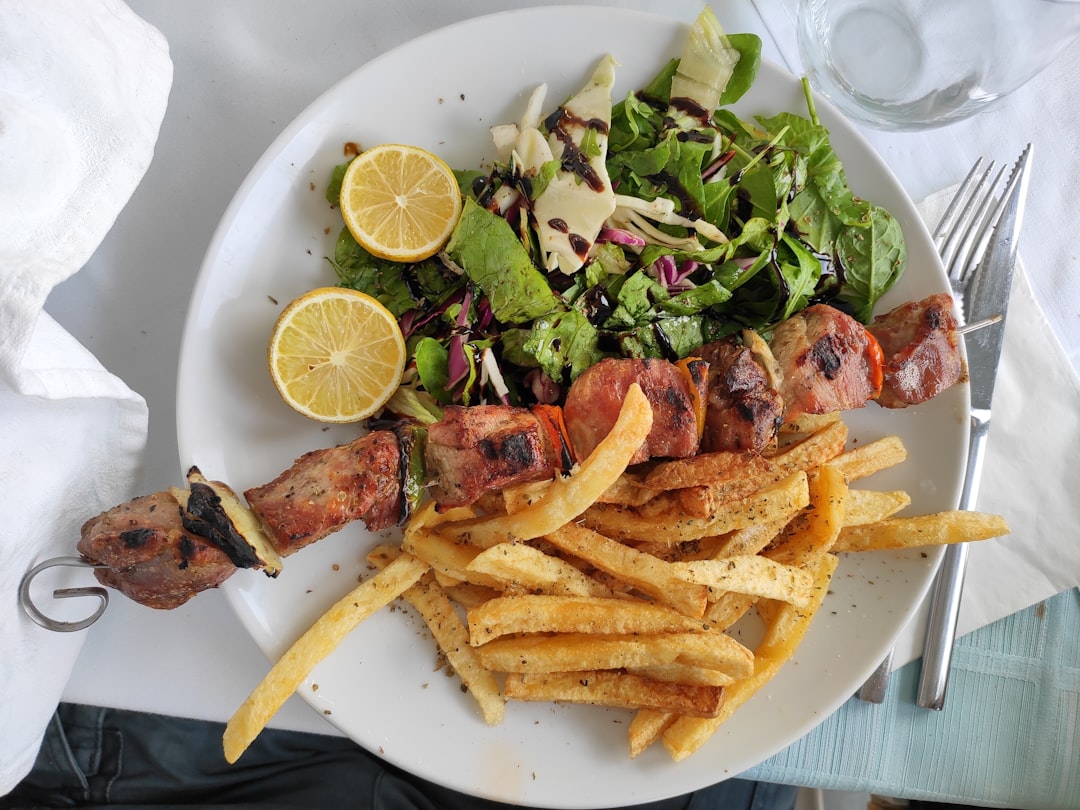
Souvlaki is Greek fast food at its finest. Cubes of meat, marinated in olive oil, lemon, and oregano, threaded onto skewers, grilled until charred on the outside and juicy within, then wrapped in warm pita with a generous dollop of cool, garlicky tzatziki. It is the kind of food that tastes like summer regardless of the calendar. This chicken souvlaki recipe goes beyond the skewers themselves to give you the complete package: an authentic Greek marinade, a quick two-ingredient pita bread that needs no yeast and no rising time, and a proper tzatziki sauce that balances creamy yogurt with bright cucumber and lemon.
The choice of chicken thighs over breasts is not arbitrary. Thigh meat is more forgiving on the grill, staying moist even if you overshoot the cooking time by a minute or two. The slightly higher fat content carries flavor more effectively than lean breast meat, and the texture is more succulent when charred over high heat. The lemon-oregano marinade, which is as simple as it gets, breaks down surface proteins for better browning while infusing the meat with the unmistakable taste of Greece. Pair these skewers with our Greek salad with grilled halloumi for a complete Mediterranean spread.
Why This Recipe Works
Chicken thighs are superior to breasts for grilling. Boneless, skinless chicken thighs contain approximately 5 to 7 grams of fat per serving, compared to 3 grams in breasts. This extra fat provides a buffer against the drying effects of direct grill heat. Thigh meat also has more connective tissue (collagen), which softens during cooking and contributes to a juicier, more succulent texture. On a hot grill, where temperatures can exceed 500 degrees F, this difference matters enormously. According to Serious Eats, chicken thighs are the traditional and preferred cut for authentic Greek souvlaki.
Acid in the marinade tenderizes and flavors simultaneously. The lemon juice in the marinade has a pH of about 2, which denatures surface proteins on the chicken, creating a slightly tender exterior that browns more effectively on the grill. However, the acid does not penetrate deeply, which is why the marinade works best on cut pieces (more surface area) rather than whole breasts. The olive oil in the marinade carries fat-soluble flavor compounds from the oregano and garlic into the meat, while also promoting better heat transfer during grilling.
Yogurt-based pita dough is the fastest bread you can make. Traditional yeasted pita requires rising time, proofing, and careful oven management. This shortcut version uses Greek yogurt as both a moisture source and a tenderizer. The lactic acid in the yogurt weakens gluten strands, producing a soft, pliable pita in minutes. Combined with a small amount of baking powder for lift, the dough can go from mixing bowl to hot skillet in under 10 minutes. The result puffs slightly in the pan and is soft enough to wrap around the souvlaki.
Proper tzatziki requires draining the cucumber. A cucumber is approximately 96% water. If you simply grate it into yogurt, the tzatziki will be watery and thin within minutes. Squeezing the grated cucumber in a clean kitchen towel until almost dry removes the excess water, allowing the yogurt to maintain its thick, creamy consistency. This step is non-negotiable for a tzatziki that holds up on a warm pita without turning into a puddle.
Charring on the grill creates the Maillard reaction and caramelization. The high heat of the grill triggers the Maillard reaction on the chicken’s surface, producing hundreds of complex flavor compounds that contribute the characteristic smoky, savory, slightly sweet taste of grilled meat. The sugars in the marinade (natural sugars in the lemon juice and trace sugars in the paprika) caramelize at these temperatures, adding another layer of flavor complexity. This is why grilled souvlaki tastes fundamentally different from oven-baked or pan-seared versions.
Recipe Card
| Prep Time | 30 minutes (plus marinating) |
| Cook Time | 20 minutes |
| Total Time | 1 hour (active) |
| Servings | 4 servings (8 skewers) |
| Difficulty | Easy to Intermediate |
| Cuisine | Greek |
Ingredients
For the Chicken Marinade
- 2 pounds (900g) boneless, skinless chicken thighs, cut into 1 1/2-inch cubes
- 1/4 cup (60ml) extra-virgin olive oil
- 3 tablespoons (45ml) fresh lemon juice (about 1 large lemon)
- 4 cloves garlic, minced or pressed
- 1 tablespoon dried Greek oregano (or regular dried oregano)
- 1 teaspoon sweet paprika
- 1/2 teaspoon fine sea salt
- 1/4 teaspoon freshly ground black pepper
For the Tzatziki Sauce
- 1 cup (240g) full-fat Greek yogurt
- 1 English cucumber (or 2 Persian cucumbers), grated on the large holes of a box grater and squeezed dry
- 2 cloves garlic, finely grated on a microplane
- 1 tablespoon (15ml) extra-virgin olive oil
- 1 tablespoon (15ml) fresh lemon juice
- 1 tablespoon chopped fresh dill
- 1/2 teaspoon fine sea salt
For the Quick Pita Bread
- 2 cups (250g) all-purpose flour, plus more for rolling
- 1 teaspoon baking powder
- 1/2 teaspoon fine sea salt
- 3/4 cup (180g) full-fat Greek yogurt
- 2 tablespoons (30ml) olive oil
For Serving
- Sliced ripe tomatoes
- Thinly sliced red onion
- Fresh flat-leaf parsley and dill
- Lemon wedges
- Crumbled feta cheese (optional)
Step-by-Step Instructions
- Marinate the chicken. In a large bowl, whisk together the olive oil, lemon juice, minced garlic, oregano, paprika, salt, and black pepper. Add the cubed chicken thighs and toss thoroughly to coat every piece. Cover with plastic wrap and refrigerate for a minimum of 30 minutes and up to 8 hours. If marinating longer than 2 hours, the lemon juice will begin to “cook” the surface slightly (similar to ceviche), which actually enhances the final texture by creating a slightly firmer exterior that chars beautifully on the grill.
- Make the tzatziki. Grate the cucumber on the large holes of a box grater. Place the grated cucumber in a clean kitchen towel or several layers of cheesecloth. Squeeze firmly over the sink, wringing out as much liquid as possible. You should remove about 1/4 cup of water. Transfer the squeezed cucumber to a bowl and add the Greek yogurt, finely grated garlic, olive oil, lemon juice, dill, and salt. Stir to combine. Taste and adjust salt and lemon juice. Cover and refrigerate. The tzatziki improves after 30 minutes as the flavors meld.
- Make the pita dough. In a medium bowl, whisk together the flour, baking powder, and salt. Add the Greek yogurt and olive oil. Stir with a fork until a shaggy dough forms. Turn onto a lightly floured surface and knead for 2 minutes until smooth and slightly tacky. The dough should be soft and pliable, not sticky. If too sticky, add flour a tablespoon at a time. Divide into 8 equal pieces (about 50 grams each). Roll each piece into a ball, then roll with a rolling pin into a thin circle, about 6 inches in diameter and 1/8 inch thick.
- Cook the pita. Heat a cast iron skillet or griddle over medium-high heat until very hot (a drop of water should evaporate immediately on contact). Cook each pita for about 2 minutes on the first side, until the bottom develops dark spots and the top begins to bubble and puff. Flip and cook 1 to 2 minutes on the second side. Stack the finished pitas and wrap in a clean kitchen towel to keep them warm and soft. The residual steam trapped in the towel keeps them pliable.
- Grill the souvlaki. If using wooden skewers, soak them in water for 30 minutes before threading. Thread the marinated chicken pieces onto 8 skewers, leaving a small gap between each piece for even cooking. Preheat the grill (or a grill pan) to medium-high heat, about 400 to 450 degrees F. Oil the grate with a paper towel dipped in vegetable oil. Grill the skewers for 10 to 12 minutes total, turning every 3 minutes to develop char on all sides. The chicken is done when an instant-read thermometer inserted into the largest piece reads 165 degrees F and the exterior is deeply charred with visible grill marks.
- Assemble and serve. Lay a warm pita on each plate. Slide the chicken off the skewers onto the pita. Top with a generous spoonful of tzatziki, sliced tomatoes, red onion, fresh herbs, and crumbled feta if desired. Squeeze a lemon wedge over everything. Fold and eat with your hands, which is the proper and most satisfying method. For a different but equally satisfying handheld meal, try our shrimp tacos. The marinating and grilling principles used here apply beautifully to our chicken tikka masala as well.
Substitution Guide
| Original Ingredient | Substitution | Notes |
|---|---|---|
| Chicken thighs | Chicken breast, pork tenderloin, or lamb shoulder | Breast cooks faster; reduce grill time by 2-3 minutes. Pork tenderloin makes excellent souvlaki with a similar marinade. Lamb is traditional for Greek souvlaki. |
| Greek yogurt (tzatziki) | Sour cream or labneh | Sour cream is tangier and slightly thinner. Labneh (strained yogurt) is thicker and produces a more luxurious tzatziki. Coconut yogurt works for dairy-free. |
| Fresh dill | Fresh mint or flat-leaf parsley | Mint adds a cooling freshness. Parsley is milder. A combination of all three herbs is traditional in many Greek households. |
| Dried oregano | Fresh oregano (use 3 tablespoons) or dried thyme | Fresh oregano is more perfumed. Dried thyme offers a similar Mediterranean herbal character. Greek oregano (rigani) is the most authentic choice. |
| All-purpose flour (pita) | Whole wheat flour or 1:1 GF flour blend | Whole wheat produces a nuttier, denser pita. Use half AP and half whole wheat for balance. GF blends need an extra tablespoon of yogurt for hydration. |
| Grill | Grill pan, broiler, or cast iron skillet | A grill pan produces grill marks and good char. The broiler works well at 6 inches from heat. A hot cast iron skillet will sear the chicken beautifully. |
Storage and Reheating Instructions
Refrigerator: Store grilled chicken, tzatziki, and pita separately in airtight containers. The chicken keeps for 3 to 4 days, the tzatziki for up to 5 days, and the pita for 2 to 3 days. Storing them separately prevents the pita from becoming soggy.
Freezer: Grilled chicken freezes well for up to 2 months. Cool completely, then store in freezer bags with excess air removed. The pita also freezes beautifully, stacked with parchment paper between each piece, for up to 3 months. Tzatziki does not freeze well due to the yogurt and cucumber.
Reheating: Reheat chicken in a 350-degree F oven for 8 to 10 minutes or in a skillet over medium heat with a splash of water to prevent drying. Refresh pita in a hot dry skillet for 30 seconds per side. Tzatziki should be served cold or at room temperature; do not heat it.
Nutrition Facts (Per Serving, 2 Skewers with Pita and Tzatziki)
| Nutrient | Amount | % Daily Value |
|---|---|---|
| Calories | 520 kcal | 26% |
| Total Fat | 22g | 28% |
| Saturated Fat | 5g | 25% |
| Cholesterol | 120mg | 40% |
| Sodium | 580mg | 25% |
| Total Carbohydrates | 38g | 14% |
| Dietary Fiber | 3g | 11% |
| Sugars | 4g | — |
| Protein | 42g | 84% |
Nutrition values are estimates based on USDA FoodData Central data for chicken thighs, Greek yogurt, and all-purpose flour. Actual values may vary depending on specific brands, chicken thigh sizes, and the amount of tzatziki used.
Building the Perfect Souvlaki Platter
Think beyond the basic wrap. While a souvlaki wrapped in pita is the quintessential presentation, consider serving the components on a large platter for a build-your-own dinner. Arrange the grilled skewers on one side, the warm pita stacked in a towel, a bowl of tzatziki, sliced tomatoes, thinly sliced red onion, a pile of fresh herbs, crumbled feta, and lemon wedges. This communal presentation is how souvlaki is enjoyed in Greek homes and creates an interactive dining experience that guests remember.
The oregano matters. Greek oregano (rigani) is different from the oregano commonly sold in American supermarkets. It has a more pungent, slightly bitter, and deeply aromatic character. If you can find dried Greek oregano (often sold at Mediterranean specialty stores or online), it will make a noticeable difference in the authenticity of the marinade. The standard Italian/Mexican oregano works well but produces a subtly different flavor profile.
Grilling over charcoal versus gas. If you have access to a charcoal grill, it is worth the extra effort for souvlaki. The direct exposure to burning charcoal produces a smokiness that gas grills cannot replicate. The fat that drips from the chicken vaporizes on the coals and creates aromatic smoke that infuses the meat. If using gas, adding wood chips in a smoker box approximates the effect. According to Bon Appetit, the char and smoke from a real fire is what makes street souvlaki in Athens taste so exceptional.
Frequently Asked Questions
Can I make souvlaki in the oven?
Yes. Preheat your oven to 425 degrees F with a rack in the upper third. Place the skewers on a wire rack set over a foil-lined baking sheet. Roast for 12 to 15 minutes, then switch to the broiler for 2 to 3 minutes to develop char on the surface. The result lacks the smokiness of a real grill but the flavor from the marinade still shines through. You can also thread the chicken onto skewers and cook in a blazing-hot cast iron grill pan on the stovetop, which produces excellent grill marks and char.
How far in advance can I make the components?
The chicken can marinate for up to 8 hours. The tzatziki actually improves with time and can be made up to 2 days ahead (add the garlic just before serving if you prefer milder garlic flavor). The pita dough can be made and divided into balls up to 4 hours ahead, covered with a damp towel at room temperature. Roll and cook the pita just before serving for the best texture, though they can be cooked up to 2 hours ahead and reheated in a hot skillet.
What is the difference between souvlaki and gyro?
Souvlaki refers to small pieces of meat grilled on skewers. Gyro (pronounced “YEE-roh”) refers to a large cone of seasoned, compressed meat that rotates on a vertical spit and is shaved off in thin slices. Both are typically served in pita with tzatziki and vegetables, but the preparation and texture are quite different. Souvlaki has a charred, grilled character with distinct cubes of meat, while gyro is smooth, thinly sliced, and more processed. In Greece, souvlaki is considered the more homestyle, taverna-style preparation.
Why is my tzatziki watery after sitting?
Cucumber continues to release water over time, even after squeezing. For the thickest tzatziki, use a very thorough squeezing technique: place the grated cucumber in a fine-mesh sieve or clean kitchen towel and press firmly, wringing out every possible drop. You should extract about 1/4 cup of liquid. Also, using full-fat Greek yogurt (which has been strained of whey) produces a thicker base than regular yogurt. If the tzatziki thins over time, simply drain off any accumulated liquid before serving.
Can I use store-bought pita instead of making my own?
Absolutely. Store-bought pita works fine, though the homemade version is notably softer, warmer, and more flavorful. If using store-bought, warm the pita briefly on the grill (30 seconds per side) or in a dry skillet to make it pliable. Wrapping warmed pitas in a kitchen towel keeps them soft. The homemade pita in this recipe takes about 20 minutes from start to finish and requires no yeast or rising time, so if you have not tried it, it is worth the effort at least once.
Disclaimer
Nutritional information is provided as a general estimate and should not be considered a substitute for professional dietary advice. Values are calculated using USDA FoodData Central data and may vary depending on specific brands, ingredient sizes, and preparation methods. This recipe contains wheat, dairy, and poultry. If you have food allergies or dietary restrictions, consult a healthcare professional before preparing this recipe. This article contains links to external websites for informational purposes; cookingzone.org is not responsible for the content of external sites.

Tom Nakamura
Tom learned to cook from his obaachan during summers in Japan - pickling daikon at the kitchen table, watching her stir miso into broth without ever measuring. Later, family trips with cousins took him through markets in Bangkok, Shanghai, and Hanoi, and the food stuck with him. His writing focuses on making authentic Asian techniques accessible to home cooks without diluting the technique or the culture that defines them. He handles Chinese, Japanese, Korean, Thai, Vietnamese, Indian, and Middle Eastern recipes at the publication.
Please note: Nutritional estimates in our recipes are derived from the USDA FoodData Central database and may vary based on specific brands and ingredient sizes. If you have food allergies, dietary restrictions, or medical conditions, consult a registered dietitian or healthcare provider before preparing this recipe. Always follow safe food-handling guidelines, including proper cooking temperatures for meat, poultry, fish, and eggs. Nothing in this article should be interpreted as medical, nutritional, or dietary advice.