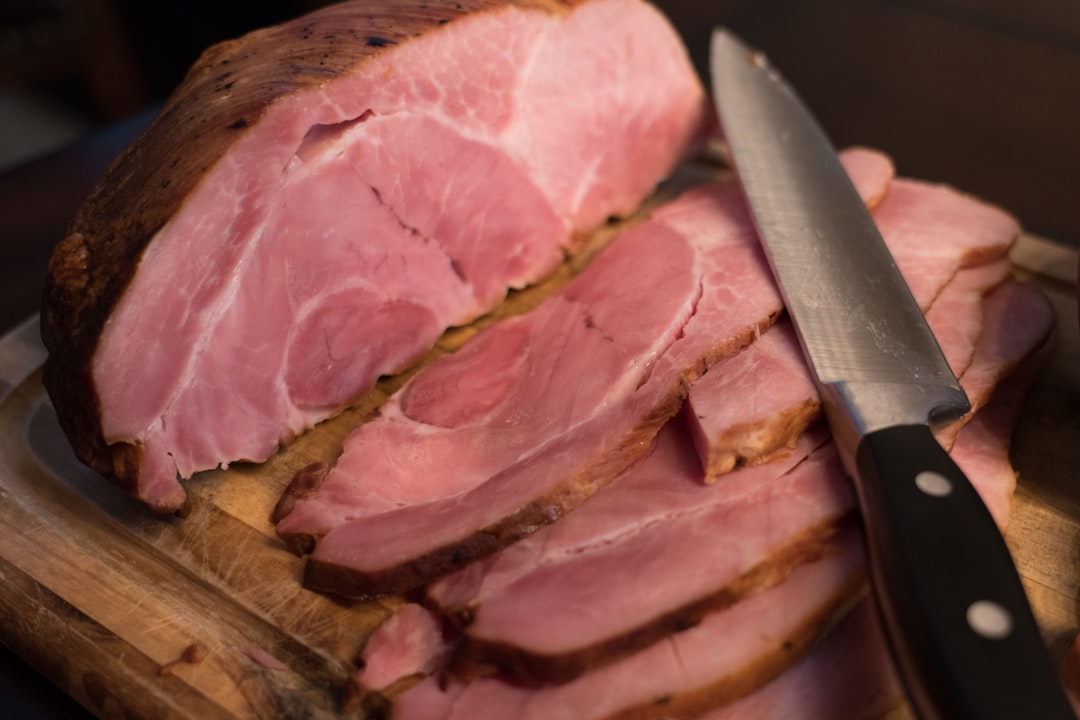
A properly glazed ham is one of those dishes that manages to be both effortless and spectacular. The ham itself is already cooked when you buy it, so your real job is to build a lacquered, caramelized exterior that cracks when you slice into it, revealing juicy, smoky meat underneath. This honey glazed ham recipe uses a combination of honey, dark brown sugar, Dijon mustard, and warm spices to create a glaze that caramelizes into a shatteringly crisp shell without burning.
The technique matters more than most people realize. Scoring the surface in a diamond pattern creates channels for the glaze to seep into, dramatically increasing the ratio of sticky-sweet crust to meat. Studding with whole cloves is optional but traditional, adding a subtle aromatic warmth that works beautifully with the honey. Slow roasting at a moderate temperature keeps the interior moist, then a final blast of high heat transforms the glaze into something approaching candy. If you enjoy building impressive centerpiece dishes, our French onion soup uses a similar patient approach to developing deep, complex flavors.
Why This Recipe Works
Scoring creates maximum glaze adhesion. When you cut a diamond pattern into the fat cap of the ham, you accomplish two things. First, you increase the surface area dramatically, giving the glaze far more territory to cling to. Second, the cuts allow the glaze to penetrate below the surface, so every slice has caramelized edges rather than just the exterior. The depth matters: too shallow and the glaze sits on top; too deep and the fat renders away, leaving dry meat. A quarter inch is the sweet spot.
Honey and brown sugar create a two-stage caramelization. The sugars in honey (primarily fructose and glucose) begin to caramelize at around 230 degrees F, while the sucrose in brown sugar caramelizes at approximately 320 degrees F. By combining both, the glaze develops complexity in stages: the honey starts to darken and concentrate first, then the brown sugar follows, building layers of flavor from light caramel to deep toffee. According to Serious Eats, this layered approach to sugar caramelization is what separates a great glaze from a one-dimensional sweet coating.
Dijon mustard provides essential acidity. Without an acidic component, a ham glaze tastes cloyingly sweet. The vinegar and mustard seed in Dijon cut through the honey and sugar, providing the same kind of balance that a squeeze of lemon gives to a rich sauce. The mustard also contains emulsifiers that help the glaze adhere evenly rather than pooling in the bottom of the pan.
Two-temperature roasting protects moisture while building crust. Starting at 325 degrees F allows the interior to warm through gently. The collagen in the ham slowly softens without squeezing out moisture. Then the final 35 to 40 minutes at 400 degrees F creates the Maillard reaction and caramelization on the surface. This approach, used by professional chefs for large roasts, avoids the common mistake of blasting the ham at high heat the entire time, which dries out the edges before the center is warm.
Resting redistributes juices evenly. During cooking, the intense oven heat drives moisture toward the center of the ham. Resting for 20 to 30 minutes allows those juices to redistribute throughout the meat, resulting in uniformly moist slices. Cutting immediately after roasting means the first slices release a flood of juice onto the cutting board, and subsequent slices are noticeably drier.
Recipe Card
| Prep Time | 20 minutes |
| Cook Time | 2 hours 45 minutes |
| Total Time | 3 hours 30 minutes (plus resting) |
| Servings | 12-15 servings |
| Difficulty | Easy to Intermediate |
| Cuisine | American |
Ingredients
For the Ham
- 1 bone-in spiral-cut ham (8 to 10 pounds), fully cooked
- 1 cup (240ml) pineapple juice
- Approximately 30 whole cloves for studding (optional)
For the Honey Glaze
- 1 cup (340g) honey, preferably clover or wildflower
- 3/4 cup (150g) packed dark brown sugar
- 1/4 cup (60g) Dijon mustard
- 2 tablespoons (28g) unsalted butter
- 1 tablespoon (15ml) apple cider vinegar
- 1/2 teaspoon ground cinnamon
- 1/4 teaspoon ground cloves
- 1/4 teaspoon freshly grated nutmeg
- 1/4 teaspoon ground allspice
- Freshly ground black pepper to taste
Step-by-Step Instructions
- Temper the ham. Remove the ham from the refrigerator 1 to 2 hours before cooking. A cold ham placed directly in the oven takes longer to cook and heats unevenly, drying out the thinner edges before the thick center reaches temperature. Pat the exterior dry with paper towels. Preheat your oven to 325 degrees F (163 degrees C) with a rack in the lower third. Line a large roasting pan with heavy-duty aluminum foil for easy cleanup.
- Score the surface. Using a sharp knife, score the fat cap of the ham in a diamond or crosshatch pattern, making cuts approximately 1/4 inch deep and 1 inch apart. Work methodically, cutting parallel lines in one direction, then rotating the ham and cutting perpendicular lines. If using whole cloves, press one into the center of each diamond. The visual effect is beautiful and the cloves perfume the meat as it roasts. Place the ham cut side down in the prepared roasting pan and pour the pineapple juice into the bottom of the pan.
- Prepare the glaze. In a small saucepan over medium heat, combine the honey, dark brown sugar, Dijon mustard, butter, apple cider vinegar, cinnamon, ground cloves, nutmeg, allspice, and several grinds of black pepper. Stir continuously until the butter melts and the sugar dissolves completely, about 3 to 4 minutes. The mixture should be smooth and pourable. Do not let it boil vigorously or the sugars may crystallize. Remove from heat and set aside. The glaze thickens as it cools slightly, which helps it adhere better.
- Slow-roast the ham. Cover the ham loosely with aluminum foil, creating a tent that does not press against the surface. Roast at 325 degrees F for approximately 2 hours, basting with the pan juices every 30 minutes using a bulb baster or large spoon. The gentle heat warms the ham through without drying it out. The pineapple juice in the pan creates a flavorful steam that keeps the environment moist.
- Apply the first glaze. After 2 hours, remove the foil from the ham. Brush the entire surface generously with approximately half of the prepared glaze, working it into the scored cuts with a pastry brush. Increase the oven temperature to 400 degrees F (204 degrees C). Return the uncovered ham to the oven and bake for 20 minutes. The higher temperature begins the caramelization process, and the kitchen will fill with an extraordinary aroma of honey and warm spices.
- Apply the final glaze and finish. Remove the ham and brush with the remaining glaze. Return to the oven for 15 to 20 minutes more. Watch carefully during this stage. The sugars can go from perfectly caramelized to burnt quickly at 400 degrees F. The ham is done when the surface is deeply amber and lacquered, and an instant-read thermometer inserted into the thickest part of the meat (avoiding the bone) reads 140 degrees F. If any spots are darkening too quickly, shield them with small pieces of foil.
- Rest and serve. Transfer the ham to a cutting board and tent loosely with foil. Rest for 20 to 30 minutes. This is not optional; the resting period allows the internal juices to redistribute. Meanwhile, strain the pan juices through a fine-mesh sieve into a small saucepan. Simmer over medium heat for 5 minutes to concentrate the flavors. Slice the ham along the spiral cuts or carve against the bone. Spoon the reduced pan juices over each serving. For a complete holiday spread, pair with beef bourguignon as a rich accompaniment or follow the same roasting principles used in our chicken pot pie for another crowd-pleasing dish.
Substitution Guide
| Original Ingredient | Substitution | Notes |
|---|---|---|
| Honey | Maple syrup or agave nectar | Maple adds a woodsy sweetness; agave is milder. Use a 1:1 ratio. Maple caramelizes at a slightly lower temperature so reduce final oven time by 5 minutes. |
| Dark brown sugar | Coconut sugar or light brown sugar | Coconut sugar has a lower glycemic index and adds a caramel note. Light brown sugar works but produces a milder flavor. Avoid white sugar; it lacks molasses depth. |
| Dijon mustard | Whole grain mustard or yellow mustard | Whole grain adds texture and a rustic appearance. Yellow mustard is tangier and more vinegary. Use the same quantity. |
| Apple cider vinegar | Orange juice or bourbon | Orange juice adds a citrus brightness. Bourbon adds smoky vanilla notes. Both provide the necessary acidity or flavor complexity. |
| Pineapple juice | Apple juice or ginger ale | Both create a flavorful steam during roasting. Ginger ale adds subtle spice. Avoid orange juice here, as it can become bitter at high heat. |
| Bone-in ham | Boneless ham | Boneless cooks faster (reduce time by 30 minutes). The bone adds flavor and keeps the meat moist, but boneless is easier to carve. |
Storage and Reheating Instructions
Refrigerator: Slice leftover ham and store in airtight containers or wrap tightly in plastic wrap and then aluminum foil. Properly stored, glazed ham keeps in the refrigerator for 5 to 7 days. Keep the bone for making ham stock or split pea soup, wrapped separately.
Freezer: Wrap individual portions tightly in plastic wrap, then in aluminum foil or freezer bags. Glazed ham freezes well for up to 2 months. Thaw overnight in the refrigerator before reheating. Sliced ham freezes better than large pieces because it thaws more evenly.
Reheating: Place sliced ham in a baking dish, add a splash of pineapple juice or water, and cover tightly with foil. Warm at 275 degrees F for 10 to 15 minutes per pound until the internal temperature reaches 130 degrees F. Avoid high heat, which dries out the already-cooked meat. For individual slices, warm in a skillet over medium-low heat with a tablespoon of the pan juices for 2 to 3 minutes per side.
Nutrition Facts (Per Serving, Approximately 5 oz)
| Nutrient | Amount | % Daily Value |
|---|---|---|
| Calories | 380 kcal | 19% |
| Total Fat | 18g | 23% |
| Saturated Fat | 6g | 30% |
| Cholesterol | 95mg | 32% |
| Sodium | 1450mg | 63% |
| Total Carbohydrates | 28g | 10% |
| Dietary Fiber | 0g | 0% |
| Sugars | 24g | — |
| Protein | 32g | 64% |
Nutrition values are estimates based on USDA FoodData Central data for cured, bone-in ham with a honey-based glaze. Actual values vary depending on the specific ham brand, the amount of glaze applied, and serving size.
Expert Tips for the Perfect Honey Glazed Ham
Choose the right ham. For this recipe, you want a bone-in, spiral-cut, fully cooked (also labeled “ready to eat” or “city ham”) product. The spiral cuts allow the glaze to penetrate between the slices, and since the ham is already cooked, you are essentially just warming it through and building the crust. A whole, un-sliced ham works too but requires more careful carving. Avoid “fresh” or “country” hams, which are uncooked and require a completely different preparation method.
Do not skip the resting period. This is perhaps the most important step that home cooks overlook. A rested ham is noticeably juicier than one carved immediately from the oven. The temperature differential between the surface (which can exceed 350 degrees F) and the center (140 degrees F) means that moisture is being actively pushed toward the center during cooking. Resting allows equalization so the juices redistribute, and each slice is uniformly moist from edge to center.
Build the glaze in the pan, not just on the surface. The pan juices that accumulate during roasting, a combination of rendered fat, pineapple juice, and dripped glaze, make an extraordinary sauce. Do not discard them. Strain, degrease if desired, and reduce slightly. This liquid gold is the best possible accompaniment for the carved ham. According to Bon Appetit, the pan sauce often outshines the glaze itself in flavor complexity.
Leftover ham is a gift that keeps giving. Diced ham elevates scrambled eggs, omelets, fried rice, mac and cheese, split pea soup, and sandwiches. The ham bone, simmered with dried beans, onion, and bay leaves for 2 to 3 hours, produces one of the most deeply flavored stocks in all of home cooking. Plan your week of meals around the leftovers and you will find that a single ham provides remarkable value.
Frequently Asked Questions
How long does it take to cook a honey glazed ham?
The general rule for a fully cooked, bone-in ham is approximately 15 to 18 minutes per pound at 325 degrees F. An 8-pound ham takes roughly 2 hours at the lower temperature, plus 35 to 40 minutes at 400 degrees F for glazing. The most reliable method is using an instant-read thermometer: the ham is perfectly heated when the thickest part reaches 140 degrees F. Start checking the temperature about 30 minutes before you expect it to be done, as oven hot spots and ham size can affect timing.
Can I make the glaze ahead of time?
Yes. The glaze can be prepared up to 3 days in advance and stored in an airtight container in the refrigerator. It will thicken as it cools, which is fine. Gently rewarm it in a small saucepan over low heat or in the microwave for 30 seconds before brushing it onto the ham. Some cooks prefer a slightly thicker, cooled glaze because it clings to the ham surface better than a thin, warm one. Either approach works well.
Why is my ham dry?
The most common causes of dry ham are cooking at too high a temperature for too long and skipping the resting period. Since the ham is already fully cooked, you are only heating it to 140 degrees F, not cooking it to a high internal temperature. Exceeding 150 degrees F significantly dries out the meat. Other factors include not covering the ham during the initial low-temperature phase (the foil tent traps moisture) and not basting regularly. Adding liquid to the bottom of the pan creates a moist environment that helps prevent surface drying.
What is the best way to carve a spiral-cut ham?
Spiral-cut hams are designed for easy carving. Place the ham on a cutting board with the flat cut side down. Using a long, thin carving knife, cut around the bone following the natural seams. The spiral cuts act as guides. Slice perpendicular to the bone to release the pre-cut slices. Work your way around the ham, lifting slices off the bone as you go. For a whole, uncut ham, carve thin slices parallel to the bone, starting from the wider end and working toward the shank end.
Can I use a different type of ham for this recipe?
This recipe is designed for a bone-in, fully cooked spiral-cut ham, but it adapts well to other types. A boneless ham works but cooks faster (reduce time by about 30 minutes) and may not hold the scoring pattern as effectively. A fresh (uncooked) ham requires much longer cooking at 325 degrees F until it reaches 145 degrees F internal temperature, which can take 4 to 5 hours for an 8-pound cut. The glaze recipe works with any type, though you should only apply it during the final 45 minutes to prevent burning during the longer cook time.
Disclaimer
Nutritional information is provided as a general estimate and should not be considered a substitute for professional dietary advice. Values are calculated using USDA FoodData Central data and may vary depending on specific brands, ingredient sizes, and preparation methods. Ham is a cured meat product high in sodium; individuals on sodium-restricted diets should consult a healthcare professional. This article contains links to external websites for informational purposes; cookingzone.org is not responsible for the content of external sites.