A four-pound sugar pumpkin broken down on a scale gives up about 300 grams of material that most kitchens throw away. That is roughly a sixth of what was bought, and it includes the two parts of the plant with the most concentrated flavor in them.
Seeds, skins, the stringy pulp around the seeds, the trimmed stem end and the shaved edges are all usable, and only one of them takes any real effort. The rest is a matter of not putting things in a bin.
Here is what comes off a medium pumpkin by weight, what each part turns into, the boil that fixes the papery seed hull, and the two things that genuinely do belong in the compost.
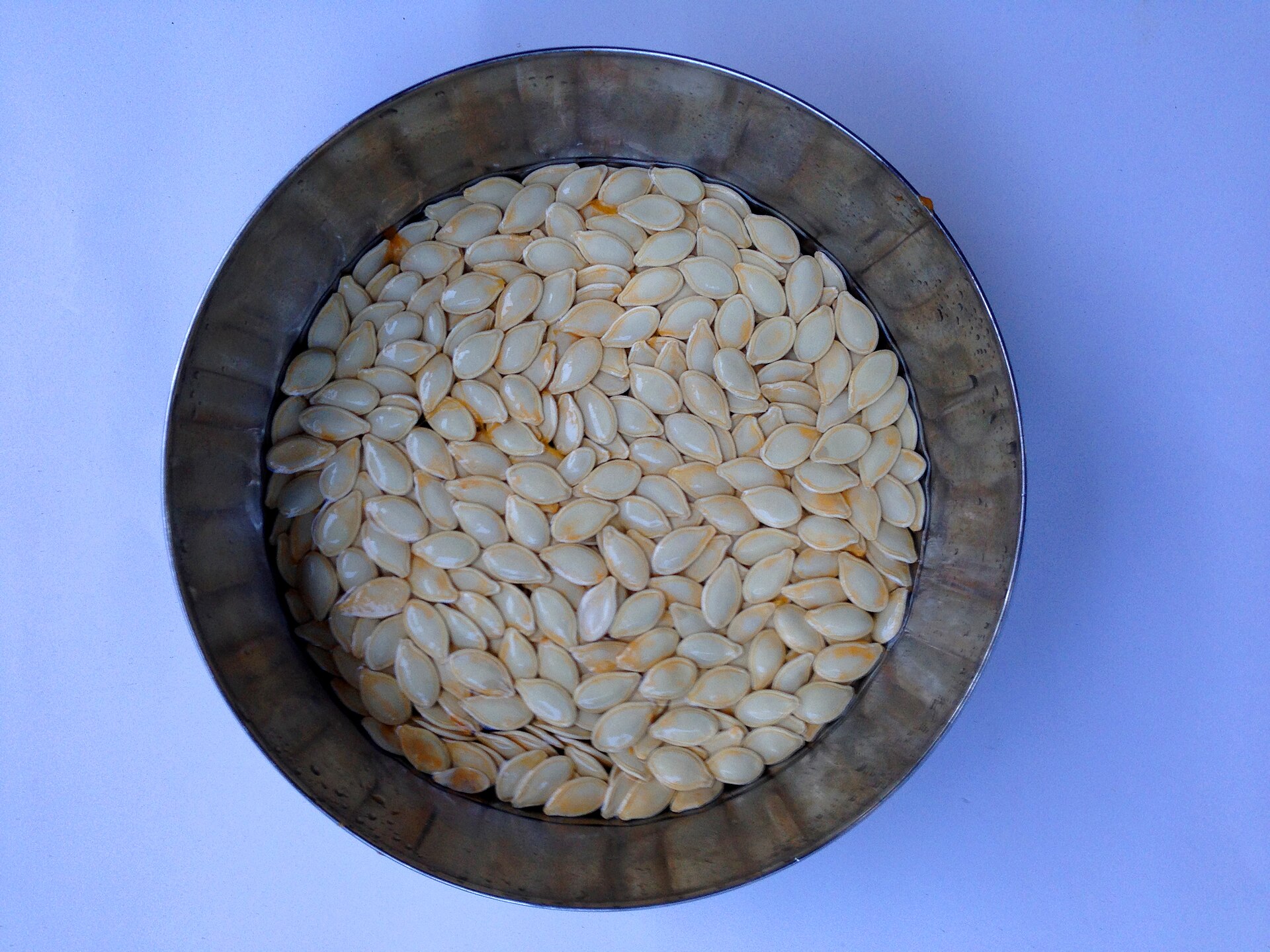
- Seeds, wet and cleaned: 55 to 70 g per medium pumpkin
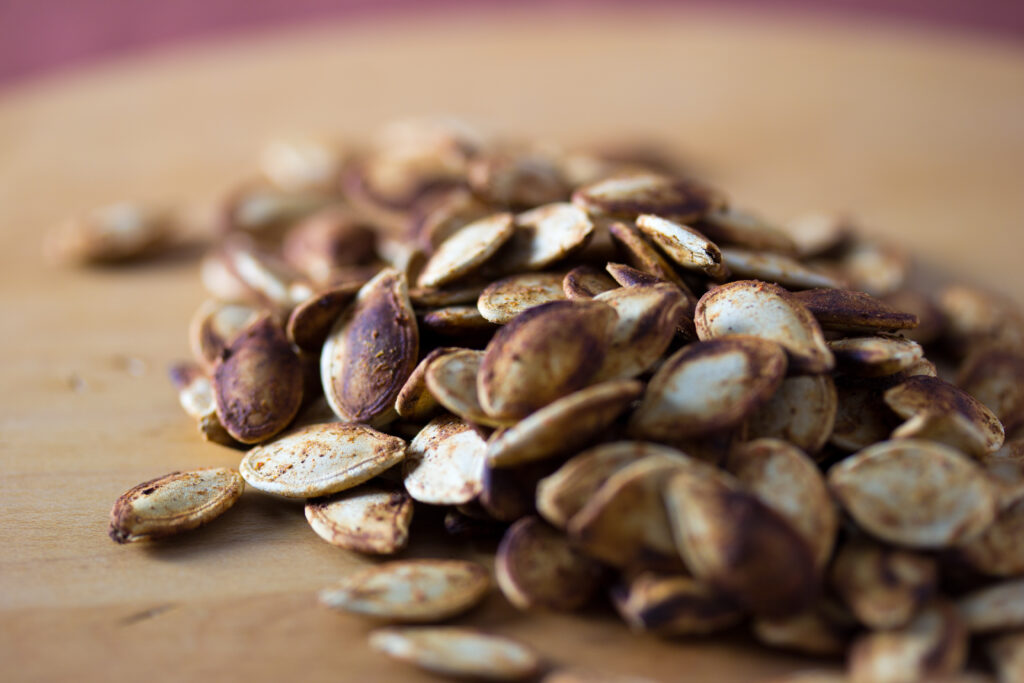
- Seeds, roasted: 35 to 45 g, about one generous snack portion
- Skin: 150 to 200 g, enough for a tray of crisps
- Stringy pulp: around 80 g, worth a light stock
- Trimmings and ends: 40 to 60 g, into the stock pot
- The boil: 10 minutes in salted water before roasting fixes the papery hull
- Not food: a carved pumpkin that spent a week on a porch
What comes off a medium pumpkin, weighed
| Part | Weight from a 4 lb pumpkin | Best use |
|---|---|---|
| Flesh | 1450 g | puree, roasting, soup |
| Seeds, cleaned and wet | 60 g | roasting, dukkah, brittle |
| Stringy pulp | 80 g | stock, or blended into soup |
| Skin | 180 g | oven crisps, stock |
| Stem and blossom end | 50 g | compost |
Those numbers move with the variety. A kabocha has thinner skin and heavier seeds; a butternut has less seed cavity and a much thinner skin worth crisping; a large field pumpkin has proportionally more of everything except flavor.
The useful figure is the total. Around three hundred grams of edible material per pumpkin, most of it requiring no more work than a rinse and a hot oven.
It is also worth breaking the pumpkin down in the right order, because doing it backward creates work. Halve it, scoop the seeds and pulp into a bowl of water first, then peel, then cut. Seeds picked out of a bowl of water separate from the fibers in about two minutes; seeds picked off a cutting board after everything else has been chopped take twenty.
Ten pumpkin scraps uses, ranked by yield
- Roasted seeds, salted. The obvious one, and worth doing properly. 35 to 45 g finished.
- Skin crisps. Peeled strips tossed in oil and roasted hard. A full tray from one pumpkin.
- Trimmings stock. Skins, pulp and ends simmered forty minutes for about 700 ml of light stock.
- Seeds ground into dukkah. With toasted coriander, cumin and sesame. Makes about 80 g of blend.
- Pulp blended into soup. Strained after simmering, it adds body without any flavor of its own.
- Seed brittle. Caramel poured over roasted seeds and broken up. About 150 g with the sugar.
- Spiced seeds for a salad. Roasted with smoked paprika and a little maple, chopped coarse.
- Seeds in granola. Substituted one for one for pumpkin seeds bought in a bag.
- Skin powder. Crisps ground fine and used as a savory dusting. A tablespoon or two.
- Stock cubes. The trimmings stock reduced by half and frozen in a tray.
The first three account for most of the weight and most of the value. Everything after that is a variation on the seeds, which are the part with real culinary range.
The papery hull, and the boil that fixes it
Home-roasted pumpkin seeds usually come out chewy and papery rather than crisp, and the reason is the hull. It is a fibrous shell full of water, and dry heat drives that water out unevenly, leaving something between leather and parchment.
Ten minutes in well-salted boiling water fixes it. The hull hydrates fully and softens, the salt penetrates rather than sitting on the outside, and the seed inside cooks slightly. Roasted afterward, the hull dries evenly and shatters instead of bending.
Use about a tablespoon of salt per liter of water, boil the cleaned seeds for ten minutes, drain them, and then dry them as thoroughly as your patience allows. Wet seeds steam in the oven and steam is the enemy of the whole exercise.
Roasting seeds so they shatter
- Separate the seeds from the pulp in a bowl of water. The seeds float and the fibers sink. Work them apart with your fingers rather than a sieve.
- Boil them ten minutes in salted water. A tablespoon of salt per liter. Skim off anything that rises.
- Drain and dry them hard. Spread on a towel, blot the top, then leave them twenty minutes. Overnight on a rack is better if you have the time.
- Toss with a teaspoon of oil per 60 g of seeds. Any neutral oil, or olive. Not butter, which browns before the seeds are done.
- Spread on a lined tray in a single layer. Crowding is why half a tray comes out pale.
- Roast at 325F for 20 to 30 minutes, stirring twice. Low and slow. A hot oven browns the outside before the inside has dried.
- Listen for them. They pop and click near the end, and the sound stops when they are done. Take one out and let it cool before judging it.
- Season while hot and cool completely on the tray. They crisp further as they cool, which is why a seed that seems soft at minute twenty-five may be right at minute thirty-five.
Three things to do with seeds beyond salting them
Dukkah. Grind 40 grams of roasted seeds coarsely with a tablespoon each of toasted coriander and cumin seed, two tablespoons of sesame, and salt. Pulse rather than blend, since a paste is a different product entirely. It keeps a month in a jar and goes on flatbread, yogurt, roasted vegetables and eggs.
Brittle. Cook 150 grams of sugar with a splash of water to a deep amber, stir in the roasted seeds and a pinch of salt, and pour it onto parchment to set. Break it up when cold. The caramel is hot enough to cause a serious burn, so the pouring is a two-hands, nothing-else-happening operation.
A savory crumb. Chop roasted seeds coarse and mix them with breadcrumbs toasted in oil, lemon zest and chopped parsley. It goes over pasta, roasted squash or a piece of white fish, and it does the job a pine nut would at a fraction of the cost.
Skin crisps from a squash you would normally peel
Pumpkin skin roasted at high heat with oil and salt goes from tough to brittle, and it tastes concentrated and slightly sweet in a way the flesh does not. It is the closest thing in a vegetable to a pork crackling.
Peel the skin off in wide strips with a Y-peeler rather than a knife, taking as little flesh as possible. Toss with a tablespoon of oil and a good pinch of salt, spread in one layer, and roast at 425F for twelve to eighteen minutes until the edges curl and darken.
Salt them after they come out rather than before, if the skin is thick. Salt draws water to the surface, and on a thick strip that water has to leave before anything crisps, which adds five minutes and a soft patch in the middle of the tray. On thin delicata skin it makes no difference either way.
They go soft within a couple of hours in a humid kitchen, so make them the day they are eaten. Any that go leathery can be dried out in a low oven and ground into a savory powder, which keeps far better than the crisps do. Crispness in a hot oven comes down to the same three things every time: dry surface, single layer, enough heat.
A stock from the trimmings, in forty minutes
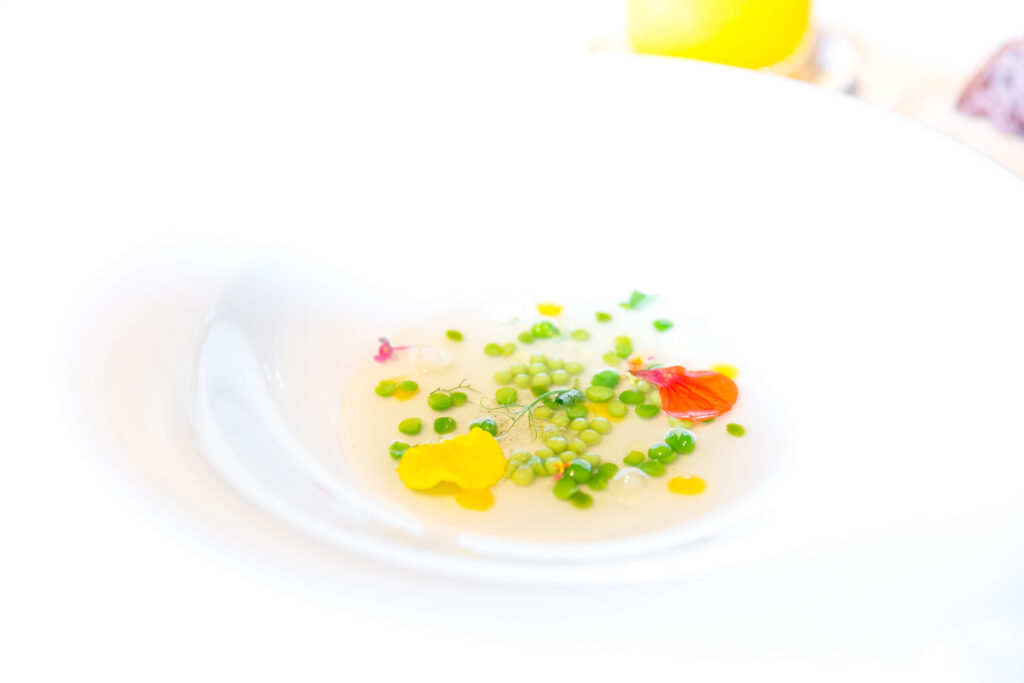
Everything that is not seed or crisp goes into a pot: skins, the stringy pulp, the shaved ends, and any flesh too close to the skin to be worth saving. Cover with cold water by an inch, add half an onion, a bay leaf and a few peppercorns, and simmer gently for forty minutes.
Strain it and you have around 700 ml of pale, faintly sweet vegetable stock with real body to it, which comes from the pectin in the skins. It is the right liquid for a pumpkin or squash soup, for a risotto, for cooking farro or barley, and for thinning a puree that got too stiff.
Do not simmer it longer than an hour. Past that the skins start giving up a slightly bitter, vegetal note, and the sweetness that made it worth doing goes flat. Forty minutes is the working time and it does not improve with more.
The stringy pulp: keep, blend, or bin
The fibrous mass around the seeds is the part people are surest about throwing away, and it is worth a second look. It tastes of pumpkin, it holds a lot of pectin, and it breaks down completely with enough heat.
What it cannot do is go into a smooth puree, since the fibers never fully disappear and a pie filling made with it comes out grainy. Where it works is in anything blended and then strained, or in anything already rustic: a soup, a stock, a braise.
The simplest use is to simmer it in the stock pot with the skins and let it give up what it has. If a batch of soup needs body, blend a spoonful of the cooked pulp into it and push the result through a sieve.
One thing it should not go into is a pie filling or a cheesecake, whatever a recipe says about not wasting it. Custards show every fiber, and a filling that tasted fine off the spoon reads as stringy on a fork. Save the pulp for anything with a rough texture already and keep it out of the smooth ones.
The stem, the blossom end, and what goes in the bin
The stem is woody and does not soften with any amount of cooking. It goes in the compost, along with the hard collar around it.
The blossom end is the small scar at the opposite pole, and it is worth trimming and discarding rather than eating. It is the part most likely to carry field soil, and on an older pumpkin it is often where softening starts.
Any part of the flesh that is soft, discolored, or smells fermented goes out with them, and so does everything around it. Soft spots in a winter squash mean mold has already grown into tissue you cannot see, and cutting away the visible part is not enough on a dense, low-acid vegetable.
Storage, and the two safety notes that matter
Roasted seeds keep two weeks in a sealed jar at room temperature and considerably longer in the refrigerator. They are high in unsaturated fat, which means they go rancid rather than stale, and rancid seeds taste of paint. If they smell sharp, they are gone.
The trimmings stock is a low-acid liquid and it needs the same handling as any other. Cool it quickly in a shallow container, get it into the refrigerator within two hours, use it within three days, or freeze it. Do not water-bath can it, since low-acid vegetable stocks are not safe processed that way and pressure canning is the only correct route.
The other note is about which pumpkin the scraps came from. A carved pumpkin that has been sitting out with its lid off, warmed by a candle, handled and exposed for several days, is not an ingredient regardless of how firm it looks. Cook from a whole, sound, unopened pumpkin, and treat the decorative one as decoration. Using more of what you buy only counts when what you use is sound to begin with.
Frequently Asked Questions
Do I have to remove all the pulp from the seeds?
Most of it, not all. Small bits of fiber left on a seed brown and turn bitter in the oven, so a rinse and a rub in a bowl of water is worth the four minutes. Perfectionism is not: a few threads will not ruin a tray.
Can I eat the whole seed, hull and all?
Yes, and that is what most home-roasted seeds are. The green kernels sold in bags are hulled, which is a mechanical process not worth doing at home. A properly boiled and roasted whole seed is crisp enough that the hull is not a problem.
Will the skin of any winter squash crisp?
Thin-skinned varieties do best. Delicata and butternut skins crisp beautifully. Kabocha works and takes longer. A large field pumpkin has skin thick enough that it stays leathery, and that one is better off in the stock pot.
Can I freeze the seeds to roast later?
Yes. Clean them, dry them, and freeze them raw in a bag for up to six months. Thaw and dry them again before boiling and roasting, since a wet start is the one thing that reliably ruins the texture.
Is the stock worth making if I only have one pumpkin’s worth of scraps?
It makes about three cups, which is a pot of soup or a risotto for two. If that is not enough, freeze the scraps and collect them across a few weeks, since squash trimmings freeze well raw and a larger batch is no more work than a small one.