I’ve tested a lot of versions of every kind of pancake recipe over the years, from box mixes to sourdough discard experiments, but this is the one my family calls “Saturday pancakes.” I first started working on this batter when I was a brand-new pastry chef, trying to recreate the tall, fluffy diner-style American pancakes I grew up eating in California. The early attempts were… fine. But they didn’t have that combo of crisp edges, custardy center, and real vanilla aroma I craved. Cloud Eggs with Smoked Salmon Recipe for Fast Weeknight Chic
So I pulled out my scale, my whisk, and my nutritionist brain, and began tweaking. I compared notes with classics like the Good Old-Fashioned Pancakes and read way too much pancake science from places like Serious Eats. Over dozens of weekends, I landed on this balanced, fluffy pancake recipe: deeply flavorful from buttermilk and browned butter, tender without being cakey, and sturdy enough to soak up maple syrup without collapsing.
What makes this version special is the combination of techniques: a quick browned butter, a touch of cornstarch for extra tenderness, precise leavening, and a short batter rest. It’s still a simple pancake recipe at heart, but with tiny professional tweaks that make it taste like brunch from your favorite café—without leaving your kitchen.
Buttermilk Pancake Recipe Card
Ingredients for This Fluffy Pancake Recipe
Dry Ingredients
- 1 1/2 cups (195 g) all-purpose flour
- 2 tablespoons (16 g) cornstarch
- 2 tablespoons (25 g) granulated sugar
- 1 teaspoon (4 g) baking powder
- 1/2 teaspoon (3 g) baking soda
- 3/4 teaspoon (4 g) fine sea salt
Wet Ingredients
- 2 large eggs, at room temperature
- 1 1/4 cups (300 ml) low-fat or whole buttermilk, at room temperature
- 1/4 cup (60 ml) whole milk, at room temperature
- 3 tablespoons (42 g) unsalted butter, plus 1–2 teaspoons (5–10 g) more for the pan
- 2 teaspoons (10 ml) pure vanilla extract
Optional Add-Ins & Toppings
- 1/2 cup (75 g) fresh blueberries, patted dry
- 1/3 cup (60 g) dark chocolate chips or chunks
- Pure maple syrup, for serving
- Fresh berries or sliced banana, for serving
- Plain Greek yogurt or a dollop of whipped cream, for serving
Step-by-Step Instructions for the Pancake Recipe
- In a medium saucepan, melt 3 tablespoons (42 g) unsalted butter over medium heat. Let it bubble and cook for 2–3 minutes, stirring, until it smells nutty and you see golden brown specks. Immediately pour the browned butter into a heatproof bowl to cool slightly.
- In a large mixing bowl, whisk together the all-purpose flour, cornstarch, granulated sugar, baking powder, baking soda, and fine sea salt until well combined and no streaks remain.
- In a separate medium bowl, crack in the eggs and whisk for 20–30 seconds until lightly frothy. Add the buttermilk, whole milk, vanilla extract, and the slightly cooled browned butter, whisking until the mixture looks smooth and cohesive.
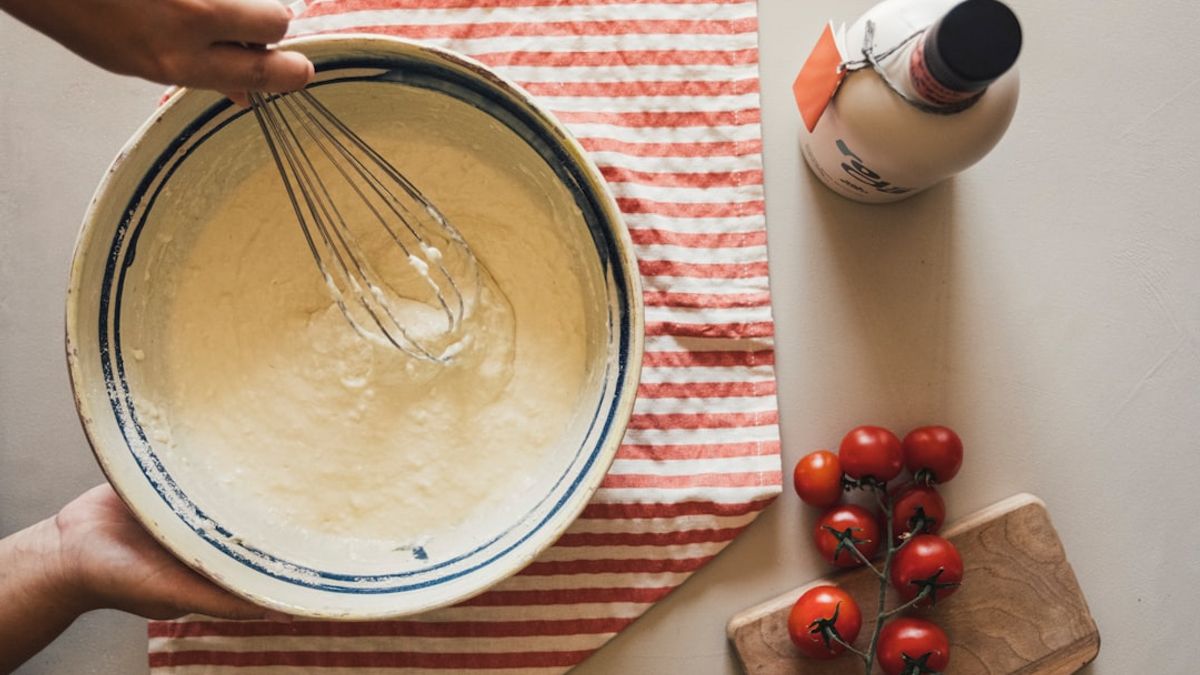
- Make a well in the center of the dry ingredients. Pour the wet mixture into the well, then gently whisk from the center outward just until the flour is moistened. Stop when you still see a few small lumps; do not overmix, or the pancakes can become tough.
- Let the batter rest at room temperature for 8–10 minutes. During this rest, the flour hydrates and the baking powder and baking soda start to react with the buttermilk, which helps create extra fluffy pancakes.
- While the batter rests, preheat a nonstick skillet or well-seasoned cast-iron griddle over medium heat for about 3 minutes. Lightly grease the surface with about 1/2 teaspoon of the remaining unsalted butter, spreading it with a paper towel so there’s a thin, even film.
- To test if the pan is ready, flick a few drops of water onto the surface; they should sizzle and dance immediately. If they evaporate instantly and smoke, reduce the heat slightly before cooking your first pancake.
- Stir the rested batter very gently once or twice. Using a 1/4-cup (60 ml) measuring cup, scoop batter onto the hot skillet, leaving a bit of space between pancakes for spreading. Each pancake will be about 4 inches (10 cm) wide.
- If you’re adding blueberries or chocolate chips, sprinkle a few (about 1 tablespoon) onto the surface of each pancake immediately after pouring the batter into the pan, pressing them in lightly with the back of a spoon.
- Cook the pancakes for 2–3 minutes, until the edges look set and small bubbles form and start to pop on the surface. The bottoms should be golden brown before you flip.
- Carefully slide a spatula under each pancake and flip in one quick motion. Cook for another 1 1/2–2 1/2 minutes, until the second side is golden brown and the centers feel springy when gently pressed.
- Transfer cooked pancakes to a wire rack set over a baking sheet, and keep warm in a 200°F / 95°C oven while you repeat with the remaining batter, lightly greasing the pan with a small dab of butter as needed between batches.
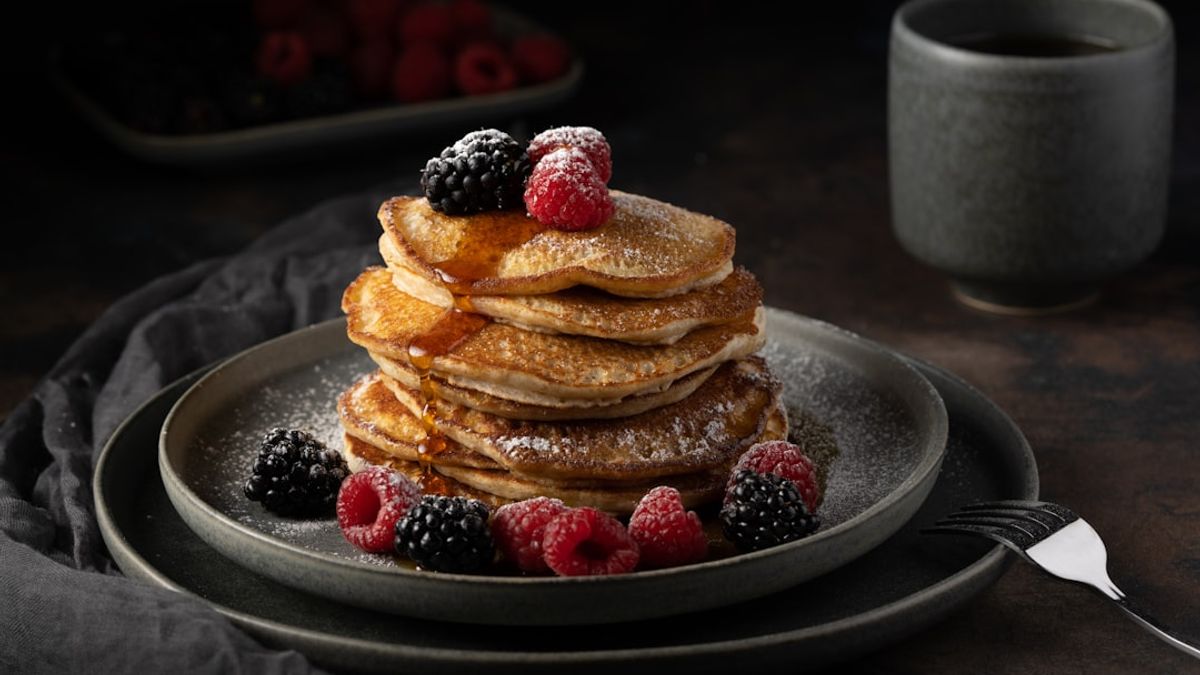
- Once all pancakes are cooked, stack 2–3 on each plate. Top with a handful of fresh berries or sliced banana, a spoonful of Greek yogurt or whipped cream if you like, and drizzle generously with warm maple syrup.
- Serve immediately while hot and fluffy. Leftover pancakes can be cooled completely on the rack, then stored for later as described in the tips section below.
Why This Buttermilk Pancake Recipe Works
This recipe borrows the best ideas from classic diner-style pancakes and modern fluffy pancake science, then streamlines them for real home kitchens. Using both baking powder and baking soda gives you lift and even browning. The buttermilk reacts with the baking soda to create those tiny air pockets that make each bite tender. According to general baking guidance from sources like Laura Fuentes’ fluffy pancakes, that acid–base balance is key to height and flavor.
Cornstarch is my secret weapon here. It slightly reduces gluten formation compared to using only flour, which may help produce a softer crumb—similar to how cake flour behaves. Browning the butter adds toasted, almost caramel-like notes that keep these pancakes tasting rich even if you serve them with just fruit and a light drizzle of syrup. And that short 8–10 minute rest? It lets the batter thicken naturally, so you get a stack that’s tall and custardy inside without being dense.
Ingredient Notes & Simple Swaps
If you’re used to reaching for a box of pancake mix, you’ll notice this ingredient list looks familiar: flour, leavening, sugar, salt, milk, eggs, and fat. The difference is that you control the quality and the exact ratios. Here’s how to adapt this traditional pancake recipe to what you have on hand. Sheet Pan Dinner: Fast Weeknight Comfort with Minimal Cleanup
- Flour: All-purpose flour keeps things classic. If you prefer to measure a pancake recipe in grams, stick to 195 g here for consistent results. You can swap up to 1/2 cup (65 g) with whole wheat flour; just add 1–2 extra tablespoons of buttermilk if the batter seems too thick.
- Buttermilk: Real cultured buttermilk gives the best flavor. In a pinch, make a substitute by mixing 1 1/4 cups (300 ml) milk with 1 tablespoon (15 ml) lemon juice or white vinegar, letting it sit for 5–10 minutes until slightly thickened.
- Sugar: Two tablespoons is enough for lightly sweet pancakes that pair with both sweet and savory toppings. You can reduce to 1 tablespoon for a less sweet version or swap in coconut sugar if you like a deeper caramel note.
- Butter: Browning the butter adds depth, but if you’re in a hurry, you can simply melt it until just liquid. For a dairy-light version, use a neutral oil like avocado or grapeseed, knowing you’ll lose some of that nutty flavor.
As a nutritionist, I also like that this batter isn’t overly sugary, so it may help keep the focus on whole-food toppings like fruit, nuts, and yogurt instead of relying solely on syrup.
How This Compares to Boxed Pancake Mix
Many readers ask if they can turn this into a homemade pancake mix, and the answer is yes. This recipe is essentially a fresher, more flavorful version of what’s in a typical box, minus the additives. To create your own mix, whisk together the dry ingredients—flour, cornstarch, sugar, baking powder, baking soda, and salt—and store them in an airtight jar for up to 2 months.
When you’re ready to cook, treat 2 cups (about 260 g) of this dry mix like you would a store-bought mix: add eggs, buttermilk, milk, vanilla, and melted butter. Compared to many commercial mixes, this homemade blend usually contains less sodium and allows you to choose higher-quality flour and sugar. According to general guidance from the USDA, paying attention to sodium and added sugars may support more balanced breakfasts over time. Sandwich Recipe: Herby Chicken Avocado Club for Lunch
If you’re used to an easy pancake recipe with 3 ingredients (often just self-rising flour, milk, and egg), you’ll notice this version has a few more components, but the payoff is in the texture and flavor. You still get that “just stir and cook” simplicity, with a more café-worthy result.
Cooking Tips, Variations & Common Mistakes
After triple-testing this batter in different kitchens, pans, and even on a slightly finicky electric griddle, I’ve gathered a handful of tips that make a big difference in your final stack:
- Don’t overmix the batter. A few small lumps are your friends. Overmixing develops gluten, which can make pancakes chewy instead of tender.
- Control your heat. Medium to medium-low is usually ideal. If your pancakes are getting too dark before the centers cook through, lower the heat slightly and give them an extra 30–60 seconds per side.
- Grease lightly. Too much butter in the pan can cause uneven browning and a slightly fried taste. Aim for a thin, even film—wipe away excess with a paper towel.
- Use fresh leaveners. Baking powder and baking soda lose strength over time. If your pancakes aren’t rising, check the expiration dates and replace if needed.
- Rest the batter. Even 5–10 minutes of rest can noticeably improve fluffiness, especially in a fluffy pancake recipe like this one that relies on chemical leaveners.
- Lemon-blueberry: Add 1 teaspoon finely grated lemon zest to the wet ingredients and fold 1/2 cup blueberries into the batter or sprinkle on top while cooking.
- Chocolate chip: Sprinkle chocolate chips onto each pancake right after pouring the batter in the pan so they don’t sink.
- Nutty protein boost: Fold in 1/4 cup (25 g) finely chopped toasted pecans or almonds for crunch and a bit more staying power.
- Cinnamon swirl: Stir 1 teaspoon ground cinnamon into the dry ingredients for a cozy, breakfast-y flavor.
Serving ideas: Serve these pancakes with a side of scrambled eggs or Greek yogurt for extra protein, plus fresh fruit and a modest pour of maple syrup. As always, balance matters; according to general recommendations from the FDA’s Nutrition Facts Label guidance, watching your portion sizes and added sugars may help keep breakfast satisfying without being overwhelming. Morning Meal: Veggie Egg Bake for Cozy, Make-Ahead Comfort
Quick Practical Tips for Cooking & Storing
- Ingredient substitutions to keep on hand: If you’re out of cultured buttermilk, mix 1 1/4 cups milk with 1 tablespoon lemon juice or vinegar and let it sit 5–10 minutes. For dairy-free pancakes, use unsweetened soy or oat milk plus 1 tablespoon acid and replace butter with a neutral oil; for gluten-free, use a 1:1 gluten-free baking blend with xanthan gum and keep the cornstarch to maintain tenderness.
- Make-ahead and storage: Make the dry mix by combining the flour, cornstarch, sugar, baking powder, baking soda, and salt; store it airtight for up to 2 months. If you must prepare wet batter ahead, keep it refrigerated no longer than 24 hours and expect slightly less lift—add 1/2 teaspoon extra baking powder just before cooking to refresh the leavening. Cooked pancakes keep well: cool completely on a wire rack, stack with parchment between layers, and refrigerate up to 3 days or freeze up to 2 months.
- Common mistakes to avoid: Don’t overmix; stop when a few small lumps remain. Avoid frying in a pool of butter—wipe the pan so you have a thin film only. Also, don’t crowd the pan; give pancakes room so they can brown evenly and you can flip cleanly. Lastly, check your leaveners—expired baking powder/soda is an often-overlooked reason for flat pancakes.
- Serving and reheating suggestions: Keep finished pancakes warm on a wire rack in a 200°F / 95°C oven so they stay crisp around the edges. Reheat refrigerated pancakes in the toaster or a warm oven for best texture; frozen pancakes work great straight from the freezer into a toaster or on a sheet in a 325°F / 160°C oven for 8–12 minutes.
- Timing and batter feel: Aim for a batter that pours slowly but holds some shape on the pan—too thin and pancakes spread flat, too thick and they may stay dense. If the batter thickens too much after resting, loosen with a tablespoon or two of milk; if it seems thin, let it rest a few more minutes to thicken slightly before cooking.
Dietary Adaptations: Egg-Free, Dairy-Free & Gluten-Free
Readers often request a pancake recipe without eggs or dairy that still tastes like a traditional stack. While this exact batter is built around buttermilk and eggs, you can adapt it with a few thoughtful swaps.
For an egg-free version:
- Omit the eggs.
- Add 2 tablespoons (16 g) extra cornstarch to the dry ingredients.
- Whisk 2 tablespoons (14 g) ground flaxseed with 6 tablespoons (90 ml) warm water; let sit 5–10 minutes until thick, then add to the wet ingredients as a “flax egg.”
This won’t be exactly the same as a classic American pancake recipe, but it can still be fluffy and satisfying.
For a dairy-free version:
- Use a neutral oil (like avocado or canola) instead of butter in the batter and for greasing the pan.
- Replace buttermilk with 1 1/4 cups (300 ml) unsweetened soy milk or oat milk plus 1 tablespoon (15 ml) lemon juice or apple cider vinegar, plus 1/4 cup (60 ml) water instead of whole milk.
For a gluten-free version:
- Swap the all-purpose flour with 1 1/2 cups (195 g) of a 1:1 gluten-free baking blend that contains xanthan gum.
- Keep the cornstarch as written to support tenderness.
As with all dietary adaptations, the texture and flavor will change slightly, but these modifications may help you keep the spirit of this pancake recipe while meeting your needs. Always check labels on your ingredients to ensure they align with your dietary requirements.
Nutrition Facts for This Pancake Recipe
| Nutrient | Amount |
|---|---|
| Calories | 310 kcal |
| Total Fat | 11 g |
| Saturated Fat | 6 g |
| Cholesterol | 115 mg |
| Sodium | 620 mg |
| Total Carbohydrates | 42 g |
| Dietary Fiber | 1 g |
| Total Sugars | 7 g |
| Protein | 11 g |
Nutrition values are estimates and may vary based on specific ingredients and portion sizes.
FAQ: Your Pancake Recipe Questions Answered
How long do these pancakes keep, and how should I store them?
Cool leftover pancakes completely on a wire rack, then stack them with small pieces of parchment paper between each one. Store in an airtight container in the refrigerator for up to 3 days. For longer storage, freeze the stack in a freezer-safe bag for up to 2 months. To reheat, warm in a 300°F / 150°C oven for 8–10 minutes, or pop frozen pancakes straight into the toaster until hot and lightly crisped.
Can I use regular milk instead of buttermilk in this pancake recipe?
Yes, you can substitute the buttermilk with the same amount of regular milk plus 1 tablespoon (15 ml) lemon juice or white vinegar. Let the mixture sit for 5–10 minutes until slightly thickened before using. The flavor will be a bit milder than with cultured buttermilk, but the pancakes will still be fluffy. If you use only sweet milk with no added acid, reduce the baking soda to 1/4 teaspoon and increase the baking powder to 1 1/2 teaspoons.
Can I double this fluffy pancake recipe for a crowd?
Absolutely. You can safely double or even triple the ingredients to feed a crowd. Use a large griddle or two skillets at once to keep cooking time reasonable. After mixing a bigger batch, it’s especially important not to overwork the batter—stir just until combined, then let it rest for 10 minutes before cooking. Keep finished pancakes warm in a 200°F / 95°C oven on a wire rack so they don’t get soggy.
What is the 3-2-1 rule for pancakes, and does this recipe follow it?
The “3-2-1 rule” is a simple ratio some cooks use for a basic American pancake recipe: 3 parts flour, 2 parts liquid, 1 part egg (by volume). This recipe is more finely tuned than that rule of thumb, with slightly more liquid and leavening to create an extra fluffy texture. If you’re looking for an easy pancake recipe with 3 ingredients only, that’s more of a minimalist approach; here, the additional ingredients (like cornstarch and browned butter) are what give you the café-style results.
Conclusion: Your New Go-To Pancake Morning
There’s something quietly joyful about standing at the stove, flipping pancakes while the kitchen fills with the smell of browned butter and vanilla. This buttermilk pancake recipe has become that ritual for me—a small, delicious pause in a busy week. I love that it feels special enough for a slow Sunday brunch yet simple enough to pull off on a school morning if I mix the dry ingredients the night before.
I hope you’ll print this out, splatter it with a little batter, and make it your own with favorite add-ins and toppings. When you try it, I’d love to hear how it turned out for you—leave a comment with your tweaks, whether you went classic with maple syrup or adventurous with berries and yogurt.
If you enjoy cozy, make-ahead-friendly breakfasts, you might also like my high-protein cottage cheese pancakes (a lighter twist on this classic stack) next. For now, grab your whisk, warm up that skillet, and let’s make your next pancake morning something worth lingering over.
Disclaimer: This article is for informational purposes only. The content provided should not be used as a substitute for professional advice tailored to your specific circumstances.