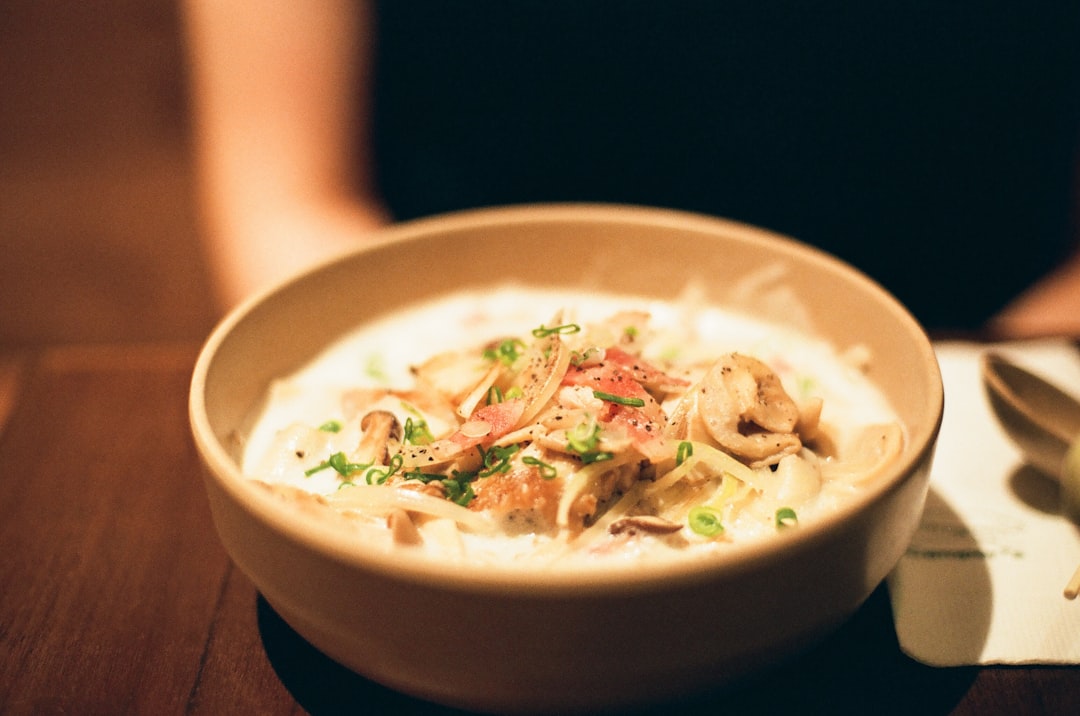
There is something deeply satisfying about a bowl of mushroom risotto that no other rice dish can replicate. The slow, meditative process of ladling warm broth into toasted Arborio rice, watching the grains release their starch into a velvety sauce, and folding in earthy mushrooms at the end — it is cooking at its most honest. No tricks, no gimmicks, just patience rewarded with one of the most comforting dinners you will ever make.
I have been making risotto at home for over fifteen years, and I can tell you that most of the intimidation around it is unearned. Yes, it requires your attention for about twenty-five minutes. No, you do not need to stir constantly — that is one of the biggest myths in Italian cooking, and I will explain exactly why below. This version uses a trio of mushrooms (cremini for meatiness, shiitake for depth, and dried porcini for that unmistakable woodsy intensity) to create a risotto that tastes like it belongs in a trattoria in Milan, not a Tuesday night in your kitchen.
What makes this recipe different from the dozens of mushroom risotto recipes online is the layered mushroom approach. Instead of dumping everything in at once, we build flavor in stages: porcini-infused broth as the cooking liquid, sauteed cremini and shiitake folded in at the end for texture, and a final shower of Parmigiano-Reggiano and fresh thyme to tie it all together. The result is a dish with remarkable depth — umami from three directions, creaminess from properly coaxed starch, and just enough bite from the al dente rice.
Creamy Mushroom Risotto
Prep Time: 15 minutes
Cook Time: 35 minutes
Total Time: 50 minutes
Servings: 4
Difficulty: Medium
Cuisine: Italian
Ingredients
Risotto Base
- 1 1/2 cups Arborio rice (do not rinse)
- 6 cups low-sodium chicken or vegetable broth
- 1/2 oz (15g) dried porcini mushrooms
- 1/2 cup dry white wine (Pinot Grigio or Sauvignon Blanc)
- 1 medium yellow onion, finely diced
- 3 cloves garlic, minced
- 2 tablespoons unsalted butter
- 1 tablespoon extra-virgin olive oil
- 1/2 teaspoon kosher salt, plus more to taste
- Freshly ground black pepper
Mushroom Mixture
- 8 oz (225g) cremini mushrooms, sliced 1/4 inch thick
- 6 oz (170g) shiitake mushrooms, stems removed, caps sliced
- 2 tablespoons unsalted butter
- 1 tablespoon olive oil
- 2 cloves garlic, minced
- 1 tablespoon fresh thyme leaves (or 1 teaspoon dried)
- Pinch of salt
Finishing
- 1 cup freshly grated Parmigiano-Reggiano (about 3 oz)
- 2 tablespoons cold unsalted butter, cubed
- 1 tablespoon fresh lemon juice
- Fresh thyme sprigs for garnish
- Shaved Parmesan for serving
Instructions
- Prepare the porcini broth. Place the dried porcini mushrooms in a small bowl and cover with 1 cup of boiling water. Let them soak for at least 15 minutes while you prepare everything else. Once softened, remove the porcini, chop them finely, and strain the soaking liquid through a coffee filter or fine-mesh sieve to remove any grit. Add the strained porcini liquid to your broth and warm the entire mixture in a saucepan over low heat. Keep it warm throughout the cooking process — adding cold broth to hot rice shocks the starch and creates a gummy texture.
- Saute the mushroom mixture. Heat 2 tablespoons butter and 1 tablespoon olive oil in a large skillet over medium-high heat. Add the cremini and shiitake mushrooms in a single layer (work in batches if needed — overcrowding causes steaming instead of browning). Cook without stirring for 3 minutes until golden on the underside, then flip and cook 2 more minutes. Add 2 cloves minced garlic and thyme, stir for 30 seconds until fragrant, and season with a pinch of salt. Transfer to a plate and set aside.
- Build the risotto base. In a large, heavy-bottomed saucepan or Dutch oven, heat 2 tablespoons butter and 1 tablespoon olive oil over medium heat. Add the diced onion and cook for 4–5 minutes, stirring occasionally, until softened and translucent but not browned. Add 3 cloves minced garlic and cook 30 seconds until fragrant.
- Toast the rice. Add the Arborio rice to the pan and stir to coat every grain in the fat. Cook for 2–3 minutes, stirring frequently, until the edges of the grains become translucent and the center remains opaque. You should hear a gentle crackling sound. This toasting step is critical — it creates a protective shell of fat around each grain that regulates starch release, preventing the risotto from becoming gluey.
- Deglaze with wine. Pour in the white wine and stir continuously until it is almost completely absorbed, about 1–2 minutes. The alcohol cooks off quickly, leaving behind acidity that brightens the final dish and balances the richness of the butter and cheese.
- Begin adding broth. Add one ladleful (about 3/4 cup) of warm broth to the rice. Stir gently until the broth is mostly absorbed. You do not need to stir constantly — stir every 30–45 seconds, which is enough to agitate the starch without exhausting your arm. Continue adding broth one ladle at a time, waiting until each addition is mostly absorbed before adding the next. This process takes 18–22 minutes.
- Add the chopped porcini. After about 10 minutes of adding broth, fold in the chopped rehydrated porcini mushrooms. They will continue to release flavor into the rice as it finishes cooking.
- Test for doneness. After 18 minutes, taste a grain of rice. It should be tender but with a slight firmness at the very center — what Italians call al onda, or “wavy.” The risotto should flow like thick lava when you tilt the pan, not sit in a stiff mound. If it is too thick, add another half-ladle of broth.
- Finish the risotto (mantecatura). Remove the pan from heat. Add the grated Parmigiano-Reggiano and the 2 tablespoons of cold cubed butter. Stir vigorously for 60 seconds — this is the mantecatura, the final emulsification step that gives risotto its signature creamy, glossy finish. The cold butter creates a temperature shock that helps emulsify the fat and starch into a cohesive sauce. Add the lemon juice and stir once more.
- Fold in mushrooms and serve. Gently fold the sauteed mushroom mixture into the finished risotto. Taste and adjust salt and pepper. Divide among warm bowls (warming the bowls prevents the risotto from seizing up on contact with cold ceramic). Garnish with shaved Parmesan, fresh thyme sprigs, and a crack of black pepper. Serve immediately — risotto waits for no one.
The Science of Starch Release
Understanding why risotto becomes creamy requires a brief look at starch chemistry. Arborio rice is classified as a short-grain rice with an unusually high amylopectin content — roughly 80 percent of its starch is amylopectin, compared to about 70 percent in long-grain varieties like basmati. Amylopectin is a branched-chain starch molecule that, when heated in liquid, leaches out of the grain and forms a viscous, creamy suspension in the surrounding broth. This is the sauce of a risotto — not cream, not excessive butter, but starch and broth in emulsion.
The toasting step coats each grain in fat, which acts as a barrier that slows the rate of starch release. Without toasting, the starch leaches too quickly, and the risotto becomes gluey and porridge-like within the first ten minutes. With toasting, the starch releases gradually over the full twenty-minute cooking window, creating a sauce that is creamy but not pasty.
The gradual addition of warm broth matters for a related reason. Each addition of liquid partially gelatinizes the surface starch on the grains, while the interior continues to hydrate more slowly. This differential creates the characteristic al dente texture: a creamy exterior with a slightly firm center. Adding all the broth at once (as you would for pilaf) hydrates the grain uniformly and eliminates that textural contrast.
As food scientist J. Kenji Lopez-Alt has demonstrated, the constant-stirring myth is largely overblown. Stirring does help agitate the grains and promote starch release, but gentle stirring every 30–45 seconds produces results virtually identical to obsessive, non-stop stirring. The real key is the ratio of liquid to rice at any given moment and the maintenance of a gentle simmer — not the mechanical action of a spoon.
Risotto Technique: What Actually Matters
Broth Temperature
Cold broth added to hot rice causes a thermal shock that slows cooking unevenly and can result in a grainy texture. Keep your broth at a gentle simmer in a separate saucepan throughout the process. The rice should never stop cooking when you add liquid — if the pan goes silent after a ladle of broth, your broth is too cold.
The Myth of Constant Stirring
Traditional Italian recipes insist on constant stirring, and there is a romantic appeal to the idea of standing at the stove, wooden spoon in hand, for twenty minutes straight. But modern testing has shown this is unnecessary. Stirring every 30–45 seconds releases plenty of starch. In fact, overly aggressive stirring can break the grains apart, creating a pasty rather than creamy texture. Stir gently, and stir often, but do not chain yourself to the stove.
When to Add the Wine
The wine goes in immediately after toasting the rice and before any broth. This serves two purposes: the acidity in the wine helps firm the exterior of the rice grains (preventing them from going mushy), and the alcohol evaporates quickly at high heat, carrying volatile flavor compounds into the dish. Adding wine later in the process means the alcohol does not fully cook off, leaving a harsh, boozy flavor.
The Mantecatura
This final step — vigorously stirring in cold butter and Parmesan off the heat — is what separates a good risotto from a great one. The emulsification creates a glossy, restaurant-quality finish that coats every grain. The cold butter is essential: if the butter is warm or melted, it does not emulsify properly and the risotto will look greasy rather than creamy.
Mushroom Selection and Substitutions
| Mushroom | Flavor Profile | Substitution |
|---|---|---|
| Cremini | Mild, meaty, earthy | White button mushrooms (milder but same texture) |
| Shiitake | Rich, savory, slightly smoky | Oyster mushrooms or maitake |
| Dried Porcini | Intense, woodsy, deeply umami | Dried shiitake (soak the same way) or 1 tsp truffle oil |
| Chanterelle (upgrade) | Fruity, peppery, delicate | No true substitute — a premium addition if in season |
| King Trumpet (upgrade) | Firm, scallop-like when seared | Cremini sliced thick and seared hard |
| Morel (luxury) | Nutty, complex, honeycomb texture | Dried morels rehydrated (more affordable than fresh) |
Why This Recipe Works
The triple-mushroom approach creates umami from three distinct sources that overlap and reinforce each other. Dried porcini infuse the broth itself, so every ladle of liquid carries mushroom flavor directly into the rice. The sauteed cremini and shiitake, cooked separately at high heat, develop Maillard browning compounds — the same caramelization chemistry that makes a good steak taste complex. Folding them in at the end preserves their texture and ensures they do not turn soft and waterlogged.
The Parmigiano-Reggiano contributes glutamic acid, a natural flavor enhancer that amplifies the mushroom umami. Mushrooms themselves are rich in guanylate, a nucleotide that creates a synergistic effect with glutamate — the two compounds together taste more than the sum of their parts, which is why mushroom risotto with Parmesan is so disproportionately satisfying compared to its humble ingredients.
The lemon juice at the end might seem unexpected, but its role is essential. Acid brightens rich, savory dishes in the same way salt enhances sweetness — it creates contrast that prevents the palate from fatiguing. Without it, the risotto tastes one-dimensional after a few bites. With it, each spoonful feels as vibrant as the first. This is a principle that Serious Eats explains in their risotto deep-dive and one that professional chefs apply across virtually every savory dish.
Storage and Reheating
Risotto is best served immediately, but leftovers can be stored in an airtight container in the refrigerator for up to 3 days. It will thicken considerably as the starch continues to set — this is normal.
To reheat, add 2–3 tablespoons of broth or water per serving to a saucepan over medium-low heat. Stir gently as it warms, adding more liquid as needed until the risotto returns to a creamy, flowing consistency. This typically takes 5–7 minutes. Do not microwave risotto — the uneven heating creates rubbery spots and does not rehydrate the starch properly.
Alternatively, transform leftover risotto into arancini (fried risotto balls). Roll cold risotto into golf-ball-sized spheres, optionally tuck a cube of mozzarella in the center, bread with flour, egg wash, and panko, and deep-fry at 350°F (175°C) for 3–4 minutes until golden. They are arguably better than the original risotto.
If you enjoy this style of comforting, slow-cooked dinner, you will love our French onion soup, which shares the same philosophy of simple ingredients transformed by patience. For more hearty main courses, browse our dinner collection.
Nutrition Facts (Per Serving — 1/4 of recipe)
| Calories | 420 kcal |
| Protein | 14g |
| Carbohydrates | 52g |
| Fat | 17g |
| Saturated Fat | 9g |
| Fiber | 3g |
| Sodium | 680mg |
Frequently Asked Questions
Can I use a different rice for risotto?
Arborio is the most widely available risotto rice, but Carnaroli is considered the gold standard by Italian chefs — it has a slightly higher amylose content that makes it more forgiving and resistant to overcooking. Vialone Nano is another excellent option, especially for looser, soupier risotto styles. Do not substitute long-grain rice like basmati or jasmine; they lack the amylopectin content needed for creaminess.
Do I really need to stir the whole time?
No. Stirring every 30–45 seconds is sufficient. The purpose of stirring is to agitate the grains so they release starch evenly, not to physically create the sauce. Overstirring can actually break the grains and create a pasty texture. Stay nearby, stir regularly, but do not feel chained to the stove.
Can I make risotto ahead of time for a dinner party?
Professional kitchens use a technique called par-cooking: cook the risotto for about 12 minutes (two-thirds of the way), spread it on a sheet pan to cool quickly, and refrigerate. When ready to serve, return it to the pan with warm broth and finish the last 8–10 minutes of cooking plus the mantecatura. This produces results nearly identical to cooking start-to-finish.
What can I use instead of white wine?
Dry vermouth is an excellent substitute with a more complex flavor profile. For a non-alcoholic option, use 1/2 cup of broth mixed with 1 tablespoon of white wine vinegar or lemon juice. The acid component is what matters most — it firms the rice exterior and adds brightness.
Why does my risotto always turn out gluey?
Three common causes: (1) you did not toast the rice in fat before adding liquid, (2) you stirred too aggressively and broke the grains, or (3) you added too much broth at once and the rice released its starch too quickly. Toast for a full 2–3 minutes, stir gently, and add broth in small increments.
Final Thoughts
A properly made mushroom risotto is one of those dishes that reminds you why simple cooking is often the best cooking. Three types of mushrooms, good rice, warm broth, and twenty-five minutes of gentle attention produce something that no amount of complicated technique or expensive ingredients can improve upon. Make it once, and it will earn a permanent place in your dinner rotation.
Disclaimer: This article is for informational purposes only. Nutritional values are estimates and may vary based on specific ingredients and brands used. Contains dairy and gluten. Individuals with mushroom allergies should avoid this recipe. This content does not constitute medical or dietary advice.