Real French onion soup is not a recipe you rush. The deep, mahogany broth that defines a great bowl comes from one thing only: time. You need at least 45 minutes of slow, patient caramelization to coax the natural sugars from the onions into something rich, complex, and almost meaty. No shortcut produces the same result. Trust the process, and you will have a soup worthy of a Parisian brasserie.
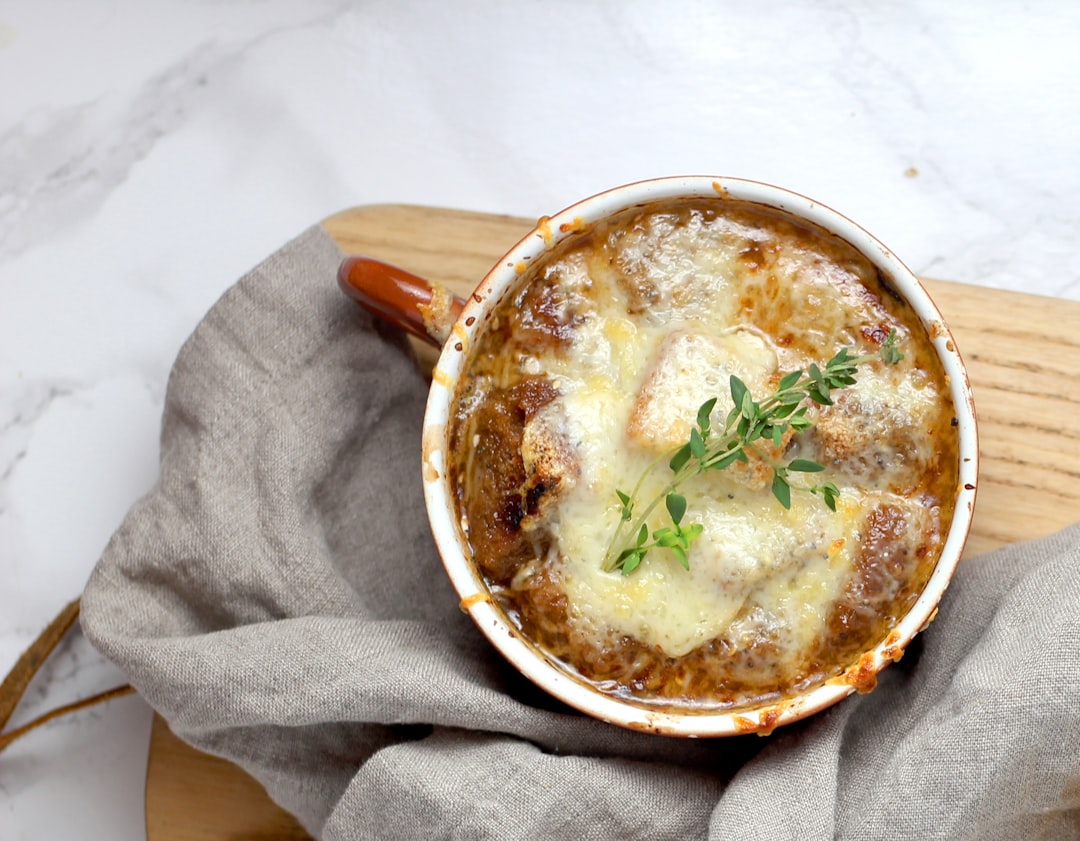
I learned this recipe from a chef in Lyon who insisted on three rules: use a mix of onion varieties for depth, deglaze with dry white wine before adding broth, and never skip the broiler step at the end. That bubbling, golden cap of melted Gruyère is not decoration — it is structural. It traps the steam and creates a bowl that stays hot for twenty minutes.
Classic French Onion Soup
Prep Time: 15 minutes
Cook Time: 1 hour 15 minutes
Total Time: 1 hour 30 minutes
Servings: 4
Difficulty: Medium
Cuisine: French
Ingredients
- 3 lbs (1.4 kg) yellow onions (about 6 large), thinly sliced
- 3 tablespoons unsalted butter
- 1 tablespoon olive oil
- 1 teaspoon sugar
- 1 teaspoon kosher salt
- 1/2 cup dry white wine (Sauvignon Blanc or Pinot Grigio)
- 6 cups beef broth (homemade preferred)
- 2 sprigs fresh thyme
- 1 bay leaf
- 1 tablespoon sherry vinegar
- 4 thick slices crusty bread (baguette or sourdough)
- 2 cups Gruyère cheese, grated (about 6 oz)
- Freshly ground black pepper
Instructions
- Start the caramelization. Melt butter with olive oil in a large Dutch oven over medium heat. Add all the sliced onions, sprinkle with sugar and salt, and stir to coat. The pot will look impossibly full — the onions will reduce to one-fifth their volume.
- Cook low and slow. Reduce heat to medium-low. Cook the onions for 45–55 minutes, stirring every 5–7 minutes and scraping the fond (browned bits) from the bottom. The onions should transform from white to amber to deep mahogany. Do not rush this step — if they start browning unevenly, lower the heat.
- Deglaze with wine. Increase heat to medium-high. Pour in the white wine and scrape up all the fond. Let the wine reduce for 2 minutes until nearly evaporated. This step adds acidity and depth that broth alone cannot achieve.
- Add broth and simmer. Pour in the beef broth. Add thyme sprigs and bay leaf. Bring to a gentle simmer and cook uncovered for 20 minutes. The flavors will concentrate and the broth will darken. Remove thyme and bay leaf. Stir in sherry vinegar and season with pepper to taste.
- Prepare the gratin topping. Preheat your broiler to high. Toast the bread slices in the oven or toaster until golden and firm — they must be sturdy enough to float on the soup without disintegrating.
- Assemble and broil. Ladle soup into oven-safe crocks or bowls placed on a baking sheet. Float a toast on each. Pile generously with Gruyère. Broil 3–4 minutes, watching constantly, until the cheese is bubbling, golden, and spilling over the edges of the bowl.
- Serve immediately. The bowls will be extremely hot. Place each crock on a plate and warn your guests. The first spoonful, where you break through the cheese crust into the rich broth below, is one of the great moments in cooking.
The Art of Caramelizing Onions
Caramelization is a chemical process where heat breaks down the natural sugars in onions (mostly fructose and glucose) into hundreds of new flavor compounds. According to Serious Eats, true caramelization requires at least 45 minutes at moderate heat. Recipes claiming 10-minute caramelized onions are producing softened, slightly browned onions — a fundamentally different result.
The pinch of sugar accelerates the process slightly by providing additional fuel for the Maillard reaction, while the salt draws moisture from the onions, helping them soften faster. Together, these small additions shave about 10 minutes off the process without sacrificing depth.
Choosing the Right Cheese
Gruyère is traditional and ideal — it melts smoothly, browns beautifully under the broiler, and has a nutty sweetness that complements the onions. Acceptable substitutes include Comté, Emmental, or Jarlsberg. Avoid pre-shredded cheese, which contains anti-caking agents that prevent smooth melting. The Bon Appétit cheese guide covers this topic in detail.
Storage
Soup base (without bread and cheese): Refrigerate for up to 5 days or freeze for 3 months. The flavor actually improves overnight. Reheat on the stove, then add the bread and cheese topping fresh before serving under the broiler.
For more cozy dinner ideas, see our dinner collection or try the crispy honey garlic chicken for a different kind of comfort.
Nutrition Facts (Per Serving)
| Calories | 410 kcal |
| Protein | 18g |
| Carbohydrates | 38g |
| Fat | 20g |
| Fiber | 4g |
| Sodium | 890mg |
A Brief History of French Onion Soup
Onion soup in some form has existed since ancient Rome, where onions were cheap, plentiful, and a staple of the poor. But the version we recognize today as French onion soup, with its beef broth base and gratineed cheese crust, emerged in 18th-century France. The dish was a fixture of the Paris market district known as Les Halles, the massive central food market that operated from the 12th century until 1971. Workers, merchants, and late-night revelers would crowd into the surrounding bistros in the early morning hours for a restorative bowl of onion soup, earning it the nickname “soupe de l’oignon gratinee” and a reputation as the ultimate late-night meal.
The Les Halles connection is not just folklore. The market generated enormous quantities of onion trimmings and unsold stock, making onions the cheapest ingredient available to surrounding restaurants. Cooks transformed this humble surplus into something extraordinary through patience and technique: slow caramelization coaxed out the natural sugars, beef broth provided body, and stale bread topped with leftover cheese created the signature gratin crust. What began as a frugal solution to abundance became one of the most celebrated dishes in French cuisine.
By the 19th century, French onion soup had migrated from working-class market cafes to the menus of Parisian brasseries and, eventually, to fine dining establishments. Auguste Escoffier included a version in his influential 1903 cookbook “Le Guide Culinaire,” cementing its place in the classical French repertoire. The dish arrived in America through French restaurants in New York and New Orleans, and by the mid-20th century it was a standard offering at steakhouses and Continental restaurants across the country. Today, it remains one of the most ordered soups in the world, a testament to the power of a recipe built on nothing more than onions, time, and good broth.
Onion Varieties and What They Bring
The recipe calls for yellow onions, which are the standard choice for French onion soup. But using a single variety limits the depth of the final broth. Many professional chefs use a blend of two or three onion types to create a more complex flavor profile. Here is how each variety contributes.
| Onion Variety | Sweetness Level | Caramelization Time | Best Use in This Recipe |
|---|---|---|---|
| Yellow Onion | Medium | 45 to 55 minutes | The workhorse. Balanced flavor with moderate sweetness and good depth when caramelized. Use as the primary onion (at least 60 percent of the total). |
| Sweet Onion (Vidalia, Walla Walla, Maui) | High | 35 to 45 minutes (higher sugar content means faster caramelization) | Adds pronounced sweetness. Use for up to 25 percent of the total. More than that risks making the soup cloying. Vidalia onions have the highest sugar content of any common variety. |
| Red Onion | Medium-low | 50 to 60 minutes | Adds a subtle sharpness and deeper color. Use sparingly (no more than 15 percent) as they can turn the broth a muddy purple if overused. Best as an accent rather than a primary. |
| White Onion | Low | 50 to 55 minutes | Sharper and more pungent when raw, but mellows significantly with long cooking. Adds a clean, onion-forward flavor without the sweetness of yellow or Vidalia. Works as a partial substitute for yellow. |
| Shallot | Medium-high | 25 to 35 minutes (smaller size means faster cooking) | Adds a refined, almost wine-like complexity. Their delicate structure means they dissolve more fully into the broth. Add a handful of sliced shallots alongside the yellow onions for an extra layer of depth. |
The ideal blend for maximum complexity: 2 pounds yellow onions, 1/2 pound sweet onions (Vidalia), and 2 to 3 large shallots. This combination produces a broth with multiple layers of sweetness and depth that a single-variety approach cannot match.
Building Better Broth
The broth is the foundation of French onion soup, and its quality determines the ceiling of the final dish. Even perfectly caramelized onions cannot overcome a thin, flavorless broth. Here is how to approach the broth component, whether you make it from scratch or start with a commercial product.
Homemade Beef Broth
The gold standard. Roast 3 pounds of beef bones (a mix of marrow bones and knuckle bones) at 425 degrees Fahrenheit for 45 minutes until deeply browned. Transfer to a stockpot with an onion, a carrot, a celery stalk, a few peppercorns, and a bay leaf. Cover with cold water and simmer for 6 to 8 hours, skimming occasionally. Strain and chill. The resulting broth will have a rich, gelatinous body from the collagen in the bones and a deep, beefy flavor that no commercial product can match. If you are making homemade broth specifically for French onion soup, add a tablespoon of tomato paste to the roasting bones for extra depth and color.
Bone Broth
Bone broth, which is essentially a longer-simmered stock (12 to 24 hours), produces an even more gelatinous, nutrient-dense base. The extended cooking time extracts more collagen, minerals, and amino acids from the bones. For French onion soup, bone broth adds a silky body that makes the finished soup feel luxurious in the mouth. Commercial bone broths from brands like Bonafide Provisions and Kettle and Fire are acceptable shortcuts, though they vary widely in quality. Look for brands that gel when refrigerated, which indicates high collagen content.
How to Fortify Commercial Broth
If you are using store-bought beef broth (no judgment, most people do), there are several ways to make it taste closer to homemade. These small additions take 5 minutes and make a significant difference.
- Soy sauce (1 tablespoon per 6 cups): Adds glutamate, the amino acid responsible for umami. It deepens the savory quality of the broth without making it taste Asian. Use regular soy sauce, not low-sodium.
- Worcestershire sauce (2 teaspoons per 6 cups): Adds a complex, fermented depth with notes of anchovy, tamarind, and vinegar. It enhances the meaty character of the broth.
- Tomato paste (1 tablespoon, sauteed): Before adding the broth to the caramelized onions, add a tablespoon of tomato paste to the pot and cook it for 1 minute until it darkens. The concentrated sugars and glutamates in tomato paste add both color and umami.
- Marmite or Vegemite (1/2 teaspoon): These yeast extracts are concentrated umami bombs. Half a teaspoon dissolves invisibly into the broth and adds a savory depth that mimics hours of simmering.
- Gelatin (1 teaspoon powdered, dissolved in broth): If your commercial broth feels thin and watery, dissolving a teaspoon of unflavored gelatin into it replicates the body that homemade broth gets from collagen. Bloom the gelatin in 2 tablespoons of cold water for 5 minutes, then stir it into the warm broth until dissolved.
Wine Selection for Cooking
The half cup of dry white wine in this recipe serves two purposes: it deglazes the fond (the caramelized residue stuck to the bottom of the pot), and it adds a layer of acidity and complexity that broth alone cannot provide. Choosing the right wine, and avoiding the wrong one, makes a noticeable difference.
Why Dry White Wine Works
Dry white wine has high acidity and no residual sugar. The acidity cuts through the sweetness of the caramelized onions, creating balance in the finished soup. The alcohol evaporates during cooking (within about 3 minutes of simmering), leaving behind only the flavor compounds: fruity esters, floral notes, and a pleasant tartness. The wine also contains compounds that help dissolve the fond more effectively than water or broth alone, which is why deglazing with wine produces a more flavorful base.
What to Avoid
Sweet wines (Riesling, Moscato, Gewurztraminer) add unwanted sugar that throws off the balance. Oaked Chardonnay can leave a heavy, buttery residue that muddies the clean onion flavor. “Cooking wine” sold in grocery store condiment aisles is loaded with sodium and preservatives and should never be used. The old cooking rule holds true: if you would not drink it, do not cook with it. That said, you do not need an expensive bottle. A perfectly good cooking wine costs 8 to 12 dollars.
Specific Recommendations
Sauvignon Blanc is the most popular choice among professional chefs for French onion soup. Its high acidity, herbaceous notes, and citrus character complement the sweet onions beautifully. Any Sauvignon Blanc from New Zealand, Loire Valley, or California works well.
Pinot Grigio is a clean, neutral alternative with bright acidity and minimal flavor interference. It is a safe choice when you want the wine to deglaze and add acidity without imposing a strong flavor of its own. Italian Pinot Grigio (from Alto Adige or Friuli) tends to have more character than the mass-market versions.
Dry Vermouth is the secret weapon of professional kitchens. Unlike an open bottle of wine, which begins to oxidize within days, vermouth is fortified and shelf-stable for months after opening. It has a more complex flavor profile than a simple white wine, with herbal, botanical notes that add an extra dimension to the soup. A bottle of Dolin Dry or Noilly Prat sits happily in your pantry and is ready whenever you need a splash of cooking wine without opening a new bottle. Many chefs consider dry vermouth the best all-purpose cooking wine precisely because of its stability, complexity, and convenience.
Frequently Asked Questions
Can I use chicken broth instead of beef broth?
You can, but the result will be lighter in both color and flavor. Beef broth provides the rich, dark base that defines classic French onion soup. If using chicken broth, add 1 tablespoon of soy sauce or Worcestershire sauce to compensate for the missing depth.
My onions are burning instead of caramelizing. What am I doing wrong?
Your heat is too high. True caramelization happens at medium-low heat over 45+ minutes. If you see black spots, add a splash of water to the pan, stir, and reduce the heat. The water deglazes the burnt fond and gives you a fresh start.
Can I make French onion soup in a slow cooker?
You can caramelize the onions in the slow cooker on high for 8–10 hours with the lid cracked open. Add the broth and cook 2 more hours. The result is good but lacks the deep fond development of stovetop caramelization.
What if I do not have oven-safe bowls?
Broil the cheese toast separately on a baking sheet, then float it on the soup after ladling. You lose the dramatic melted-over-the-edge presentation, but the flavor is identical.
Final Thoughts
A bowl of French onion soup done right is one of the most satisfying things you can eat on a cold evening. It demands nothing more than onions, patience, good broth, and real cheese. That simplicity is exactly what makes it extraordinary.
Disclaimer: This article is for informational purposes only. Nutritional values are estimates. Contains dairy and gluten. This content does not constitute medical or dietary advice.