A great cast iron steak does not require a grill, a sous vide machine, or a culinary degree. It requires a heavy pan, a good piece of meat, high heat, and the confidence to leave things alone while the Maillard reaction does its work. The ribeye is my favorite cut for this method because its generous marbling bastes the meat from within, and the fat cap renders into a crispy, savory crust that no lean steak can match.
I have cooked hundreds of steaks in my kitchen, testing every variable: pan material, oil type, butter timing, flipping frequency, resting duration, and finishing technique. The method below is the distillation of all that testing into a single, reliable process that produces a restaurant-quality ribeye with a shatteringly crisp exterior, a juicy pink interior, and a compound butter that melts into a built-in sauce as it rests. This is my wheelhouse, and I am going to walk you through every detail.
What separates a home-cooked steak from a steakhouse steak is usually not the quality of the meat — it is the sear. A steakhouse kitchen runs at temperatures most home cooks never reach, which is exactly why cast iron is the great equalizer. A well-seasoned cast iron skillet retains heat better than any other material in your kitchen, giving you the thermal mass to sear a thick steak without the pan temperature crashing the moment the cold meat hits the surface.
Cast Iron Ribeye Steak with Herb Compound Butter
Prep Time: 10 minutes (plus 45 min tempering)
Cook Time: 12 minutes
Rest Time: 10 minutes
Total Time: 1 hour 17 minutes
Servings: 2
Difficulty: Medium
Cuisine: American
Ingredients
Steak
- 2 bone-in ribeye steaks, 1 to 1.25 inches thick (about 14–16 oz each)
- 2 teaspoons kosher salt (or 1 teaspoon per pound)
- 1 teaspoon freshly cracked black pepper
- 2 tablespoons avocado oil or other high-smoke-point oil
- 2 tablespoons unsalted butter
- 4 cloves garlic, lightly crushed
- 3 sprigs fresh thyme
- 2 sprigs fresh rosemary
Herb Compound Butter
- 1/2 cup (1 stick) unsalted butter, softened to room temperature
- 2 tablespoons fresh parsley, finely chopped
- 1 tablespoon fresh thyme leaves, finely chopped
- 1 tablespoon fresh rosemary, finely chopped
- 2 cloves garlic, minced or pressed through a garlic press
- 1 teaspoon flaky sea salt (Maldon or fleur de sel)
- 1/2 teaspoon freshly cracked black pepper
- 1 teaspoon fresh lemon zest
Instructions
- Make the compound butter (can be done ahead). Combine the softened butter with parsley, thyme, rosemary, garlic, flaky salt, pepper, and lemon zest in a bowl. Mix thoroughly with a fork until all herbs are evenly distributed. Transfer the butter onto a sheet of plastic wrap, roll it into a tight log about 1.5 inches in diameter, twist the ends to seal, and refrigerate for at least 30 minutes to firm up. The butter can be made up to 1 week ahead and stored in the refrigerator, or up to 3 months in the freezer.
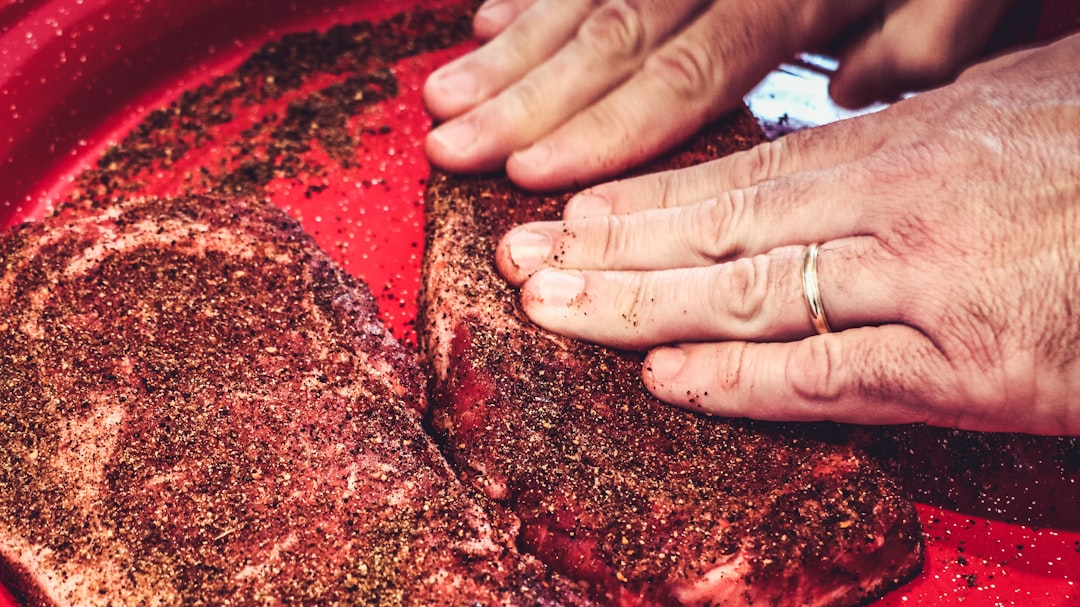
- Temper the steak. Remove the steaks from the refrigerator 45 minutes before cooking. Pat them thoroughly dry on all surfaces with paper towels — this step is critical for achieving a proper sear, because surface moisture must evaporate before browning can begin, and evaporation cools the meat’s surface. Season generously on all sides with kosher salt and black pepper. The salt will draw out a small amount of moisture, which will reabsorb during the tempering period, seasoning the interior of the steak.
- Preheat the cast iron. Place your cast iron skillet on the burner over medium-high heat for a full 5 minutes. You want the pan genuinely hot — a drop of water should evaporate on contact instantly. The pan should be lightly smoking before you add the oil. This extended preheat ensures even heat distribution across the entire cooking surface, eliminating cold spots that cause uneven searing.
- Sear the first side. Add the avocado oil and swirl to coat. Immediately lay the steaks away from you in the pan (this prevents oil from splashing toward you). Press them gently with a spatula to ensure full contact with the pan surface. Cook without moving for 4 minutes. Do not touch, flip, or peek. The crust forms through uninterrupted contact with the hot surface. You will hear an aggressive sizzle — that is the sound of the Maillard reaction at work.
- Flip once. After 4 minutes, flip the steaks. The seared side should be deeply browned, almost mahogany. If it is pale, your pan was not hot enough — leave it 60 more seconds next time. Cook the second side for 3 minutes for medium-rare (see the temperature table below for other doneness levels).
- Baste with aromatics. During the last 2 minutes of cooking, add the 2 tablespoons of butter, crushed garlic cloves, thyme sprigs, and rosemary sprigs to the pan. As the butter melts and foams, tilt the pan slightly and use a large spoon to continuously baste the steaks with the fragrant, foaming brown butter. The butter bastes the surface, the herbs infuse the fat with aromatic oils, and the garlic adds a subtle sweetness. This step adds an enormous amount of flavor in a short time.
- Sear the fat cap. If your ribeye has a thick fat cap on the edge, use tongs to hold the steak on its side, pressing the fat cap against the pan surface for 60 seconds until it renders and crisps. This transforms a chewy, rubbery strip of fat into a crunchy, caramelized bonus.
- Rest the steak. Transfer the steaks to a cutting board or warm plate. Immediately place a thick round of compound butter on top of each steak. Tent loosely with aluminum foil and rest for 10 minutes. During this time, the internal temperature will rise 5 to 8 degrees (carryover cooking), the muscle fibers will relax and reabsorb their juices, and the compound butter will melt into a fragrant, herby pool that becomes your sauce. Do not skip this step — cutting into a steak immediately after cooking causes the pressurized juices to flood onto the plate instead of staying in the meat.
- Slice and serve. Slice the steak against the grain into 1/2-inch thick strips if desired, or serve whole. Spoon the melted compound butter and any accumulated juices from the cutting board over the top. Finish with a pinch of flaky sea salt.
Reverse Sear vs. Traditional Sear
The method above is the traditional sear: high heat first, rest after. But there is a second technique that has gained enormous popularity among serious home cooks, called the reverse sear. Understanding both methods will let you choose the best one for any situation.
| Factor | Traditional Sear | Reverse Sear |
|---|---|---|
| Method | Sear in hot pan first, then rest | Slow-roast in oven first, then sear in hot pan |
| Best for | Steaks 1 to 1.25 inches thick | Steaks 1.5 inches or thicker |
| Oven temp | Not used | 250°F (120°C) until 10–15°F below target |
| Internal temp control | Good — requires experience to nail timing | Excellent — gradual heating gives wide window |
| Crust quality | Excellent — deep, even crust | Superior — dry surface sears harder and faster |
| Edge-to-edge doneness | Good — thin gray band around the pink center | Exceptional — pink from edge to edge with no gray band |
| Total time | 20–25 minutes (including rest) | 60–75 minutes (mostly hands-off oven time) |
| Difficulty | Medium — timing is critical | Easy — very forgiving, hard to overcook |
| Resting needed? | Yes, 8–10 minutes | No — muscle fibers relax during slow oven phase |
The Serious Eats reverse sear technique, popularized by J. Kenji Lopez-Alt, is particularly well-suited for thick-cut steaks where the traditional method tends to overcook the outer layers before the center reaches the desired temperature. For the 1 to 1.25 inch ribeyes in this recipe, the traditional sear produces outstanding results and is significantly faster. For special-occasion two-inch tomahawk steaks, use the reverse sear.
The Science of the Maillard Reaction
The deep brown crust on a properly seared steak is the product of the Maillard reaction, a chemical process that occurs when amino acids and reducing sugars are heated above approximately 300°F (149°C). Named after French chemist Louis-Camille Maillard, this reaction produces hundreds of new flavor compounds, including the complex savory, nutty, roasty notes that we instinctively associate with “delicious.”
The Maillard reaction is not the same as caramelization (which involves only sugars) or burning (which involves combustion). It is a constructive chemical process that creates new molecules with flavors that did not exist in the raw meat. This is why boiled steak and seared steak taste fundamentally different even though both reach the same internal temperature.
Why Surface Dryness Matters
Water boils at 212°F (100°C) — well below the 300°F threshold where the Maillard reaction begins. As long as the steak’s surface is wet, all the pan’s heat energy goes toward evaporating that moisture rather than browning the meat. This is why patting steaks dry with paper towels and tempering them (which allows surface moisture to evaporate) are not optional steps. A dry steak in a hot pan starts browning immediately. A wet steak steams and turns gray.
Why Cast Iron Is Superior for Searing
Cast iron’s thermal mass — the ability to store and deliver heat energy — is the reason it produces better sears than thinner pans. When a cold steak hits a hot stainless steel pan, the pan’s temperature drops dramatically because the thin metal cannot store enough heat energy to compensate. Cast iron, being much thicker and denser, maintains its temperature throughout the searing process, delivering consistent browning energy to the entire steak surface.
Steak Doneness Temperature Guide
| Doneness | Pull Temperature | Final Temperature (after resting) | Center Color | Texture |
|---|---|---|---|---|
| Rare | 115°F (46°C) | 120–125°F (49–52°C) | Cool red center | Very soft, slippery |
| Medium-Rare | 125°F (52°C) | 130–135°F (54–57°C) | Warm red to pink center | Tender, juicy, slight resistance |
| Medium | 135°F (57°C) | 140–145°F (60–63°C) | Hot pink center | Firm but still juicy |
| Medium-Well | 145°F (63°C) | 150–155°F (66–68°C) | Slightly pink center | Firm, less juicy |
| Well-Done | 155°F (68°C) | 160°F+ (71°C+) | No pink, uniformly brown | Firm, dry |
Important note on carryover cooking: Always pull the steak 5 to 10 degrees below your target final temperature. The residual heat continues cooking the interior during the resting period. A steak pulled at 125°F will reach 130–135°F after 10 minutes of rest. An instant-read thermometer like the ThermoWorks Thermapen is the most reliable way to hit your target every time — the guesswork of the finger-poke test is not worth the price of a good steak.
Compound Butter Variations
| Butter Style | Ingredients (per 1/2 cup butter) | Flavor Profile | Best Paired With |
|---|---|---|---|
| Classic Herb (this recipe) | Parsley, thyme, rosemary, garlic, lemon zest | Fresh, aromatic, versatile | Any steak cut, chicken, fish |
| Blue Cheese | 2 oz crumbled blue cheese, chives, black pepper | Bold, pungent, creamy | Ribeye, filet mignon, burgers |
| Black Truffle | 1 tbsp truffle paste, flaky salt, chives | Earthy, luxurious, umami-rich | Filet mignon, NY strip, special occasions |
| Cajun | 1 tbsp Cajun seasoning, garlic, parsley, hot sauce | Smoky, spicy, robust | Ribeye, pork chops, grilled corn |
| Chimichurri | Parsley, oregano, garlic, red wine vinegar, red pepper flakes | Bright, herbaceous, Argentinian | Skirt steak, flank steak, hanger steak |
| Miso-Ginger | 1 tbsp white miso, 1 tsp grated ginger, scallion, sesame | Savory, umami, Asian-inspired | NY strip, wagyu, salmon |
Why This Recipe Works
This recipe succeeds because every step is designed to maximize the two things that matter most in a steak: crust and juiciness. The 45-minute tempering ensures the steak cooks evenly from edge to center. The paper-towel drying eliminates surface moisture so the Maillard reaction begins immediately. The 5-minute cast iron preheat stores enough thermal energy to maintain searing temperature when the cold protein hits the surface. The single flip with a 4-minute sear per side creates a deep, even crust without overcooking the interior. The aromatic butter baste in the final minutes adds a layer of herb-infused richness. And the 10-minute rest with compound butter allows the juices to redistribute while simultaneously creating a ready-made sauce.
The compound butter is the detail that elevates this from a good steak to a memorable one. As it melts across the hot surface, the herbs release their volatile oils, the garlic sweetens in the residual heat, and the butter mingles with the steak’s natural juices to form a sauce that no bottled steak sauce can replicate.
Storage and Reheating
Leftover steak: Wrap tightly in plastic wrap or place in an airtight container. Refrigerate for up to 3 days. For the best reheating results, place the steak on a wire rack set over a sheet pan in a 250°F (120°C) oven for 15 to 20 minutes until the internal temperature reaches 110°F (43°C), then sear briefly in a hot skillet for 30 seconds per side. This two-stage method rewarms the steak gently without overcooking it. Microwaving is the enemy of leftover steak — it heats unevenly and steams the crust into a rubbery gray surface.
Compound butter: Refrigerate for up to 1 week or freeze for up to 3 months. Slice rounds from the frozen log as needed — there is no need to thaw the entire roll. The butter is also excellent on grilled vegetables, baked potatoes, steamed fish, warm bread, and roasted chicken.
Repurposing leftovers: Cold leftover steak sliced thin makes outstanding steak sandwiches, steak salads, steak tacos, or steak and eggs for breakfast. The flavor is often better the next day as the seasoning has had time to permeate the meat.
For more dinner ideas, check out our crispy honey garlic chicken thighs or explore the full dinner collection.
Nutrition Facts (Per Serving — 1 Steak)
| Calories | 580 kcal |
| Protein | 48g |
| Carbohydrates | 1g |
| Fat | 42g |
| Saturated Fat | 20g |
| Cholesterol | 165mg |
| Sodium | 680mg |
| Iron | 4.5mg (25% DV) |
Frequently Asked Questions
How long should I let steak come to room temperature before cooking?
Forty-five minutes is the sweet spot. A 1-inch steak left on the counter for 45 minutes will lose its deep refrigerator chill and cook more evenly, though the center will still be well below room temperature. Longer than 2 hours enters the food safety danger zone (40°F–140°F / 4°C–60°C). The real benefit of tempering is not reaching room temperature — it is removing enough chill that the pan temperature does not crash when the steak hits the surface.
Should I use butter or oil for searing?
Start with a high-smoke-point oil (avocado oil, grapeseed, or refined canola) and add butter in the last 2 minutes for basting. Butter added at the beginning will burn and turn acrid because its milk solids scorch above 350°F (177°C). Oil can withstand the 450°F+ temperatures needed for a proper sear without smoking excessively. The late-added butter gets all the flavor benefits without the burning risk.
How often should I flip the steak?
For the traditional sear method, one flip is all you need. Some expert sources, including J. Kenji Lopez-Alt, advocate for frequent flipping (every 30 seconds), which can produce more even cooking. However, for home cooks, a single flip is simpler, produces an excellent crust, and is more forgiving. Choose the method that feels comfortable and suits your attention level.
Do I need to rest the steak, and does it really make a difference?
Yes, and the difference is dramatic. During cooking, the heat drives the juices toward the center of the steak. If you cut immediately, those pressurized juices flood onto the cutting board — you can lose up to 40 percent of the moisture. Resting for 8 to 10 minutes allows the muscle fibers to relax and the juices to redistribute evenly throughout the meat. The steak will be visibly juicier when sliced.
What is the best cut of steak for cast iron cooking?
Ribeye is ideal because its high fat content keeps it juicy and flavorful even with the intense heat of cast iron. New York strip is a close second — leaner but with a satisfying chew. Filet mignon works but benefits from the reverse sear due to its thickness. T-bone and porterhouse are challenging in cast iron because the bone prevents even contact with the pan surface. For those cuts, grilling is usually superior.
Final Thoughts
A cast iron steak is one of the most satisfying things you can cook at home, and this recipe gives you every tool you need to do it right. The method is simple: dry the surface, heat the pan, sear without fussing, baste with butter and herbs, rest with compound butter, eat. No grill required. No sous vide machine. No restaurant reservation. Just a heavy pan, a good piece of meat, and the patience to let the heat do its work. That is cooking at its most honest, and I think you will find the results speak for themselves.
For sandwich technique fundamentals, see the Serious Eats sandwich building guide. Nutritional values referenced from USDA FoodData Central. Bread selection tips from King Arthur Baking.
Frequently Asked Questions
Can I make this sandwich ahead of time?
Assemble up to 4 hours ahead, but add the avocado and any wet ingredients just before serving to prevent soggy bread. Wrap tightly in parchment paper and refrigerate.
What bread works best for this sandwich?
Sourdough or ciabatta hold up best against the moisture from the chicken and avocado. Avoid soft white bread, which will compress and become soggy under the weight of the fillings.
How do I keep the chicken moist?
Brine the chicken breast in salted water for 30 minutes before cooking, or use chicken thighs which have more natural fat. Let the cooked chicken rest for 5 minutes before slicing to retain juices.
Can I make this vegetarian?
Replace the chicken with grilled halloumi, marinated portobello mushroom, or crispy chickpea patties. The herb dressing and avocado work beautifully with all three alternatives.
For expert sandwich construction techniques, refer to the Serious Eats sandwich guide. Ingredient nutrition data sourced from USDA FoodData Central. Bread pairing recommendations from King Arthur Baking.
Disclaimer: This article is for informational purposes only. Nutritional values are estimates and may vary based on steak size, marbling, and specific cuts. The USDA recommends cooking beef to a minimum internal temperature of 145°F (63°C) for food safety. Consuming undercooked meat carries inherent risk. This content does not constitute medical or dietary advice.