Americans cooking 2026 survey reveals home kitchens reshaping how the nation eats
The story of the Americans cooking 2026 survey does not start in a research lab or a marketing office. It starts in millions of kitchens where people quietly chose to turn on the stove instead of tapping a delivery app. By the time new data began to surface in late 2025, one pattern was already clear: home cooking was no longer a pandemic‑era phase. It was becoming a durable habit with cultural, economic, and emotional weight, reshaping how Americans think about food, health, and everyday comfort. One Pan Weight Loss Recipes for Faster Weeknight Results
According to The 2025–2026 State of Home Cooking Report (a HelloFresh study), roughly 93% of Americans expect to cook as much or more in the next 12 months than they did the year before. That headline number sits at the center of the Americans cooking 2026 survey narrative, but the real story is what it reveals about shifting priorities: less obsession with restriction, more focus on pleasure, comfort, and control in an uncertain economy.
At the same time, a separate survey commissioned by Challenge Butter (a brand‑sponsored poll), covered by Tasting Table and summarized in outlets such as Yahoo Finance, found that Americans are easing away from restrictive diet rules and leaning into a more joyful, flexible relationship with food. Another piece of coverage framed it bluntly: people are letting go of old diet baggage.
Layered on top of that is a geographic twist. A national poll highlighted by Scripps News crowned California the U.S. “food champion,” and reported that a strong plurality of respondents see 2026 as their personal “year of the kitchen.” That phrase captures the mood better than any statistic: the kitchen is becoming a stage for identity, creativity, and even quiet rebellion against fast food and ultra‑processed routines.
This article pulls those threads together. Drawing on the leading reports and polls, it maps how cooking statistics, fast food vs home‑cooked meal trends, and regional pride are reshaping what and how Americans eat—and what that likely means for the rest of 2026 and beyond.
From survival skill to lifestyle choice: inside the 2025–2026 home cooking surge
On a cold weeknight in Cleveland, a single parent scrolls past takeout offers and instead opens a recipe app. In Phoenix, a recent college grad experiments with a sheet‑pan dinner to stretch a tight paycheck. In Atlanta, grandparents teach a teenager how to fry chicken without burning the oil. These scenes look ordinary, but together they explain why the latest home cooking indicators are notable.
The 2025–2026 State of Home Cooking Report captures that shift in survey data. It reports that a large majority of Americans expect to maintain or increase their home cooking frequency over the coming year. That figure matters because it follows several years of disruption—supply chain shocks, inflation, and a boom in restaurant delivery platforms.
Polling summarized by SupplySide Journal points in the same direction: about four in ten respondents there report cooking at home five or more times per week, while additional segments cook three to four times or one to two times weekly. When those groups are combined, a strong majority of U.S. adults are preparing at least several home meals each week. Americans Cooking: Fast Healthy Weeknight Wins
Several factors may be contributing to this behavior rather than a single clear cause: continued pressure on household food budgets, high restaurant prices, health concerns about highly processed products, and the satisfaction of controlling what goes on the plate. Analysts also note that younger generations, raised on online tutorials and social cooking content, are more comfortable treating cooking as a creative hobby rather than a chore.
- Economic pressure: rising out‑of‑home meal costs are making home cooking feel like a practical choice for many households.
- Health awareness: some consumers worried about ultra‑processed foods and sodium are gravitating toward basic ingredients they can control.
- Skill access: online videos and step‑by‑step apps have lowered the barrier to entry for beginners.
- Emotional payoff: home cooking offers a sense of control and accomplishment for people navigating uncertainty.
- Social media influence: viral recipes and “cook with me” content turn dinner prep into a shareable experience.
- Cooking frequency appears to be stabilizing at higher levels than pre‑pandemic baselines, suggesting a behavioral shift rather than a short‑lived spike.
- Practical convenience—frozen produce, pre‑chopped veggies, semi‑homemade shortcuts—is enabling more frequent home meals without added stress.
- Regional culinary pride is turning everyday kitchens into hubs for cultural preservation and adaptation, widening the impact beyond metropolitan “foodie” enclaves.
In my experience tracking food trends, this combination is unusual. Historically, surges in home cooking faded when economic or health pressures eased. The Americans cooking 2026 survey data suggests this time may be different, though the long‑term trajectory will depend on how many of these habits stick.
A quiet revolution: why Americans are cooking more but stressing less
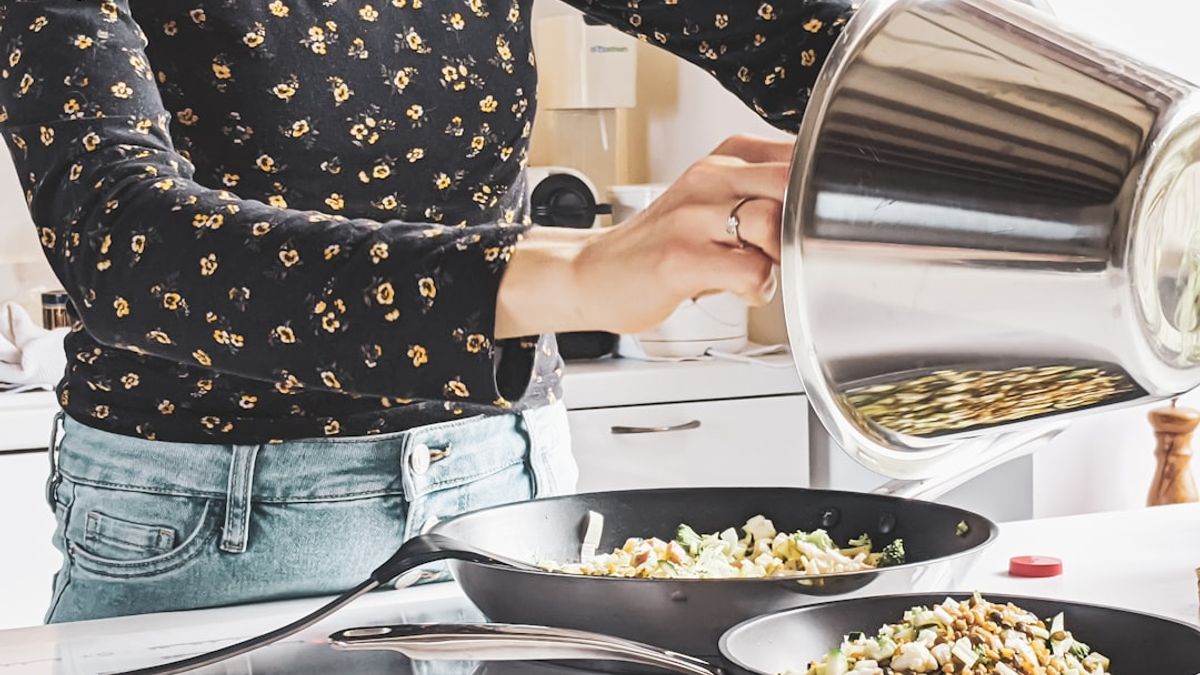
The most notable thread across recent coverage is that people may be spending more time in the kitchen while simultaneously worrying less about perfection, restriction, and rigid rules. A Challenge Butter–commissioned poll (reported by Tasting Table and Yahoo Finance) describes a mindset shift: home cooking is being reframed as joy, not judgment.
That survey, which the coverage reports reached more than two thousand Americans, indicates many respondents are deliberately loosening their grip on restrictive diet rules. Instead of counting every calorie, respondents describe a focus on satisfaction, balance, and the emotional side of eating. This does not mean nutrition is ignored; rather, “healthy” is increasingly defined to include mental well‑being and pleasure.
This perspective aligns with broader guidance from institutions such as the Mayo Clinic, which notes sustainable eating patterns often emphasize variety, whole foods, and enjoyment instead of extreme restriction. This article is for informational purposes only and does not provide medical advice; consult a healthcare professional for personalized guidance.
Another nuance is the growing willingness to use convenience tools without guilt. Frozen vegetables, pre‑chopped produce, jarred sauces, and semi‑homemade shortcuts are no longer seen as “cheating” by many home cooks. This helps explain why people can cook more often without feeling crushed by time pressure. Observers of fast food vs home‑cooked meal trends note that this hybrid approach—combining store‑bought components with home seasoning and assembly—makes it easier to choose home meals over drive‑thru stops.
Food writers at the New York Times have described 2026 as a year of “quieter tastes,” where people seek small, dependable pleasures instead of flashy, high‑stress experiences. Home cooking fits that mood: it offers a reliable way to care for oneself and others without the noise of diet culture or the unpredictability of restaurant service. Forgotten American Recipes Revive Weeknight Flavor Fast
Taken together, these shifts suggest the rise in cooking frequency is not simply a reaction to external pressures like prices; it may reflect a broader reevaluation of what food should feel like in everyday life.
Are Americans really letting go of restrictive eating—and what replaces it?
What exactly are Americans discarding when surveys say they are “letting go of restrictive eating,” and what is taking its place? The brand‑commissioned research and accompanying coverage offer some clues, but the implications reach beyond any single poll.
Analysis of the Americans cooking 2026 survey landscape suggests three overlapping trends: a move away from rigid diet labels, a renewed interest in satisfaction and satiety, and a more pragmatic relationship with indulgent foods.
- Rigid diet identities are softening. Coverage emphasizes fewer people wanting to be boxed into strict identities such as “always low‑carb” or “never eat dessert.” Instead, respondents use softer language—“mostly” eating a certain way—suggesting a desire for flexibility rather than an all‑or‑nothing approach.
- Satisfaction is being treated as a health metric. Respondents describe “feeling satisfied” and “feeling good after I eat” as important outcomes. This aligns with nutrition guidance that meals rich in fiber, protein, and healthy fats tend to support satiety. Information on high‑fiber foods and satiety is summarized on public portals such as the U.S. Department of Agriculture’s Nutrition.gov.
- Indulgence is being reframed as intentional. Butter, baked goods, and comfort dishes remain on many tables; the trend is toward choosing them deliberately and pairing them with nutrient‑dense staples rather than prohibiting them entirely.
Within that framework, common questions about what to eat to be healthy in 2026 take on a nuanced tone. Health‑focused outlets often highlight dark leafy greens, fatty fish, fermented foods, legumes, and high‑fiber ingredients as useful staples. Reviews and summaries from public health and academic sources—such as the National Institutes of Health and the Harvard T.H. Chan School of Public Health—note that dietary patterns emphasizing vegetables, whole grains, and minimally processed foods are associated with better long‑term outcomes, though individual needs vary.
Home cooking becomes the practical tool that makes this style of eating feasible. It is easier to add a handful of spinach to pasta, swap in beans for some meat, or stir yogurt into a sauce when you are in charge of the pan. The Americans cooking 2026 story is therefore not just about how often people cook, but about the type of food culture home kitchens are quietly enabling.
“Year of the kitchen”: how geography and pride shape Americans’ cooking habits
“For me, 2026 is the year of the kitchen,” a California respondent told pollsters in a Scripps News survey. That sentiment, echoed from New York to Alabama, captures the emotional charge behind the latest regional cooking data. Americans Cooking Survey: Beat Weeknight Burnout Fast
The Scripps‑covered poll named California the U.S. “food champion,” but the more revealing detail is how many people across states see the coming year as a turning point for their cooking lives. The report notes that a sizable share of respondents described 2026 as their “year of the kitchen,” with stronger interest in some states, including New York, South Carolina, and Alabama.
This regional breakdown suggests culinary pride is not limited to obvious foodie hubs like Los Angeles or Brooklyn. In the Americans cooking 2026 narrative, smaller cities and rural communities also appear as centers of home‑kitchen ambition. Local identity matters: people in Louisiana mention gumbo and jambalaya; Texans cite barbecue and breakfast tacos; Midwesterners point to casseroles and hotdishes that stretch a budget and feed a crowd.
When researchers compare fast food and home‑cooked meal patterns, they often find access and culture matter as much as income. Areas with traditions of church suppers, potlucks, or family Sunday dinners tend to have deeper home‑cooking roots, while long‑commute regions with more drive‑thrus may lean heavier on takeout. The 2026 data hints these patterns are shifting as more people across the map consciously reclaim their kitchens.
Food historians also note that many iconic American dishes are hybrids shaped by immigration and regional adaptation. California’s food‑champion status in the Scripps poll reflects that hybridity: Korean tacos, mission‑style burritos, and farm‑driven salads all sit alongside more traditional fare.
In my view, the “year of the kitchen” phrase is less about any one state’s ranking and more about a shared sense that the kitchen is where Americans negotiate identity, budget, and health in real time. That may explain why the share of Americans who cook at home is rising even in places with abundant restaurant options.
Regional kitchens vs national trends
Regional pride does not erase national patterns; it reshapes them. Coastal cities often emphasize sustainability, plant‑forward menus, and global flavors. In the Midwest and South, comfort dishes and large‑batch cooking dominate interviews, increasingly paired with efforts to add vegetables and cut food waste.
Comparing these approaches reveals a convergence: regardless of zip code, home cooks juggle time, money, and meaning. They may choose different spices or proteins, but they share motivations—control over ingredients, feeding loved ones, and stretching grocery budgets in ways a drive‑thru cannot.
Home stove vs drive‑thru window: what the numbers say about cooking and fast food
Fast food chains are not disappearing, but the Americans cooking 2026 data suggest their dominance is being quietly challenged by a resurgent home stove. The tension between these options becomes clear when cooking frequency data and industry commentary are considered together.
Polling summarized by SupplySide Journal indicates about four in ten Americans prepare meals at home five or more times per week, with additional segments cooking several times weekly. That means a substantial share of dinners are now home‑cooked. Industry observers have also noted some consumers are cutting back on spontaneous fast‑food runs, reserving them for specific cravings rather than default weeknight dinners.
The reasons are pragmatic. Fast‑food prices have climbed along with grocery costs, and the value perception has shifted: the price of a single combo meal can rival ingredients for a simple pasta or stir‑fry that feeds several. When families compare options, home cooking often wins on cost and yields more control over ingredients.
Nutritionally, the balance leans toward home kitchens in many cases. While not every home‑cooked meal is automatically healthy, people who cook regularly have more opportunities to add vegetables, moderate portion sizes, and limit sugary drinks. Public health guidance from the Centers for Disease Control and Prevention notes diets high in fruits, vegetables, and whole grains are associated with better long‑term outcomes. Home cooks are better positioned to follow that advice than someone relying heavily on drive‑thru menus.
However, convenience remains fast food’s strongest advantage. Long workdays, childcare duties, and commutes still push many toward the quickest option. That is why hybrid strategies—batch cooking, freezer meals, and semi‑prepared ingredients—are important: they create a middle ground that competes with fast food on speed while often outperforming it on cost and nutrition.
Notable statistics from recent reports and polls that frame the Americans cooking 2026 story:
- 93% — Percentage of Americans who expect to cook as much or more in the next 12 months (State of Home Cooking Report, HelloFresh, 2025–2026; company study).
- ~40% — Share reporting they cook at home five or more times per week (SupplySide Journal summary of national polling).
- ~58% — Share describing 2026 as their “year of the kitchen” (Scripps News poll reporting statewide breakdowns).
- 2,000+ — Approximate sample size reported for the Challenge Butter–commissioned poll covered by Yahoo Finance and others.
- 2 hours — FDA‑advised maximum time perishable food should sit at room temperature before refrigeration or discarding (shorter at temps >90°F).
- 3–4 days — Recommended refrigerated storage window for most leftovers before consumption or freezing (FDA food‑safety guidance).
| Metric | Value | Source |
|---|---|---|
| Share planning to cook the same or more in next 12 months | 93% | HelloFresh, State of Home Cooking Report (2025–2026) — company study. |
| Respondents cooking at home ≥5 times/week | ~40% | SupplySide Journal (national polling summary) |
| Respondents calling 2026 their “year of the kitchen” | ~58% (nearly 6 in 10) | Scripps News poll (state breakdowns reported) |
| Sample size of Challenge Butter–commissioned poll | 2,000+ respondents | Challenge Butter / Yahoo Finance coverage — brand‑commissioned polling reported in press. |
| FDA recommended maximum time at room temperature for perishables | 2 hours (1 hour if ambient temperature >90°F) | U.S. Food and Drug Administration (food safety guidance) |
| Recommended refrigerated storage window for leftovers | 3–4 days | U.S. Food and Drug Administration (leftovers guidance) |
How the 2‑2‑2 mindset quietly fits into home cooking
One concept that occasionally surfaces in food‑safety and leftovers discussions is the “2‑2‑2 rule,” a shorthand some home cooks use to remember guidelines like limiting how long food sits out, how quickly it should be refrigerated, and how long it can be stored. While specific recommendations vary by source, the U.S. Food and Drug Administration generally advises refrigerating perishable food within a short window after cooking and consuming leftovers within a few days.
For Americans cooking more often in 2026, awareness of basic food‑safety rules matters because batch cooking and meal prep are on the rise. Large pots of chili, trays of roasted vegetables, and cooked grains are being portioned into containers for fast reheating. This approach supports the case for home cooking over fast food by keeping weeknight effort low, but it also requires attention to storage times and temperatures to reduce risk.
In practice, many households adopt simple systems: labeling containers with dates, dedicating a shelf to “eat this first,” or planning weekly “leftovers night” dinners. These habits support both safety and budget goals, further tipping the scale toward home‑cooked meals in the broader trend described by the Americans cooking 2026 survey.
What Americans will actually be cooking in 2026—and how it could reshape the future
Looking ahead, the Americans cooking 2026 findings are less about a single year and more about the trajectory they suggest for the next decade of American eating. If current patterns hold, home kitchens could become the primary testing ground for new health habits, cultural mash‑ups, and budget strategies that influence restaurants, grocery shelves, and food media alike.
Disclaimer: The information in this article is for general informational purposes only and is not intended as medical advice. Always consult a qualified healthcare professional before making changes to your diet or health routine.
Pastry chef with nine years in boutique patisseries and fine-dining kitchens across Tokyo and Paris. Focuses on plated desserts, wagashi techniques, sugar and gelatin work, and adaptable gluten-free pastry methods.