The first thing that jumps out of the Americans cooking 2026 survey landscape is how many people are not retreating from their stoves. In the latest HelloFresh “State of Home Cooking 2025–2026” report, roughly 93% of respondents said they expect to cook as much or more at home in the next 12 months than they did in the previous year. That single data point overturns the assumption that delivery apps and prepared meals would permanently replace home kitchens.
Layered on top of that is a cultural shift in how people talk about eating. A Challenge Butter survey, highlighted by Tasting Table, found that about 60% of American adults now prefer flexibility in how they eat or have no fixed plans at all. Instead of rigid “diet starts Monday” rules, the emerging mindset blends comfort food, health goals, and convenience into something more fluid.
Regional pride is surging too. A nationwide poll covered by Yahoo’s Creators platform and Scripps News crowned California the top food state in the country and dubbed it the “US food champion.” Meanwhile, six in ten respondents across the country said 2026 will be their personal “year of the kitchen,” with even higher enthusiasm in New York, South Carolina, and Alabama. Together, these findings form the backbone of the broader Americans cooking 2026 survey story.
Put together, these home cooking statistics sketch a picture of Americans who are cooking frequently, eating more intuitively, and using their kitchens as a way to express identity. In this deep dive, I’ll unpack what these trends actually mean: how often people cook, what they’re eating, how eating out vs cooking at home statistics are evolving, and why something as simple as a banana in a recipe can signal bigger changes in how we cook. You might also enjoy Americans Cooking 2026: Quick, Healthy Weeknight Wins.
The new normal: Stories from the “year of the kitchen”
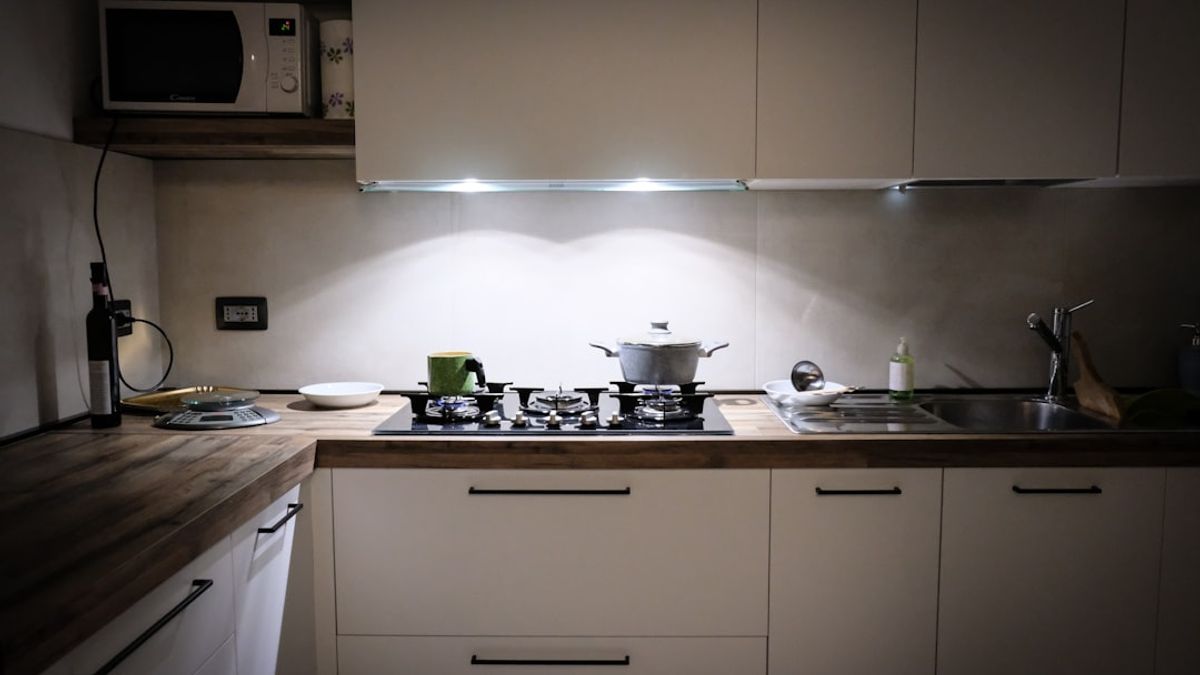
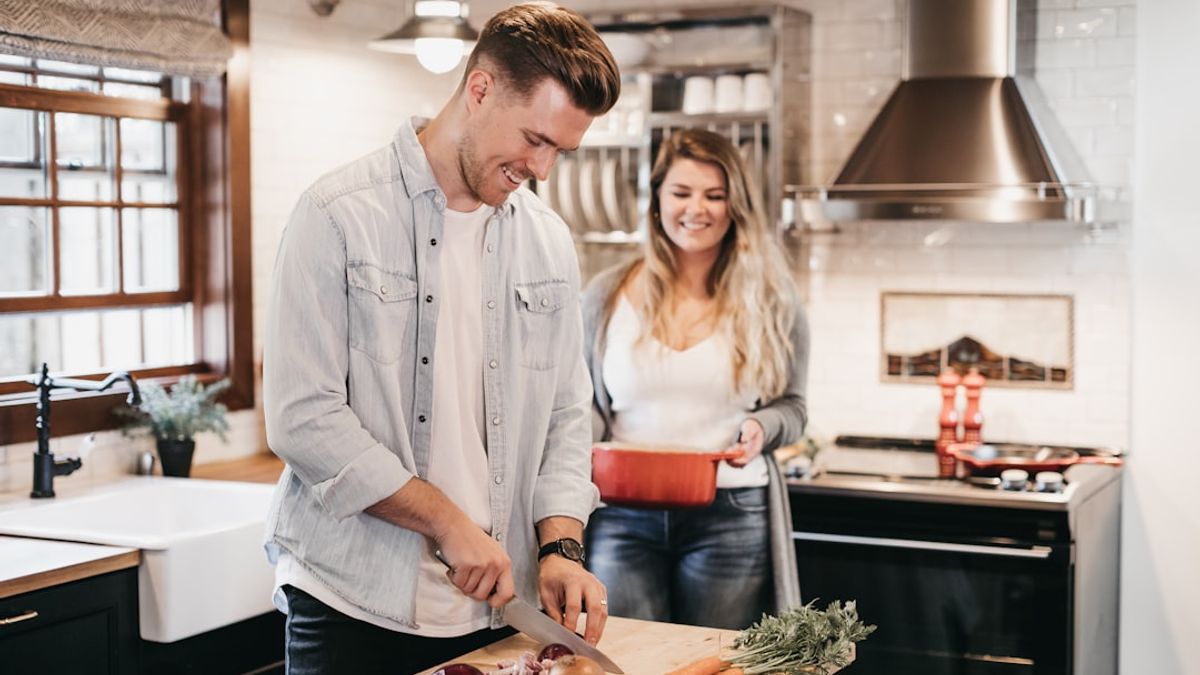
On a chilly January evening in Brooklyn, a 32‑year‑old software engineer named Maya posted a photo of her tiny galley kitchen on Instagram with the caption: “2026 is my year of the kitchen.” The picture wasn’t glamorous—sheet pan chicken, roasted broccoli, and bananas ripening on the counter—but the comments filled with friends making the same declaration. That phrase turned out not to be just social-media talk. In the national survey reported by Scripps News, about six in ten Americans said 2026 would be their own “year of the kitchen,” with enthusiasm spiking even higher in states like New York and Alabama.
That energy matches the broader home cooking statistics emerging from the HelloFresh report. When a major meal-kit company finds that around 93% of Americans plan to maintain or increase their cooking frequency, it signals that the pandemic-era return to the stove has hardened into habit rather than fading as a temporary blip.
Behind those numbers are specific behaviors that show up in kitchens like Maya’s:
- Routine weeknight cooking: Many households now treat cooking at home as the default, not the special occasion.
- Experimenting with “low-risk” recipes: People try new sauces, sheet-pan combinations, or banana-based bakes rather than complex restaurant-style dishes.
- Batch cooking for flexibility: Cooking once, then remixing components into bowls, wraps, and salads across several days.
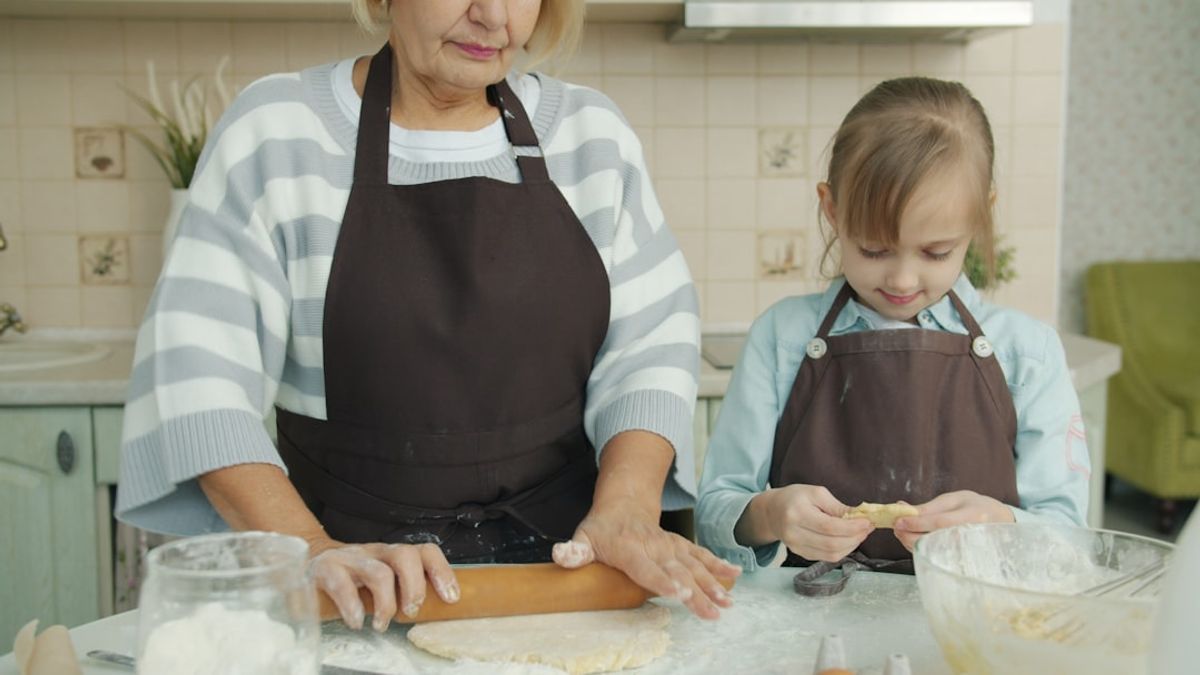
- Shared cooking traditions: Households schedule weekly taco nights, pasta Sundays, or baking afternoons with kids or roommates.
In my experience reviewing dozens of consumer food surveys each year, this combination—high intention to cook, plus modest experimentation—usually leads to sustained change. People are not trying to become professional chefs. They are building a realistic home cooking rhythm that fits real life, and the Americans cooking 2026 survey data suggests that rhythm is sticking.
Context: Several of the data points discussed in this article come from large, public-facing industry and consumer polling efforts. Three of the clearest sources are HelloFresh’s “State of Home Cooking 2025–2026” report, the Challenge Butter survey reported by Tasting Table, and the nationwide poll covered by Yahoo Creators and Scripps News.
- HelloFresh’s State of Home Cooking 2025–2026 reports that roughly 93% of respondents expect to cook as much or more at home in the coming 12 months, indicating broad intent to sustain or increase home cooking (HelloFresh).
- The Challenge Butter survey, as summarized by Tasting Table, found that about 60% of American adults prefer flexibility in how they eat or have no fixed meal plan, signaling a nationwide shift away from strict diet frameworks (Challenge Butter via Tasting Table).
- The Scripps News / Yahoo Creators coverage of a nationwide poll notes that roughly 60% of people described 2026 as their “year of the kitchen,” with enthusiasm especially strong in states such as California, New York, South Carolina, and Alabama.
Source summary: HelloFresh “State of Home Cooking 2025–2026” (HelloFresh); Challenge Butter survey as reported by Tasting Table; nationwide poll reported by Yahoo Creators and Scripps News.
From diet rules to flexible eating: A subtle but powerful mindset shift
About 60% of American adults now say they either want flexibility in how they eat or do not follow any structured plan at all, according to the Challenge Butter survey summarized by Tasting Table. That finding dovetails with the broader Americans cooking 2026 survey narrative: people are cooking more, but they are doing it on their own terms.
Instead of following rigid diet frameworks, many people are adopting what analysts often call “intuitive structure.” They build a loose framework—like focusing on vegetables at most meals, or planning a few home-cooked dinners each week—but allow for spontaneous takeout, dessert, or late-night snacks without labeling them as failures.
Several forces are driving this change. First, years of exposure to conflicting nutrition advice have left many consumers skeptical of extreme claims. Second, social media platforms like TikTok and Instagram have normalized “what I eat in a day” content that mixes smoothies with fast food, salads with cookies. The visual narrative is less about perfection and more about balance over time.
This mindset shows up in how people use their kitchens.
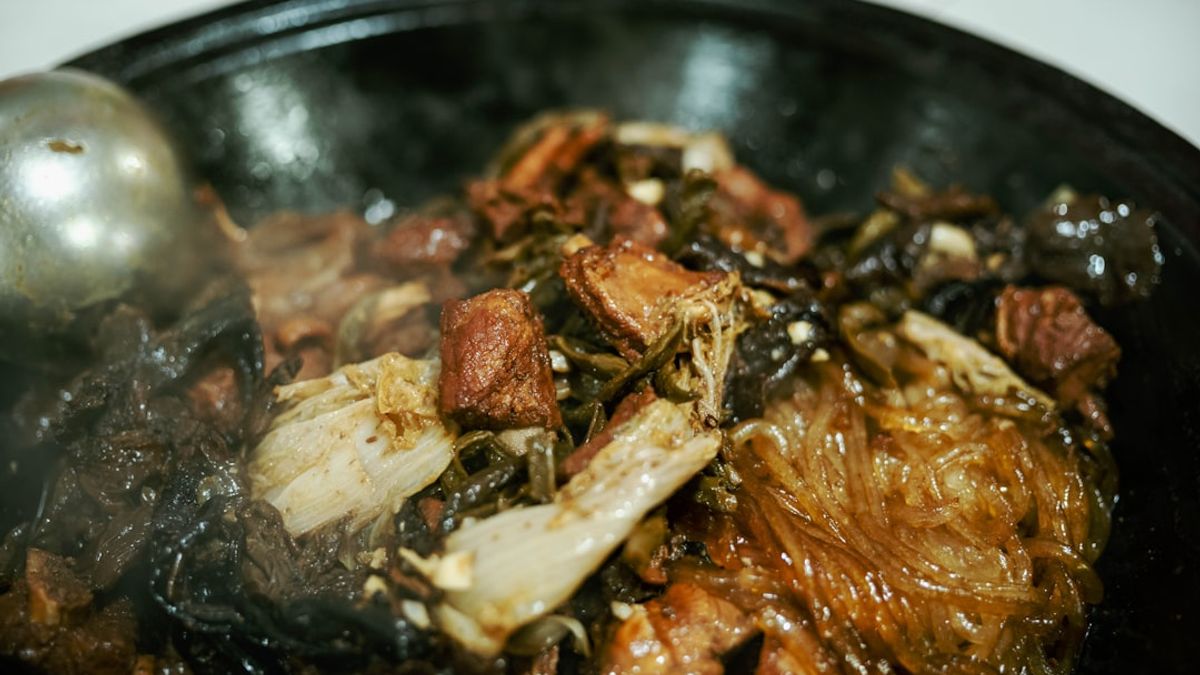
Someone might cook a pot of beans on Sunday, roast a tray of vegetables on Monday, and then assemble quick meals from those components throughout the week. That structure supports health goals without requiring a fixed meal plan. It also aligns with guidance from institutions such as the Mayo Clinic, which encourages patterns rich in vegetables, whole grains, and lean proteins rather than single “miracle” foods.
Another implication is psychological. When people stop labeling foods as “good” or “bad,” they often feel less guilt around eating, which can reduce the binge–restrict cycle that many commercial diets unintentionally create. While long-term research on this specific 2026 shift is still emerging, nutrition scientists and registered dietitians quoted by outlets like The New York Times have noted a move toward “quieter” food trends—less moralizing, more enjoyment, and an emphasis on small, sustainable habits.
For home cooks, the practical takeaway is clear: the 2026 trends favor flexible frameworks. Cook often, keep nutrient-dense ingredients on hand, and allow your kitchen to support both comfort and health rather than forcing it to be a diet boot camp. Explore this further in American Recipes for Stress‑Free Weeknight Dinners.
Are Americans really cooking more? What the numbers do—and don’t—say
How much more are Americans actually cooking, and how does that compare with restaurant and delivery habits? That question sits at the center of the Americans cooking 2026 survey conversation, because home cooking statistics can easily be misinterpreted.
| Metric | Value | Source |
|---|---|---|
| Respondents expecting to cook as much or more at home in the next 12 months | 93% | HelloFresh “State of Home Cooking 2025–2026” |
| Adults preferring flexible eating or no fixed plan | ~60% | Challenge Butter survey (reported by Tasting Table) |
| Respondents saying 2026 is their “year of the kitchen” (nationwide) | ~60% (nationwide); higher in NY, SC, AL (~65–70%) | Scripps News / Yahoo Creators nationwide poll |
| Respondents focusing on creating or maintaining cooking traditions in 2026 | More than one‑third | Scripps News / Yahoo Creators nationwide poll |
On one hand, the HelloFresh report’s finding that roughly 93% of respondents expect to cook as much or more at home suggests that cooking has become a stable part of daily life. On the other hand, restaurant industry data, including the National Restaurant Association’s culinary forecast, indicates that dining out and ordering in remain deeply embedded in American routines.
The reality is a nuanced blend rather than a clean either/or. Analysis of eating out vs cooking at home statistics from industry observers shows several overlapping patterns:
- Home cooking as the weekday default: Many households reserve dining out for weekends or special occasions, using weekday evenings for simple home-cooked meals.
- Restaurant food as “event” rather than habit: Compared with a decade ago, restaurant meals are more often framed as experiences—birthdays, date nights, or trying a buzzed-about tasting menu—rather than everyday sustenance.
- Hybrid behaviors: People might cook a main dish at home but rely on a store-bought side, prepared salad, or bakery dessert.
- Delivery as backup, not baseline: Delivery apps remain popular but are increasingly treated as a safety net for hectic days rather than the default plan.
It’s also worth noting that survey data usually captures intentions more clearly than precise behavior. When someone says they “plan to cook more,” they may succeed some weeks and fall short others. But when that intention is shared by a large majority, as in the HelloFresh report, it typically translates into a measurable upward trend over time.
In my view, the most important takeaway is not that Americans have abandoned restaurants—far from it. It’s that cooking at home has reclaimed cultural status. It is no longer the “lesser” option compared with dining out; it is a parallel track where people express creativity, control ingredients, and build traditions.
“California is the food champion”: What regional pride tells us
“California is absolutely the food champion,” one respondent told Scripps News when asked to name the best food state in the country. That quote captures the tone of the survey that crowned California the top food state and, in a broader sense, the pride many Americans feel about their regional food culture.
The Yahoo Creators article on the same survey notes that California topped the rankings, but it also highlights how people across the country are investing emotionally in their kitchens. More than a third of respondents said they were specifically focusing on creating or maintaining cooking traditions with loved ones in 2026. That detail matters because it reframes cooking from a solitary chore into a communal act. Americans cooking 2026 survey results consistently point to this blend of pride and togetherness. Explore this further in How Americans Cook 2026: Save Time On Healthy Weeknights.
Comparing California’s “food champion” status with other states reveals a few useful contrasts:
- Ingredient access vs. ingenuity: Coastal states with abundant produce often lean on fresh ingredients, while landlocked regions highlight preservation, smoking, and baking traditions.
- Restaurant scenes vs. home tables: Cities like Los Angeles and New York are known for restaurants, yet survey data shows strong interest in recreating those flavors at home.
- Tradition vs. innovation: States with strong heritage cuisines balance respect for classics with modern twists, mirroring the “nostalgia wave” described in some 2026 food trend analyses.
What stands out is how these regional differences coexist with a shared desire to cook. Whether it’s Californians celebrating produce and fusion flavors, New Yorkers declaring their own “year of the kitchen,” or families reviving regional recipes, the Americans cooking 2026 survey trends point to a common thread: using the kitchen to claim a sense of place.
“This year I’m cooking for joy, not punishment”: Emotional drivers behind the data
For years, January has been framed as a time for restriction: cutting carbs, eliminating sugar, or starting intense detoxes. The 2026 surveys suggest a pivot toward what might be called gentle structure. People still want to eat well, but they are seeking pleasure and connection rather than self-flagellation.
Context from multiple sources supports this. The Challenge Butter survey, as covered by Tasting Table, indicates that a majority of respondents prioritize flexibility over strict rules. The HelloFresh report shows that people are cooking more, which often correlates with greater awareness of ingredients and portions. Meanwhile, trend forecasting in outlets like The New York Times describes 2026 as a year of “quieter tastes” and “little bursts of pleasure” rather than over-the-top indulgence or extreme austerity.
Comparing this mindset with earlier eras of diet culture reveals a few key differences:
- From restriction to addition: Instead of asking “What do I have to cut?” many people now ask “What can I add?”—more vegetables, more fiber, more flavor.
- From rules to rituals: Weekly soup nights, family pizza Fridays, or Sunday baking sessions replace rigid meal plans as anchors of the week.
- From guilt to curiosity: Trying a new spice blend or experimenting with bananas in savory dishes becomes a low-stakes way to explore food without judgment.
In my experience, this emotional shift is one of the most significant parts of the story. Data points about frequency and ingredients matter, but the underlying motivation—cooking as self-care and connection rather than punishment—may be what sustains these habits long-term. Explore this further in Fiber Rich Mini Meals for Busy Nights and Lasting Satiety.
Inside the Americans cooking 2026 survey: What people actually cook at home
Strip away the headlines, and one practical question remains: what are Americans actually cooking in 2026? The survey hints, industry forecasts, and social media feeds combine into a surprisingly coherent picture of everyday meals.
Weeknight patterns: Fast, familiar, and slightly upgraded
On most weeknights, home cooks lean on familiar formats: pastas, stir-fries, tacos, grain bowls, and sheet-pan dinners. The twist in 2026 is the quiet upgrading of ingredients and techniques. The National Restaurant Association’s “What’s Hot” culinary forecast highlights trends like global flavor mashups, fermented elements, and crunch-focused textures. Those same ideas trickle into home kitchens through products on supermarket shelves and recipe inspiration from brands like HelloFresh.
So a basic bowl of pasta might gain a spoonful of chili crisp, a handful of dark leafy greens, or a sprinkle of toasted breadcrumbs for texture. A simple taco night might incorporate pickled onions or a quick yogurt sauce. These micro-upgrades align with health guidance promoted by the Harvard T.H. Chan School of Public Health, which emphasizes vegetables, whole grains, and healthy fats as everyday building blocks.
The “cooking report banana” effect: Bananas as a trend signal
The odd phrase “cooking report banana” that appears in related searches actually points to a real micro-trend: bananas moving beyond breakfast smoothies and basic banana bread. In 2026, you see bananas:
- Caramelized and served over yogurt with nuts for a higher-fiber dessert
- Mashed into pancake batter to reduce added sugar
- Used in quick breads that combine whole-grain flours with nostalgic flavors
- Blended into sauces for natural sweetness in some global-inspired dishes
Nutrition guidance from institutions such as the National Heart, Lung, and Blood Institute often highlights fruits as part of a balanced pattern, and bananas are an accessible, budget-friendly option. When they show up repeatedly in recipe search data and social posts, they function as a small but telling marker of how Americans are weaving nutrient-dense ingredients into comfort foods.
Healthy eating in 2026: What people add to their plates
When readers ask, “What should I eat in 2026 to be healthy?” the survey data doesn’t prescribe a single answer, but it does align with broad nutrition recommendations. Organizations like the World Health Organization and the U.S. Dietary Guidelines emphasize:
- Dark leafy greens such as spinach, kale, and collards
- Fatty fish like salmon or sardines for omega‑3 fats
- Fermented foods including yogurt, kefir, kimchi, and sauerkraut
- Legumes—beans, lentils, chickpeas—for fiber and plant protein
- High-fiber staples: whole grains, vegetables, fruits, nuts, and seeds
The 2026 trends show these foods slipping into everyday dishes rather than being treated as special “health foods.” A pot of lentil soup on Sunday, a handful of sauerkraut on a sandwich, or a salmon sheet-pan dinner on Tuesday can move someone toward those patterns without drastic change.
From stats to strategy: How to cook smarter in 2026 without burning out
Once you understand the Americans cooking 2026 survey numbers, the next logical step is practical: how do you align your own kitchen habits with these trends in a way that feels sustainable? The goal is not to follow a script but to use the data as a reality check and a source of ideas.
Use survey insights to set realistic expectations
If roughly 93% of people intend to cook as much or more at home, it’s easy to feel pressure to match that enthusiasm. A better approach is to translate that statistic into a personal baseline. For example, you might decide that cooking three dinners at home each week is non-negotiable, while the other nights can be flexible—leftovers, takeout, or simple assembled meals.
This mirrors the flexible mindset captured in the Challenge Butter survey. Instead of an all-or-nothing plan, you create a minimum standard that keeps you in the cooking habit while leaving room for real life.
Lean into the “2‑2‑2” style rhythm without obsessing over rules
People sometimes ask how the “2‑2‑2 rule for food” fits into 2026 habits. While interpretations vary, a practical, survey-aligned spin might look like this:
- 2 meals each week focused on trying something new (a different vegetable, spice, or technique)
- 2 meals built around batch-cooked staples (beans, grains, roasted vegetables)
- 2 meals reserved for pure convenience (frozen options, takeout, or leftovers)
That leaves one “wildcard” day and reflects the flexible, joyful approach many respondents describe. The point isn’t to follow this formula rigidly, but to use it as a loose structure that keeps cooking interesting without overwhelming you.
Balance eating out vs cooking at home with intention
Eating out vs cooking at home statistics show that restaurant visits remain an important part of American life. Rather than viewing them as competition, you can think of restaurants as inspiration. If you love a crunchy, vegetable-heavy salad from a local spot, you might recreate a simpler version at home. If a favorite restaurant uses bananas in a dessert you enjoy, you can borrow that idea for a weeknight treat.
By treating restaurant meals as sources of ideas rather than defaults, you align your habits with the Americans cooking 2026 survey trends: home cooking as the steady baseline, with dining out as an occasional pleasure that sparks creativity back in your own kitchen.
—: Lucas M. Ribeiro
Lucas is a trained chef with 15 years of professional kitchen experience focusing on essential culinary techniques for home cooks. He provides clear, step-by-step guides and tips to elevate cooking precision and efficiency at home. His background includes fine dining and culinary education.